Author: Diana Marin

  • A glimpse of Annihilation (2018). The Uncanny Within.

    A glimpse of Annihilation (2018). The Uncanny Within.

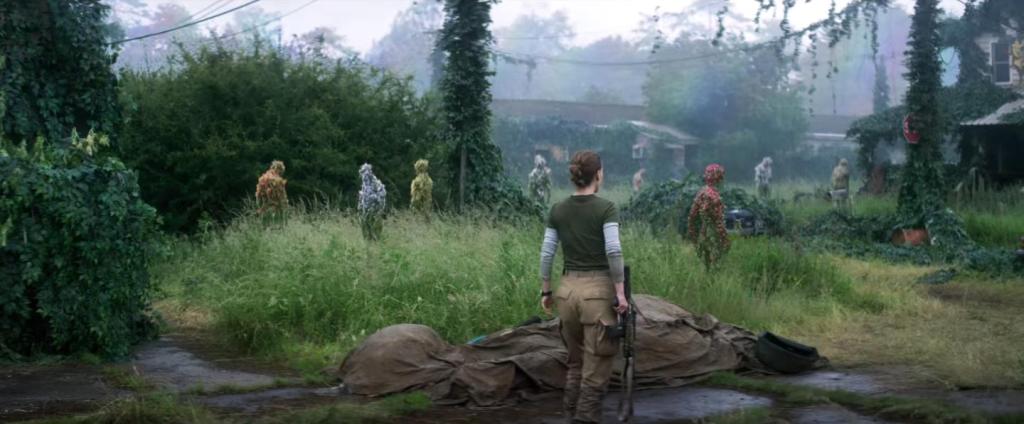
    After the success of his intense directorial debut, Ex Machina, Alex Garland creates a cinematic adaptation of Jeff VanderMeer’s first book from the Southern Reach TrilogyAnnihilation. The sci-fi thriller turns out to be a visually stunning exploration into the unknown, which in this case borrows the form of the enigmatic ‘Shimmer’, a disquieting yet alluring foreign veil encompassing a part of the Earth, Area X – ceaselessly expanding and threatening to swallow the whole world.

    The film opening reveals Lena, the protagonist, a biologist portrayed by the enigmatic, detached Natalie Portman who appears disoriented while being interrogated about the expedition and its survivors. The next scene introduces us for a brief moment to the desolate landscape surrounding the lighthouse, which is mysteriously related to the powerful alien presence the film revolves around. The lighthouse becomes a symbol, the connection with another world, with something uncanny, just like the Monolith from 2001: A Space Odyssey (1968).

    The eerie and toxic beauty of the scenery from Area X echoes the dystopian “Zone” depicted in the well-known sci-fi, Stalker (1979), directed by Andrei Tarkovsky. Similarly, just as the Zone proves to be a philosophical journey, the Area X expedition also symbolises an exploration inwards, and eventually, a disintegration of identity – an idea poetically alluded to through the words uttered by the psychologist in a crucial intense scene towards the end: “Unfathomable mind: now beacon, now sea.”, quoting Samuel Beckett.

    There are many alluring elements contributing to the immersive nature of the film and its fascinating uncanniness: The alien presence of an ambiguous nature, strange, nightmarish mutations, a symbiotic connection and the fear of being assimilated into something terrifying, blurred lines between self and other, the process of doubling, the tension, the eerie, magnetic atmosphere, gripping narrative, philosophical, introspective discourse, and compelling body horror imagery consisting in familiar elements depicted in a sinister, macabre way.

    A geomorphologist, a paramedic, a physicist, a biologist, and a psychologist enter the Shimmer seeking answers and, whilst they encounter biological anomalies, beauty and decay, and a lot of unanswerable questions, we are encouraged to wonder what really lies beyond their (and our) human drive to enter the unknown, as well as how the uncanny encountered outwards echoes the uncanny within each of them.

    Here are a few haunting excerpts from the eponymous book by Jeff VanderMeer. Among other thematic concerns, the book is also focused on environmental themes and metaphors for the conflict between nature and culture. VanderMeer alludes to the relationship between human beings and planet Earth, which can also be viewed through a lens of contamination. He emphasises the idea that nature should be treated as a part of us, just as we are part of nature; for if we dismiss it, we become alienated from a part of ourselves, of our humanness.

    The following excerpts are amazingly reflective of the concept of the uncanny:

    The effect of this cannot be understood without being there. The beauty of it cannot be understood, either, and when you see beauty in desolation it changes something inside you. Desolation tries to colonise you.”

    “I believed that it might be pulling these different impressions of itself from my mind and projecting them back at me, as a form of camouflage. To thwart the biologist in me, to frustrate the logic left in me.

    “A day that had the clarity of dream, of something strange yet familiar – familiar routine but strange calmness.”

    “And what had manifested? What do I believe manifested? Think of it as a thorn, perhaps, a long, thick thorn so large it is buried deep in the side of the world. Injecting itself into the world. Emanating from this giant thorn is an endless, perhaps automatic, need to assimilate and to mimic. Assimilator and assimilated interact through the catalyst of a script of words, which powers the engine of transformation. Perhaps it is a creature living in perfect symbiosis with a host of other creatures. Perhaps it is “merely” a machine. But in either instance, if it has intelligence, that intelligence is far different from our own. It creates out of our ecosystem a new world, whose processes and aims are utterly alien—one that works through supreme acts of mirroring, and by remaining hidden in so many other ways, all without surrendering the foundations of its otherness as it becomes what it encounters.”

    “[…] Imagine these expeditions, and then recognise that they all still exist in Area X in some form, even the ones that came back, especially the ones that came back: layered over one another, communicating in whatever way is left to them. Imagine that this communication sometimes lends a sense of the uncanny to the landscape because of the narcissism of our human gaze, but that it is just part of the natural world here. I may never know what triggered the creation of the doppelgangers, but it may not matter.”

    “The strange quality of the light upon this habitat, the stillness of it all, the sense of waiting, brought me halfway to a kind of ecstasy.”

    ― Jeff VanderMeer, “Annihilation”

  • Review: Laura Makabresku’s dark fairy tales

    Review: Laura Makabresku’s dark fairy tales

    Polish self-taught fine art photographer Kamila Kansy, known as Laura Makabresku, draws inspiration from her deep, intimate connection to her native land – which she perceives as a mysterious realm of sinister fairy tales, in order to design a tragic world revolving around death, obscure eroticism, suffering, and human frailty. The suggestive name of her artistic identity conjures up the darkness portrayed in her haunting photographs which seem to reflect the Freudian uncanny through their eerie and strangely familiar quality.

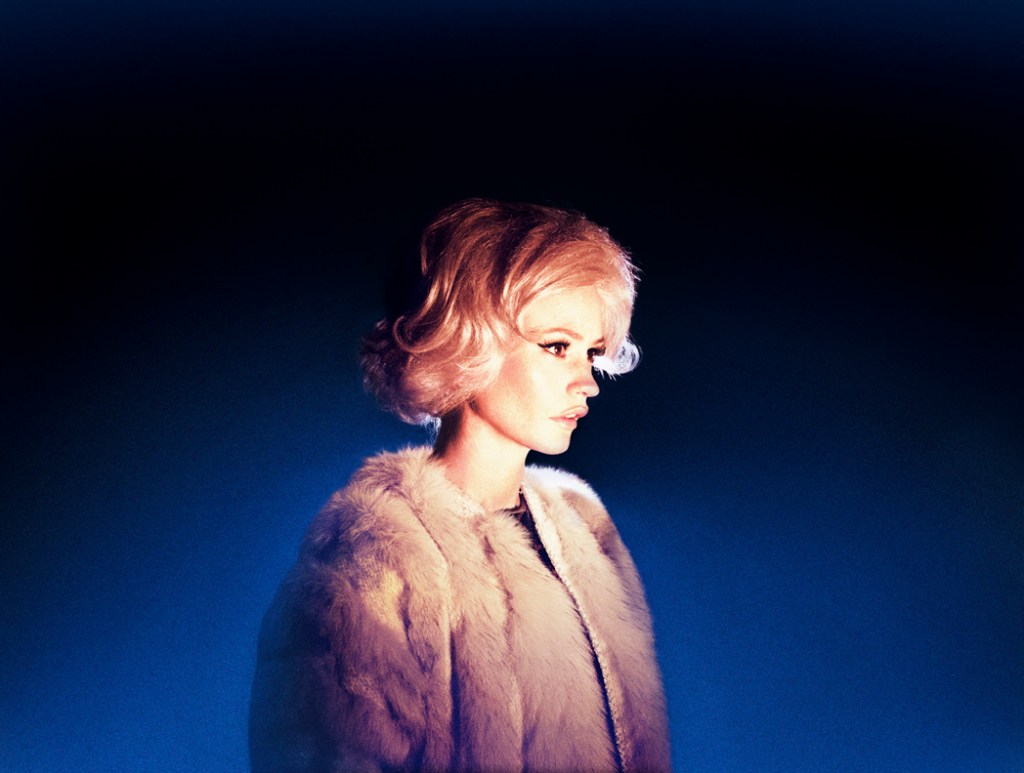
    Stepping away from digital cameras, she embraces the analogue practice with a soft painterly style with dark undertones. To create a gloomy, glacial, and morbid atmosphere, the colours used are often desaturated dark blue and green and the photographs are intentionally underexposed. Some photographs adopt the technique of superimposition to achieve a ghostly aesthetic and induce the impression that there is always something morbid looming within the frame – a dormant presence about to be unleashed.

    The distinctive imagery depicting Laura Makabresku’s artistic world can be compared to a dream: it has multiple layers, inviting the observer to begin an internal exploration. Her pictures should not only be admired aesthetically, but also felt from within. The shots are like collections of impulses, raw emotions, objects filled with hidden symbolism displayed in a beautifully chaotic, surreal manner which often involves strikingly unexpected combinations of elements such as dead animals, naked bodies, blood, knives, ants amplified in size, ravens pictured indoors, and human bodies with animal masks. The uncanny is ever present in this artistic realm: from dead birds coming out of the mouth of a woman collapsed on the autumnal earth, a naked body covered in moss, guarded by a mysterious fox, a sorrowful girl’s languid body enveloped by a goat’s hide, a pensive woman touching a bowl filled with blood, upon which a little bird rests, a touching portrait of a girl embracing a fox in a glass coffin, eyes covered by pressed flowers or positioned dangerously close to a raven. All of her entrancing visual creations are filled with lyricism. In addition to these transparent motifs and compositions, the uncanny also lies in the homely atmosphere of the photographs, as well as the strange aesthetic quality reminiscent of macabre fairy tales.

    Influenced by Francesca Woodman, her black and white portraits of the naked female body convey a duality between the calm, beautiful, graceful vulnerability and simplicity of the nude body sight and the undertones of death, darkness, emptiness, isolation, and dark sexuality. Through self-portraits, she embraces her fears and anguish and explores themes like autopsy, witchcraft, love, and a deep connection with animals, mortality, and the evil that lurks within her. The universe she creates makes the viewers look within and be inspired to embrace their own dark instincts and fantasies.

  • Review: Alex Prager

    Review: Alex Prager

    Fascinated by the mysterious quality of the colour photographs of William Eggleston, a 20 year-old Alex Prager decided to buy a professional camera and dark room equipment in order to express herself creatively through images, in her quest for existential meaning. 18 years later, currently on show at the Photographers’ Gallery in London, the Silver Lake Drive exhibition represents a mid-career examination of her distinctive photographic and filmic work.

    The internationally-acclaimed images of crowds, staged by the artist, portray a sense of emptiness and disconnection underneath the polished façade of active, compact crowds. It can be seen as a subtle commentary on the continuous, superficial interconnectedness that disguises individual alienation: everyone is self-preoccupied and follows their own narrative. There is an intertwining line between the public and the private- groups of people finding themselves in the same space, unaware of or uninterested in the silent stories hidden in the others’ eyes and in their conflicting facial expressions.

    Often shot from above, from voyeuristic angles, Alex Prager’s still photographs always have a cinematic quality: they seem to be frozen film stills, presenting a fragment of a greater narrative; which is the main reason the self-taught artist decided to create short films conveying the ‘before’ and the ‘after’ moments surrounding the photographs. Through the cinematic perfection of her still images, the ordinary situations depicted become compelling: the staged details in deep focus, the strange lighting, the highly stylised and saturated aesthetic, all render the reality of her world in a glamourous and glossy way. However, despite the hyper-real and sometimes eerily perfect nature of the pictures, the essence of this world lies in the portrayal of a disturbing emotion, hence there is always a sense of authenticity beyond the artificial fictive layer.

    The focus on emotion has been acknowledged by the artist and made particularly obvious in her short film, Despair. This early piece adopts characteristics of her general cinematic sources of inspiration, including Hollywood melodrama, silent movies, film noir, art house cinema, as well as Hitchcock and Lynch. The atmosphere dictating her work is ominous, as if tragedy always lurks around the corner – an idea reinforced by the recurrent theme of the vanishing woman, which can also be found in her more recent film shot in Paris, La Grande Sortie.

  • A poem: Face to face

    Face to face:
    eyes locked,
    staring into each other;
    seeing your reflection
    in the dark lake of her iris.
    Hand on hand,
    praying together-
    not like those bible verses preach-
    no, praying to the abyss,
    hoping it won’t swallow you whole;
    understanding at first the irony
    and then the futility
    of your act.
    The abyss has wet black lips,
    kissing you to compensate
    for chewing pieces of your soul
    and spitting them out
    because they were bittersweet.
    Now they are soaked, slippery,
    no longer sticking either in or to the puzzle,
    which is why you don’t make sense
    except in the silver,
    face to face,
    where your soul is pure, whole,
    and wholly unleashed.

  • A poem: Unfiltered

    Clinical,
    surreal emptiness.
    Chocolate-scented wood.
    Smell of new and
    non-alcoholic intoxication.
    Life as art for art’s sake.

    Neon light flickers as you blink
    infected by dizziness.

    No longer tone-deaf to the harmonies
    of your own soul,
    you don’t shrink for someone else to grow.

    An invisible corpse in the plastic bag
    winks at you from the corner-
    madness, it grows
    in sanity.

    Lifeless but intense:
    you don’t pray for another,
    you prey for yourself.


  • A Poem: Bloody act

    Two bodies wrapped in an embrace
    in a tomb of glitter and frost-
    the blood lingers while they kiss,
    then it pours gently down the legs
    of the cradle surrounded by mist.

    The lake of tears reflects the moon of sorrow-
    trembling, fluid, unpredictable;
    their red eyes locked, unblinking,
    while eternity replaces the morrow.

  • A poem: Echoes

    A silhouette merging with the unknown-
    all that is left is your breath in the cold air
    as you exhale in slow motion.
    I speak in shadows,
    you respond with specters of light,
    haunting every word-
    making sense of it all;
    I choose to live in the now,
    but if you whisper in my ear
    I will take decades to figure out
    why you chose to disappear
    that day
    when I ran down the hallway-
    gargoyles staring from above-
    for a second I thought I could hear
    another set of footsteps
    under a different weight
    even after I accepted your longing
    for the netherworld.
    The statues were grotesque,
    threatening, demon-like in thunder and lightning,
    and still, I hoped that hallway would never end
    just so I could hear the sounds again and again
    and convince myself they weren’t merely
    echoes of my footsteps into the unknown.

  • A poem: Afterlife

    I taste the blood of dehydrated lips,
    admire the inadequately plucked eyebrows
    above vapid black circles surrounded by
    red on translucent white.
    Dark hair, itchy like rope
    against my neck,
    frozen hands trembling,
    features particularly thin:
    I forgot how to live,
    yet I laugh at my own sin.

  • Train of thought

    You said to yourself that it was too cold and that was why you could barely function. It was either that, or the weeks-long stagnation of the spirit.

    One day you will no longer think of your own passing, or that of those closest to you, no longer delving in scenarios of unhappiness out of masochistic urges, or in abyssal streams of consciousness.

    The city, oh, the city. Sometimes you are the city, sometimes the city is in you, sometimes the city does not exist, or is something so detached from who you are, even as you pass right through its heart. The city in daylight and the city at night – such peculiar dualism to which your mindset adjusts, and which appeals to different beings within you, with different dreams and different nightmares.

    You need success and fulfilment in order to open up. Is it right? It might be ingrained – inherited or caused by nurture. Unfolding at your most vulnerable seems impractical anyway, what a silly thing to do. Put up walls and let flowers climb them.

    I ate everything I had in the house -red and purple fruits and chocolate, then I took the first train and stopped at the station where my train of thought decided to let me go. The station was all empty, I smiled to myself, and nature witnessed. There is a journey ahead.

  • Music: Submerged

    Their music submerged my body in cold waters- red, blue, and purple lights piercing into the depths. Their voice embraced me, the melody wrapped me up in a liquid swirl, whilst my mind was surrounded by the haze of the late 90’s when I was a child and the very early 90’s when I was not born yet, but it somehow made sense. The fabric of the universe, the condition of being human and of simply being, were reflected in the icy singing. It could be the soundtrack of a trip to the moon, or a trip into the underworld. Of running and never stopping, following an endless white line on the ground, or running and jumping off a cliff not knowing what is on the other side and whether you will survive the crash. Of brides saying ‘I do’ in glittery white dresses inside Christian churches; of a little girl’s tears on her grandfather’s coffin. That moment extended into infinity, the music encompassed everything, and that is how a thousand experiences enriched my mind in an instant.