I just re-vamped the Uncanny Archive website, making it more atmospheric whilst including descriptions of different categories of the uncanny, as well as personal insights and additional information on the Freudian roots of the concept. There will be more web content coming up soon, so keep an eye out, especially if you’re a fellow lover of uncanny films and intriguing, moving narratives.
Within the first pages of his essay on Das Unheimliche, Freud adopts a humble tone, acknowledging that his analysis is limited by the lack of exposure to foreign literature due to conditions in the immediate post-World War I period. Within this historical context, the psychoanalyst’s interest and fascination with the uncanny arose from his experience treating post-war traumatic cases. This is evident in his essay, which consistently gravitates towards the subject of neurosis and the significance of repressed content of thought in the manifestation of the uncanny.
Freud’s work itself turns out to possess some of the uncanny characteristics it describes. First of all, its purpose is to reveal something that is concealed within the parameters of subjectivity of feeling, of experience, and memories. […] Another aspect that Das Unheimliche shares with its subject and with many uncanny narratives is that it is haunting, repetitive, and filled with uncertainty. […] Certain works of art encompass that combination of factors through which the uncanny is born out of art and transcends into life, making the reader and the viewer experience it.
An ineffable sense of rapture of the mind, body, and soul.
A substitute for the spirit molecule.
A place where it’s safe to be human and where the concept of being human is unravelled at various stages in a way that will add to one’s self-worth, empathy, and awareness.
The texture of reality is mutable here. Your substance might go through physical and spiritual metamorphoses in tempestuous waves. Fragments of souls that are no longer around will reflect back at you unexplored feelings and aspects of your self on a visceral level.
You will witness the miracle of the self unfold. During your paradigm-shifting odyssey into this state of overwhelming multitudes, your core will be shaken and re-examined, but despite that, you will overflow with self-love even as you go through the transformative process. Your memories and dreams will be your friends, not your foes.
There will be upheavals, eventually followed by a sense of enlightenment and profound emotional intensity that will set new foundations in stone. No more lingering intrusive thoughts. No longer projecting and no longer being affected by other projections. An elation and liberation of the self.
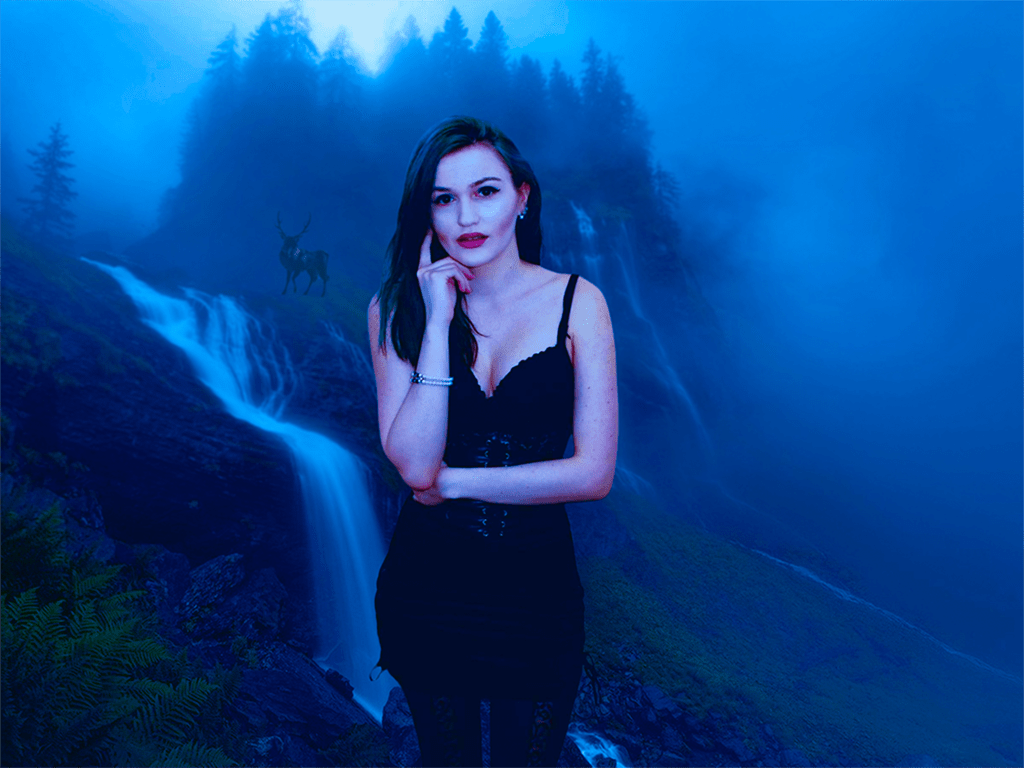
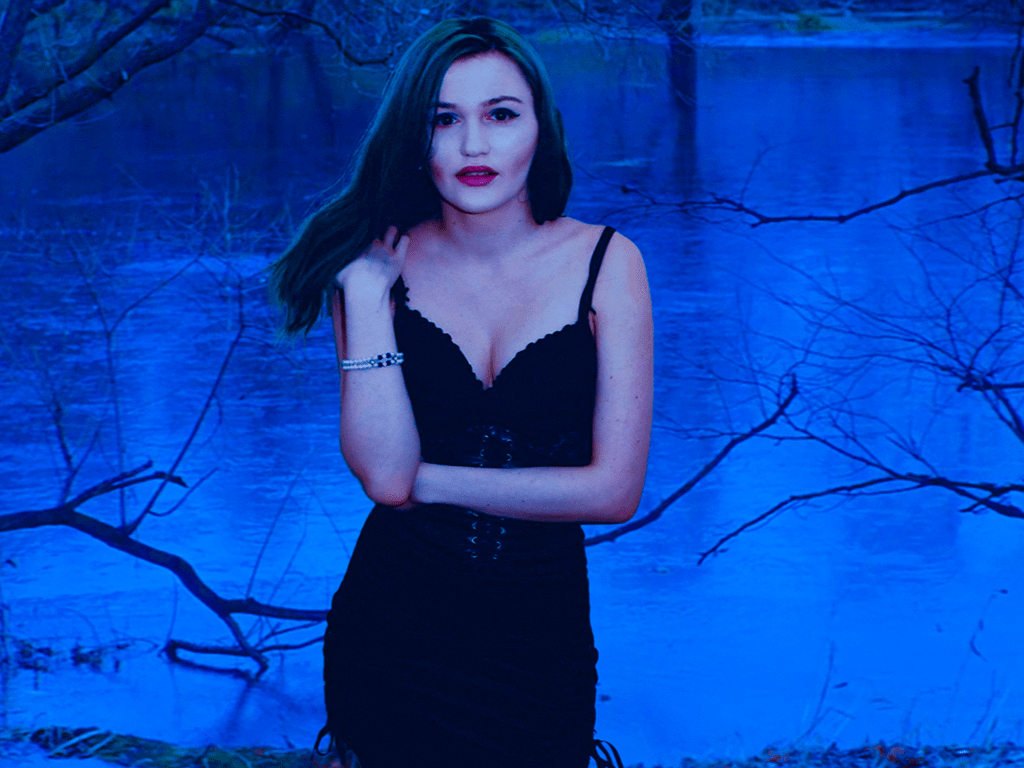
Inserted myself in film stills from Stalker, Annihilation, and Solaris; photos edited and composited by me.
I had actually written a little uncanny story that these images were just accompanying, but I’ve decided to integrate that one exclusively in a greater project of the future.
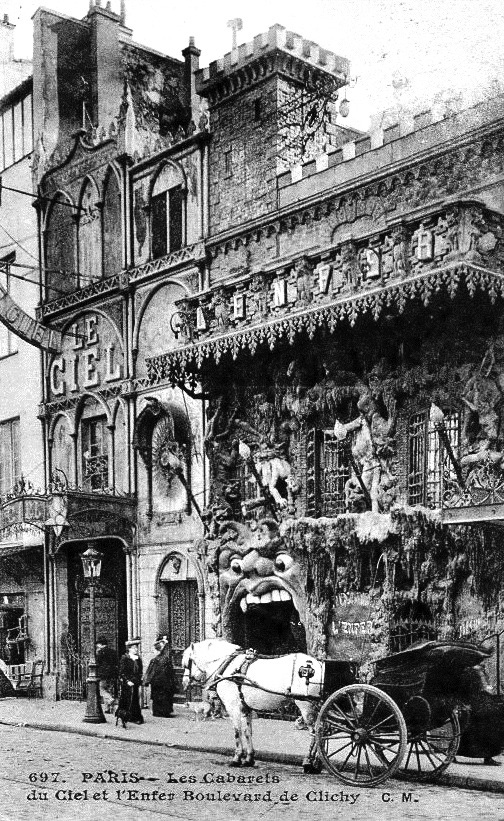
While meandering through the vastness of cyberspace, I found myself immersed in old analogue photographs and archival material of the intriguing Parisian phenomenon known as the “Cabarets of the Beyond”: the Cabaret De L’Enfer (the Cabaret of Hell), the Cabaret du Ciel (of Heaven), and the Cabaret du Néant (of Nothingness). As night deepened in the heart of the glittering capital’s Montmartre neighbourhood in the late 19th and early 20th centuries, flâneurs could escape the mundane and seek refuge in the enrapturing and otherworldly embraces of both Heaven and Hell during the same night, as they were situated at the same address. Diminishing the veil between worlds, the Dantesque cabarets represented a stirring source of entertainment and inspiration for guests from different walks of life, as well as a fitting backdrop for avant-garde artists and bohemian intellectuals in particular.
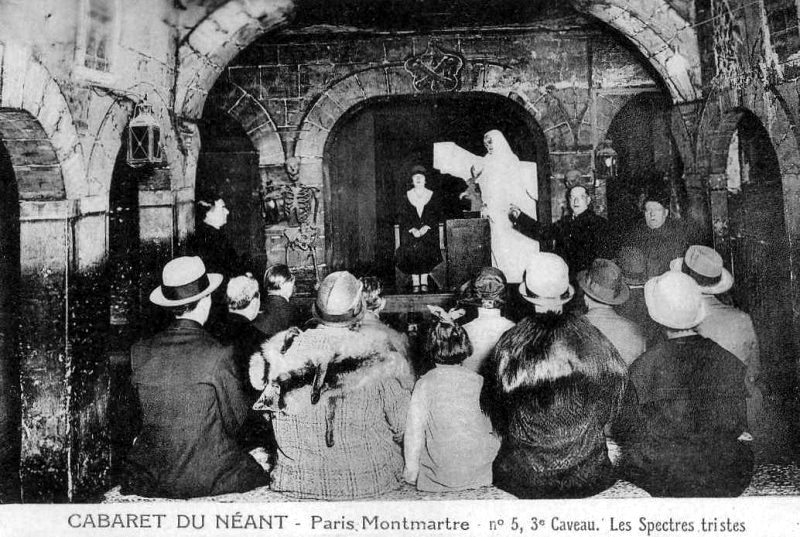
The Cabaret du Ciel greeted wandering – damned and divine – souls with blue lights and ethereal archways, whilst the neighbouring entrance of the Cabaret de l’Enfer allowed them to be devoured by the flames of hell in the grotesque jaws of the Leviathan. A little bit further away, one could find the arguably more unsettling Cabaret of Nothingness, which was a celebration of the essence and process of death, embodying a more worldly and macabre approach to the concept. The grim exterior of the latter was black and unadorned, except for the eerie green lanterns casting an otherworldly, cadaverous glow upon the unwary faces of the guests.
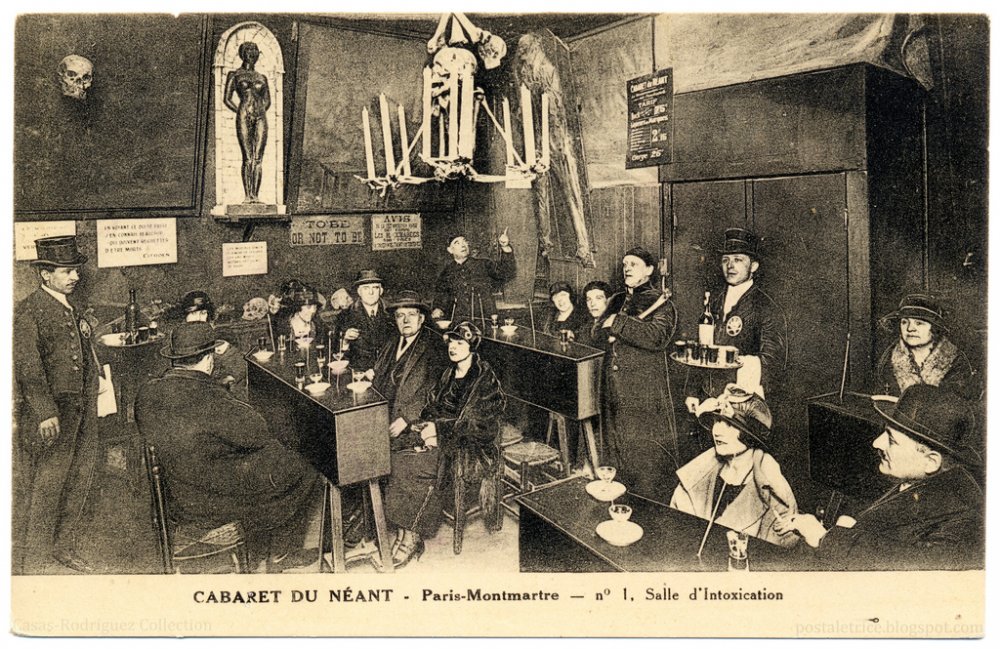
Inside the Cabaret du Néant, people were led by a monk-like figure through a dark hall towards a sinister café. In the Intoxication Hall, a chandelier crafted entirely from human bones cast a flickering eerie light upon the setting below, which consisted of coffin-shaped tables adorned with deathly flowers, dismembered arms with candles in their fingers, waiters dressed as undertakers who addressed the patrons as “corpses”, and disquieting depictions of battles and executions seemingly resurrected by the flickering lights. The unearthly, foreboding ambiance of the stage was merely a prelude to the performance that was about to unfold. Bells tolled. A funeral march entranced the audience. A sombre young man dressed in black held a transfixing discourse on the anguish and misery of death, pointing at the macabre imagery on the walls. The visuals would suddenly glow and become imbued with life as ghastly figures started emerging from the frames. Portrayals of fighting, living men turned into haunting images of skeletons writhing in a deathly embrace, as if they were fighting a never-ending battle.
With the help of mirrors, lights, and hidden rooms, the disoriented audience could witness the gradual decomposition of bodies. In a smaller room, the “Room of Disintegration”, a beautiful, pale, uncannily alive young woman in a white veil was enclosed in a coffin. Here is an excerpt from William Chambers Morris’ “Bohemian Paris of Today” (1899), which describes the experience through his eyes:
“Soon it was evident that she was very much alive, for she smiled and looked at us saucily. But that was not for long… Her face slowly became white and rigid; her eyes sank; her lips tightened across her teeth; her cheeks took on the hollowness of death—she was dead. But it did not end with that. From white the face slowly grew livid… then purplish black… the eyes visibly shrank away into their greenish-yellow sockets… Slowly the hair fell away… The nose melted away into a purple putrid spot. The whole face became a semi-liquid mass of corruption. Presently all this had disappeared, and a gleaming skull shown where so recently had been the handsome face of a woman; naked teeth grinned inanely and savagely where rose lips had so recently smiled.”
Compared to the other two cabarets, the Cabaret du Néant was notably different mood-wise and far less light-hearted. Not everyone appreciated the cabaret’s earthly, corporeal, macabre approach to death. Jules Claretie noted, “a sinister irony was expressed, not with angels and devils, but with people, mortals, death”. The French journalist also perceived the Cabaret du Néant created by illusionist M. Dorville to be ghastly and mean-spirited compared to Antonin Alexander’s Cabaret of Hell.
Renault and Château expressed their critical point of view in their book, “Montmartre”, stating: “if the Ciel and Enfer of the lovable M. Antonin merit a visit, this is not true of the Néant, which is frequented by hysterical and neurotic persons”.
Despite the scarcity of visual archive material featuring the cabarets, judging by literary accounts providing first-hand snap shots of nightlife in Paris, it’s hardly surprising that the Cabaret du Néant was found to be more disturbing. It seems to have embodied a visceral approach with painful reminders of mortality whilst focusing on the actual process and ritual of death in a way that made people face a primal fear. Moreover, some aspects of it created an uncanny experience, which would automatically involve the elements of emotional shock and repulsion. Besides the uncanny acts from the room of disintegration, there were other elements that were subtly frightening, nihilistic, and potentially psychologically scarring for some, as the cabaret of the void focused on conveying the emptiness of existence in a surreal way that had the effects of psychological horror.
Meanwhile, despite the profane theme it depicted, the unholy Cabaret de l’Enfer was less anchored in secular, materialistic reality and more rooted in the intangible and unearthly, which might have been one of the characteristics that made it less disconcerting. However, it was also not exactly for the faint of heart. After entering the infernal mouth-portal, past the embers that were stirred by a frenzied scarlet demon in the depths of hell, one would be welcomed by meticulous hell-themed decorations, ghoulish images of demons, dioramas of sinners being punished, and staff dressed in devil costumes. A cauldron was hanging over a hellfire, partially enveloping several devil musicians eerily playing “Faust” on stringed instruments, being prodded with red-hot irons for every discordant note.
After having their orders taken by a devilish being whose discourse was characterised by consistently twisted, macabre, yet playful words and arcane incantations, the damned souls who ventured in this hellish place would get to drink liquids that were supposed to ease their upcoming suffering, from glasses with an eerie, phosphorescent, unearthly glow. Meanwhile, the place pulsed with dark energy. There was a palpable, ominous sense of unholiness in the air. Volcanos were blasting and streams of molten precious metals were trickling from the crevices of the underground rock structure of the walls.
Imagine being there, surrounded by figures and symbols of the macabre, witnessing nightmarish scenes, soaking up the atmosphere, sipping glowy liquids, and catching sight of André Breton in one of his meetings with the Surrealists. The Cabaret de l’Enfer served as a gathering place for the Surrealists in the 1920s – and a popular one, at that. Unsurprisingly, the Surrealists were drawn to the cabaret’s macabre aesthetic, due to their fascination with the unconscious mind and penchant for the bizarre and the subversive. Breton’s studio was located on the fourth floor above the cabaret, which is where he and Robert Desnos arranged his well-known surrealism sessions.
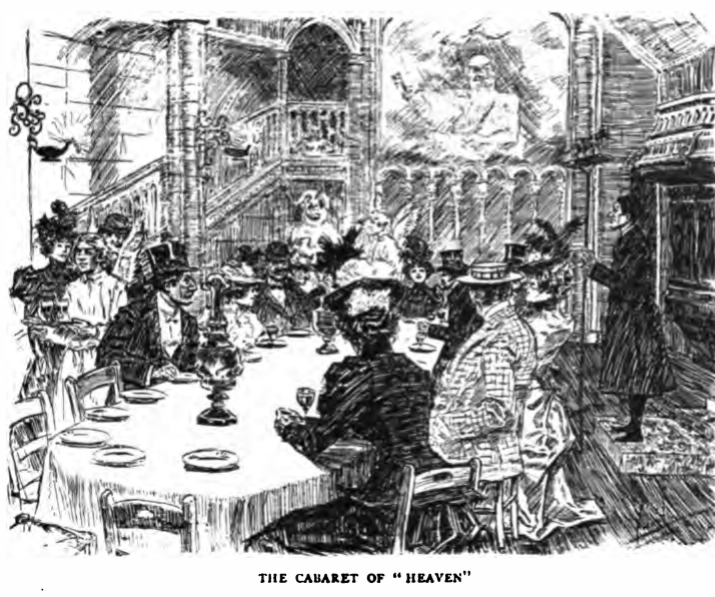
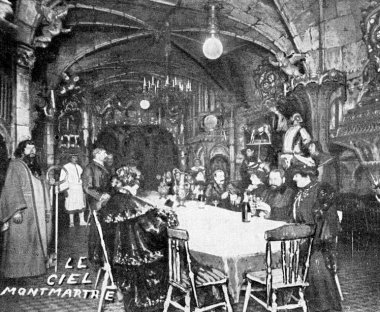
The souls that graced the vibrant Cabaret du Ciel were enveloped in a cold blue light. The patrons stepped into an ethereal realm featuring plays that depicted the bliss of heavenly afterlife. Divine, dreamlike harp music as well as gloomier organ music filled the air. A priest recited a typical invocation from a small altar. St. Peter would stick his head through a hole in the celestial cupola to sprinkle holy water from the heavens, while reenactments of scenes from Dante’s Paradiso mesmerised the audience. Waiters were adorned with lacy translucent wings and halos that seemed to glow in the ethereal light. Fluttering among sacred palms and gilded candelabras, the performers were dressed as nuns, angels, and saints. After a brief procession, guests were invited to a separate room in order to become angels themselves through an uplifting, ritualistic, choreographed performance involving singing, incense, getting dressed in white robes, being adorned with wings and halos, holding a harp, and gaining access to the empyrean – a cloud structure.
Many visitors, including British poet Arthur Symons, described the Cabaret du Ciel as a Parisian gem of divine enchantment, a slice of heaven, appreciating its serene atmosphere, uplifting show, and otherworldliness. However, some naysayers seemed to be of the opinion that it was strangely irreverent, vaguely sinister, or, worse – kitsch. Others said it was actually more depressing and grotesque than the Cabaret of Hell, which provided an intriguing spectacle.
Despite being staged like a religious ceremony, according to British visitor Trevor Greenwood, the Cabaret du Ciel had something dark and sinister in its ambiance and mise-en-scene. In his view:
“I just couldn’t believe my own eyes. What a room! Down the centre, lengthwise, was a long table covered with a white cloth… and lots of ash-trays: around the long table were seats, some already occupied by bewildered looking Americans: I suppose there would be about thirty seats all told. At the far end of the room was a small screen about eight feet square… presumably hiding a stage of some sort… And the room itself!! It might have been a temple for the sinister performances of black magic or something. The walls were covered with cheap imitations of religious knick-knacks. There was a large bell suspended from an imitation beam… and it was a wooden bell! Close to the bell was a banner-pole, with a silver coloured effigy of a bull mounted on top… The whole place reeked of something sinister… and the general effect was the very essence of tawdriness.”
An iconic and inspiring piece of the cultural landscape of 19th and 20th century Montmartre, the Cabarets of the Beyond provided a tantalising glimpse into vivid worlds lying beyond the veil by inducing uncanny, surreal Dantesque experiences. Testaments to the alchemical and polarising effects of art, the well-known entertainment venues were places where the ordinary was endowed with uncanniness, and where curious souls could immerse themselves in a sea of unfamiliar and strangely familiar sensations. Through their macabre and celestial decorations, their unsettling performances and music, as well as the otherworldly themes that they brought to life, the Cabarets created a space where the boundaries of reality and imagination were stretched and distorted.
Mental Health Awareness campaigns that help destigmatise mental illness and normalise our general discourse surrounding mental health have gained momentum as more and more people have become aware of the importance of tackling the topic of mental health in a tactful, empathetic, and authentic manner, whilst promoting an approach based on kindness and transparency. Partly influenced by the devastating effects of the pandemic, partly due to a general paradigm shift towards awareness and a more inclusive worldview, this phenomenon has generated a surge in initiatives meant to summon empathy and unite people, with the aim of making a palpable positive change and ultimately helping people live happier, more fulfilling lives by facilitating access to support and recovery.
My latest blog post at dianamarindigital.com analyses how mental health organisations that are intrinsically devoted to this cause have inspired change through impactful campaigns that have sparked meaningful conversations and, in some cases, helped significantly transform people’s lives for the better. Whether by utilising the eternally stirring powers of spoken word poetry, portrait photography, or video or providing stimulating tools for self-reflection, these incentives have made an impact that continues to cause ripples and echoes in time and, in many cases, their relevance and striking effects have been sustained through creative acts ranging from picking a memorable hashtag to reinterpreting stories through a poetic lens. As we shall see, success was in part attributed to leveraging social media to convey the right message in the right way to a wide range of people.
Here are the campaigns I explored in my article:
“If this speaks to you, speak to Mind” by Mind
“The Last Photo” by CALM
“Every Mind Matters” by Mental Health Foundation
“Be Vocal: Speak Up for Mental Health” collaboration between several advocacy groups such as The Depression and Bipolar Support Alliance, The Jed Foundation, Mental Health America, the National Alliance on Mental Illness, and the National Council for Behavioral Health.
The “Unlonely Project” by the Foundation for Art & Healing
“B4Stage4” by Mental Health America
“Act Early” by YoungMinds
“Get Into Nature” by Change your Mind
“The Big Event for Mental Health” by the World Health Organization (WHO) in collaboration with United for Global Mental Health and the World Federation for Mental Health
“The Healthy Relationships” by Mental Health Foundation
For descriptions of the campaigns and more, read the full article on my other website:
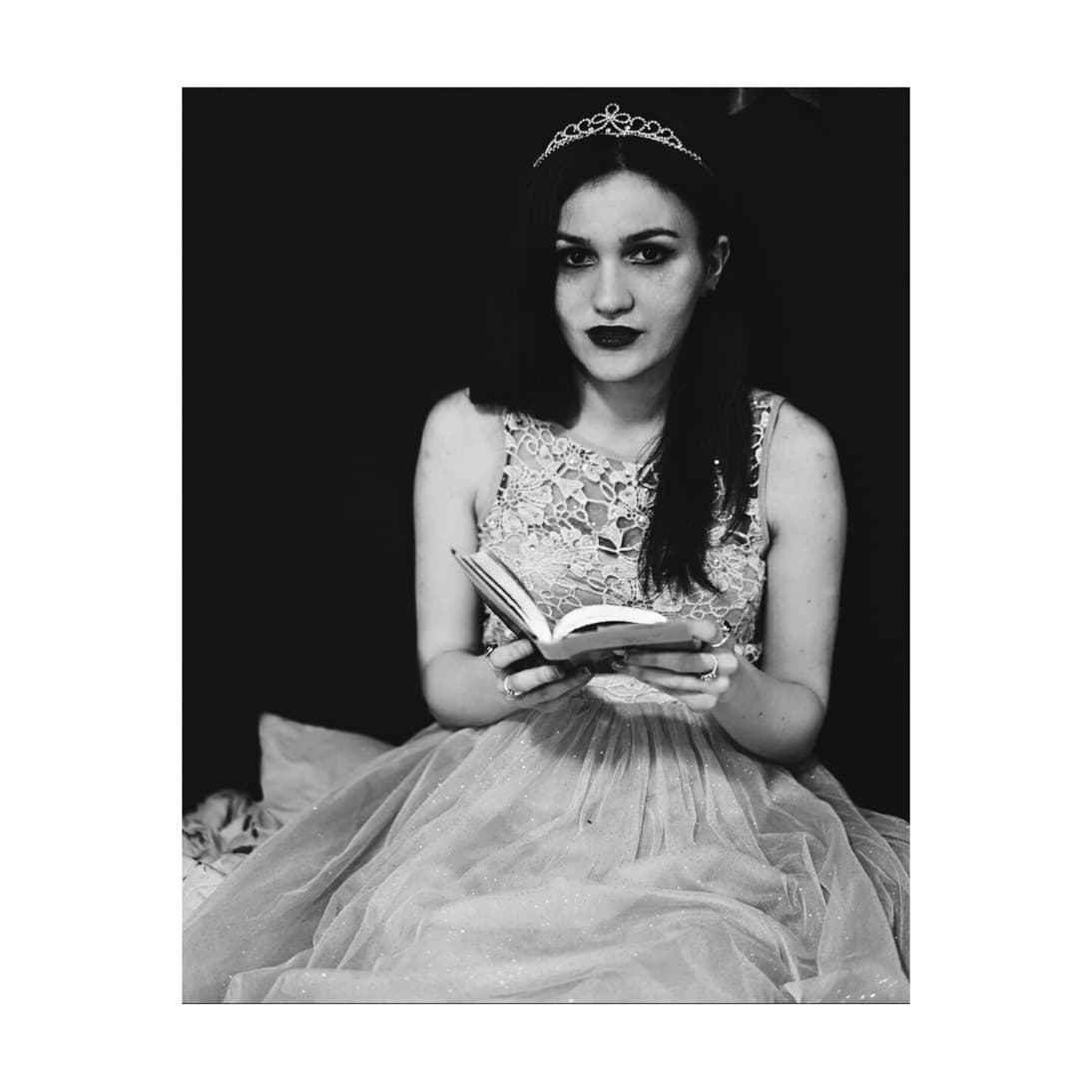
Innocence lost, a long time ago. Nostalgia replaced. By curiosity for the unknown. By determination. Out of the cold, out of the black I rise and into the blue I delve with the excitement of a bird piercing through a portal in the sky, seeing the grandeur of another world, realising for the first time she had been flying inside a big cage surrounded by mist until that moment. There is warmth rising from within. I embrace the unknown. The unknown embraces me.
I have written a list of content ideas for mental health professionals and organisations planning to establish a striking digital presence that adds value to people’s lives, engages their target audience, as well as turning their followers into brand advocates:
Post educational content about mental health conditions, including an overview of risk factors, warning signs, symptoms, causes, and treatment options. If you are comfortable in front of the camera, conveying this information in a video format would help you establish a good rapport with your audience. Thought-provoking text posts, memorable captions, visually compelling social media graphics, and stimulating animations can also be impactful.
Create statistical infographics to show the scale of certain problems and raise awareness about significant topics.
Create mental health awareness campaigns, embracing trends: Have a mental health calendar with relevant dates e.g. Time to Talk Day, Mental Health Awareness Month, World Mental Health Day, Eating Disorders Awareness Week, Stress Awareness Month, World Bipolar Day, Anti-bullying week, University Mental Health Day, etc.
Host Q&A sessions where followers can ask questions about mental health concerns and you can provide insightful answers about therapy options, mindfulness practices, building a mental health support system, and healthy coping strategies.
Collaborate with influencers to spread the message aligned with your mission or share the stories of public mental health advocates who adopt a destigmatising approach when discussing mental health topics.
Use CTAs to build rapport and increase engagement. For instance: Encourage your followers to participate in a self-care challenge using a specific hashtag or to tag a friend who has helped their mental wellbeing in the comments section.
For further details, the exhaustive list, and valuable takeaways to inform the content strategy of a mental health brand overall, check out the full blog post on my SMM website:
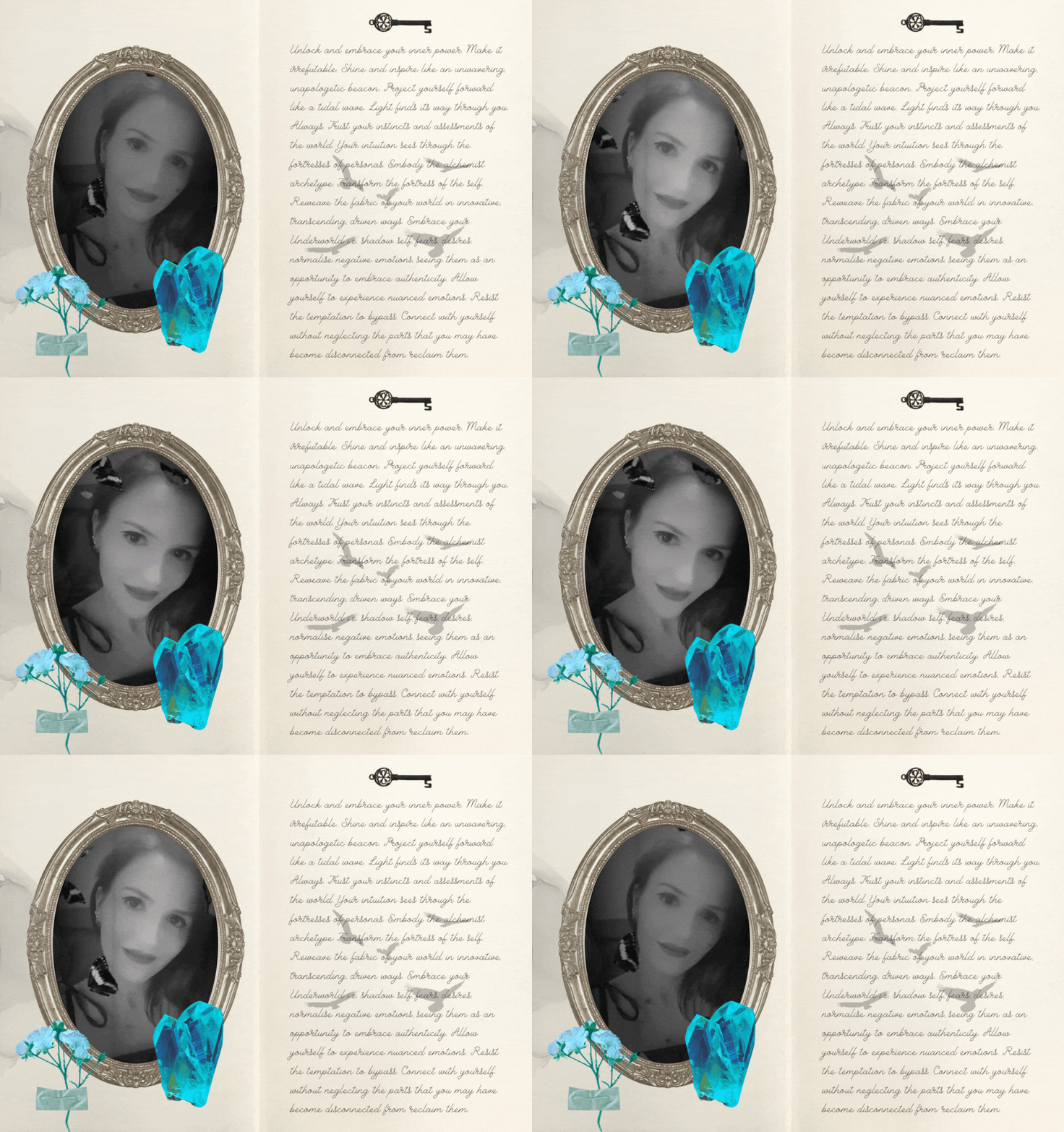
Step into your wild self. Access your Dark Feminine energy to rediscover your full strength and unlock your untamed power. Recognise dark energies, but don’t fear them. Deconstruct the fortress of the self. Reweave the fabric of your world in innovative, transformative, driven ways. Embrace your Underworld i.e. shadow self, fears, desires; normalise negative emotions, seeing them as an opportunity to embrace authenticity. Allow yourself to experience nuanced emotions. Resist the temptation to bypass. Connect with yourself without neglecting the parts that you may have become disconnected from: reclaim them. Trust your instincts and assessments of the world, they’re usually accurate and you owe yourself self-belief. If it doesn’t feel right, it probably isn’t. Your intuition always sees through the fortresses of personas. Reframe your outlook on your whole existence. Embody the witch / alchemist archetype: Transform everything. Start by transforming your inner life, which will empower you to enact external change (including shifts in consciousness). Expand your vision, expand your knowledge. Only you have the power to hold yourself back from personal fulfilment. Some situations require control, others would be better navigated through an approach based on surrendering. You are the only one with the tools to discern between the two. Aim to be impervious to other people’s visions of your life’s trajectory. Avoid circumstances that don’t allow you to show up as your best, authentic self. Don’t feel a pressure to approach interpersonal relations as if they’re a performance and avoid situations where there is that expectation whenever possible. Healthy relationships don’t require you to change, pretend, cross your own boundaries, or feel depleted or uncomfortable in any way. Tap into childlike wonder and blissful maiden-like playfulness. Connect with nature more often. Be emotionally mature and empowered without losing a sense of connection with your innocence.
Spiralling, A beckoning sign. I’ve been teetering on a thin line
The catalyst- Something as simple as a knife twist, disguised.
A reframing of purity- turned glacial. A false sense of security, dissipating.
Withdrawing, inward submersion. It’s coming, one step forward- the possession the engulfing It’s on.
The switch has been turned. The demon has been summoned I sense the first intimations of life, feel its claw without being touched, almost taste its void, hushed She picks up and licks the knife it turns into a magic wand in her hand the open wound morphs into a black hole I can no longer lick it to exorcise my self She is free to bleed into me, she’s in control The last protective layer is pulled off, violently.
After a battle spree progressing morbidly, artfully I summon the will to lull the beast to sleep before I get silent and still I’m in it really deep yet once again manage to make it all seep out of me as I get ready to take another leap.
In my dream I was a siren, dwelling in a pool of blood filled with corpses of preys awaiting their starved predator; Musical, aquatic Scheherazade- unwilling witness, captive, or cold-blooded accomplice with a gnawing change of heart- so not so cold-blooded after all? Moon-intoxicated, I sensed your presence from afar, running, teeth-clenching- anxiety rising, clinging to the last tidal dream, I wonder – who am I supposed to hypnotise: the new live prey, the ghosts of the dead, or you? Reluctant to find out, I sing my melody, inwardly to drown out the sound of your blood feast.
















 DIANA MARIN