Blog

  • Uncanny Synergy

    I awaken in pure exaltation in a meadow bathed in sunlight. Everything is enveloped in luminous splendour. The lake of memory ripples and glistens with echoes of myths and fairy tales. There is something intrinsically immaculate about this moment. It feels as if this corner of the world has been ritualistically transfigured by forces that have had access to moments that evoked my noblest emotions. Or that my dream-weaving mind from a parallel reality is actively manifesting a mosaic of a world that I could feel in perfect alignment with.

    I decide to explore my surroundings. I increasingly get the feeling that the place is sentient – a living, breathing, intoxicating sanctuary. The breeze touches my body with the ambivalent gentleness of a yearning spirit. There is an enigmatic scent cloaked in various elements, clothed with the vibrancy of an undefined passion. I reach an alien stone structure on top of which there is a crystal coffin. The woman inside looks like me. Her clothing embodies an exquisite, non-clichéd version of the cybergoth aesthetic. Although motionless, her body seems neither lifeless nor in the alluring state of catalepsy of most female waxworks stuck in reverie. She awakens, with her face bathed in sunlight. Her presence is enveloped in luminous splendour. There is something intrinsically immaculate about her, like her substance has been ritualistically transfigured by celestial beings.

    She starts exploring her surroundings. As she appears to strangely, naturally assimilate the environment, I feel like I’m witnessing a process of symbiosis. Her movements are of an uncanny, refined quality that blends in with the landscape and speaks with the language of light. This world seems to have been created in her image. In her I catch glimpses of a level of aliveness that I’ve never seen in anyone else. Her discreet glances over her bare shoulder make me think she is waiting for someone, or some external thing.

    I hear a disturbing, mystical interference sound and see flickering lights. The fabric of the world is briefly cracking to make space for another body, which materialises out of thin air. Twilight falls. She looks at him. It’s apparent they know each other from a parallel universe; the encounter is not serendipitous. Their eyes – both life-giving and annihilating – are glinting with rapture. She moves towards him through the dusky landscape, soft and languid, proceeding with a whimsical charm on the fragrant earth. What follows is their embrace – the drowsy sweetness of it.

    Her resonant words are breaking the overpowering silence, being hauntingly echoed within all the natural elements around them. Listening to the melodious outpouring, his liquid gaze subtly changes. Their substances intertwine. Her life source becomes a part of him. His life source – a part of her. Their pupils are wide as they both take close-up views into each other. Here, this means experiencing the other’s entire life in a flash. Every moment of agony, ecstasy, every glimpse of the soul and of the dark night of the soul in its various manifestations. Everything around them shifts vibration: the elusive, undefined sense of ontological yearning becomes palpable. The atmosphere turns sultry. The ecstatic movements of nature fluctuate between frantic, impetuous, violent and soft, languorous, soothing. I am filled with a deep sense of rapture under the light of creation. Visible and invisible forces are harmonising and constantly replicating, giving birth to their higher selves, until the landscape is of an ineffable resplendence. Their encounter nurtures and transfigures the eco-system.

  • Aesthetic Sensibility

    The narrative of our relationship with space is shaped and re-shaped by our minds, and not always in predictable ways. Mesmerising and haunting, that is how I would describe the aesthetics of Brutalist architecture now, although it hasn’t always been this way. I’ve mentioned before how impactful the relationship between ontology and aesthetics is to me. The way I relate to new landscapes featuring cold concrete, imposing facades, and the towering silhouettes of brutalism often constitutes an uncanny experience. In England, it happened when I gazed at Liverpool Metropolitan Cathedral, when I first walked the path next to the Roger Stevens Building in Leeds, and when I stepped on the grounds of Barbican in London.

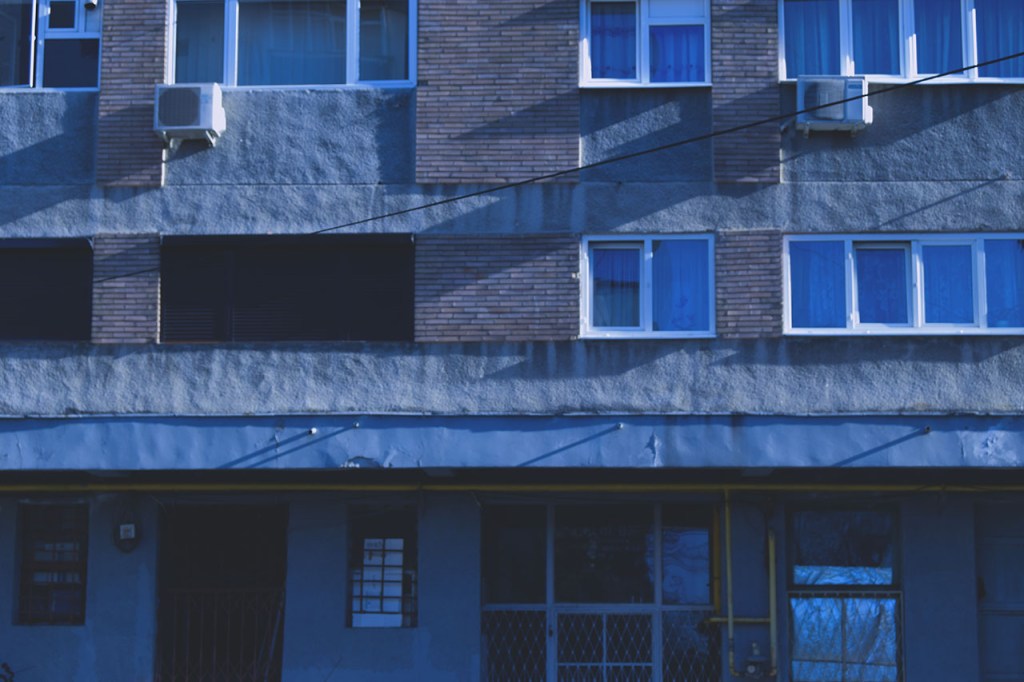
    The cold rawness of the stark, monolithic, slightly dystopian aesthetic carries echoes of the past seeping into the future, haunting my perception of self and place. It helps if the spaces appear desolate, without disruptions. And the atmosphere of a new place feels slightly more otherworldly when the boundary between Brutalist architecture and nature is blurred. Even better if the structure is abandoned and derelict. Although the haunting quality is already inherent in the eerie architecture of Brutalism. Moreover, for me, since I lived in a brutalist-socialist block – a type of structure that was ubiquitous during childhood, when I encounter a different version of the aesthetic of brutalism, in a new environment, the familiar and the unfamiliar collide.

    It’s an uncanny feeling of revisiting a liminal place, the archetypal presence of the homely that is rendered alien, a ghostly intersection of memory and materiality. Being haunted by a double, the self becomes partly ‘other’, being watched by a higher external force whilst existing ‘elsewhere’, until that sense diminishes as the self acclimates to the environment and everything else outside that space actually becomes temporarily otherworldly. Temporary identity and place are interlinked, so whenever I see a new architectural space with Brutalist exterior design, my past selves which visited other Brutalist spaces are having a gathering and collectively pondering how inhabiting such an architectural space both preserves and erodes the past.

    Brutalist design…both intimate and vaguely distant, startling and infused with echoes of sci-fi narratives, comforting yet unsettling. Inspiring a homesickness for a place that never actually existed and will probably never materialise, a chimeric shadow world of inner phantoms, a world that borrows elements from the geography of my childhood as well as from tech-noir films. Such experiences have a destabilising effect – surreal, almost. With their ghostly, whispery grey walls, the buildings seem to be living, breathing things, rather than static. There is an undertone of fear and anxiety, mixed with rapture. As we know, the uncanny can also signify a longing for a return to a state of unity, which may be intertwined with a more sinister primal desire, a pull towards inorganic dissolution. Hunting the familiar image of tech-noir dystopia, both living and dead, can symbolise a repetition compulsion.

    Whilst exploring and intimately absorbing a Brutalist space, I uncover lost poetry and sensory fragments of my inner world, feeling strangely at home even as I find myself in a place of liminality. When I exit a Brutalist Zone (particularly one that I’ve just seen for the first time), everything else feels temporarily alien, unreal (I say a new one because through repetition, the allure is demystified and diminished). It’s a state of mild spiritual dissociation that makes me feel like I can gain essential knowledge about myself, about consciousness and about the universe, whilst acquiring a sense of distance from myself.

  • Urban Fragmentation and Decay

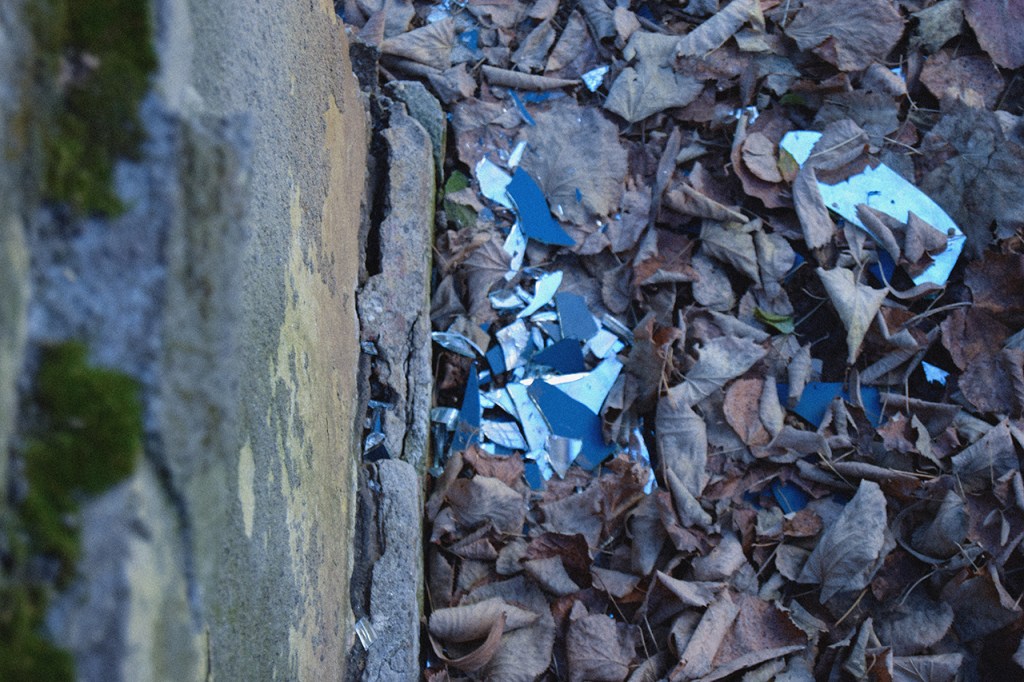
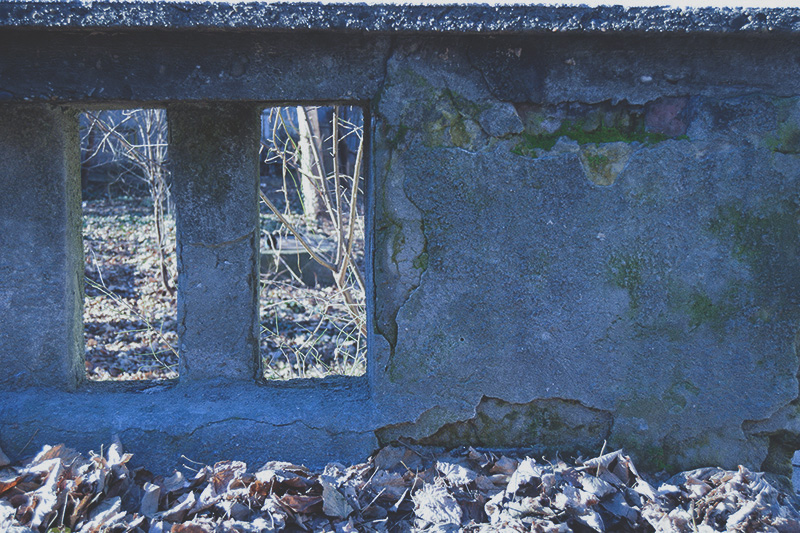
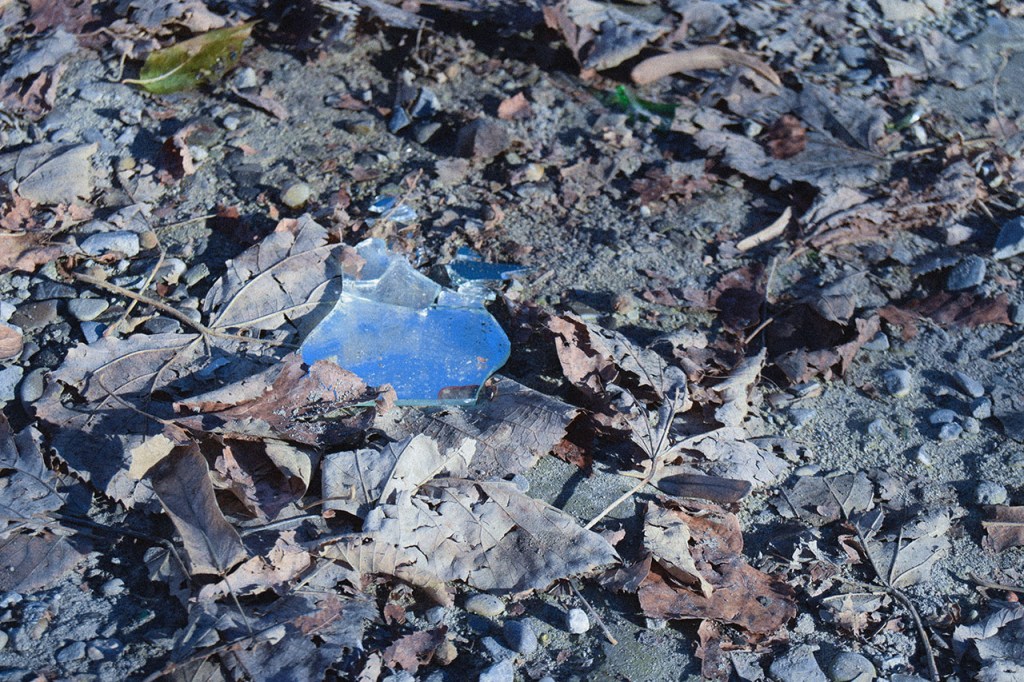
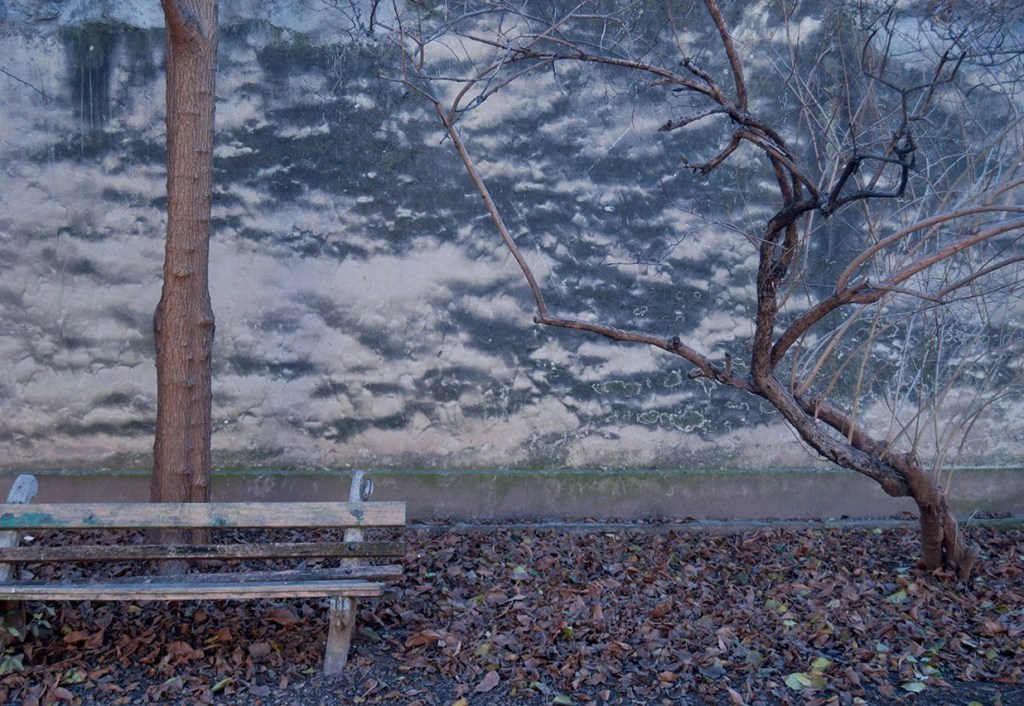
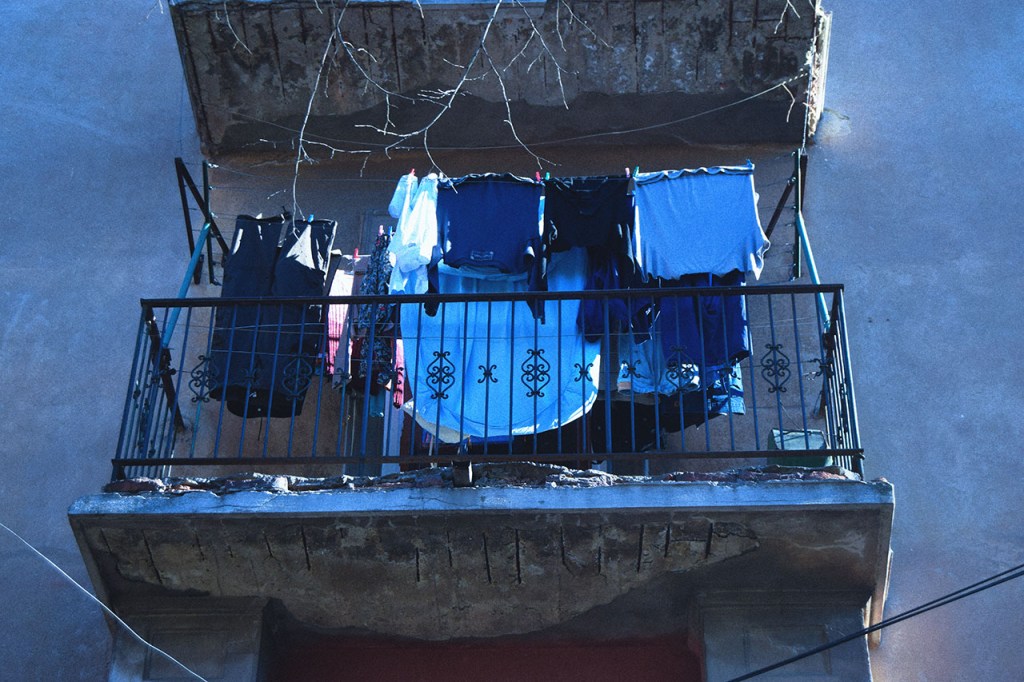
    Here is a slideshow of photographs that I took a while ago, in two cities where different chapters of my life unfolded. The theme was fragmentation in urban geography. I’m always inspired, affected, infected, impacted by place; there is almost a certain sense of symbiosis that I feel with my surroundings wherever I find myself, which is why my environment is so important to me, sometimes more so than people, and it often dictates how I feel. Of course, there are exceptions, it can also work the other way around, if there are other overpowering aspects in my life that induced a certain feeling or state whilst I existed in a particular space, then the feeling will haunt the place – if that state was depression for instance, then I probably imbued every corner with depression, it would colour my perception, and it might take a long time to no longer associate the geography of the place with the geography of my emotions at that particular time and to be able to return to the physical space without feeling the echoes, if I ever do return. Besides a depressive state, which is alienating in itself, perhaps even worse and more alienating, is the feeling of being trapped. I suppose because in some cases depression can constitute a bridge that invites empathy and connection if it isn’t also accompanied by feeling trapped, whereas very often feeling trapped is like existing within a soul-sucking veil, or indeed a bell jar, that makes you daydream about jumping off a bridge instead. The way I’m influenced by space is not always intuitive. I’ve always liked the aesthetics of fragmentation and decay within a landscape. One of my favourite adventures has always been exploring derelict factories, forsaken asylums, old Gothic mansions, ruins, and cemeteries. They have the opposite of a depressing effect on me.

  • Self-Portrait

    The spiritual (‘spiritual’ in a secular sense) pride sometimes accompanying the feeling of being attuned to the universe and highly perceptive of shifts in energies, angst, desires, signs of discomfort, motivations, attractions, repulsions, projections, insecurities, prejudice, coping mechanisms, vibrations, the multidimensionality of the human experience, and so on when I walk into a room means that when I am – not by choice – in the disposition that I actually have to go through a break from the reality of existence, I find it hard to open up about my inner experiences even a long time afterwards. Granted, that’s also due to the nature of my experiences, the way they unfold, and the type of real-life material they tend to feed on and feed into. It’s that and the fact that, in my darkest yet lucid hours, my worldview tends to become more assertive, particularly when I feel my boundaries are being crossed, which is what is amplified (and internalised) to surreal levels when I’m thrown into the vortex of my ‘other’ self, which is not something I’d like to consciously/actively even indirectly nurture outside of that.

    Whenever I’ve tried opening up, things have gone chaotically wrong both interpersonally – as once I add that layer it becomes nearly impossible to know others’ angles, and in my subsequent experience of the breaks, which have gone hopelessly meta and more labyrinthine. Things no longer flow naturally in my interactions. And I put a lot of pressure on myself to rewire my thinking patterns in ways that are beneficial to me, but unfortunately, this has come to mean detachment, which implies automatically being less likely to experience positive emotions as well. I have come to accept that only those with a very similar predisposition and psychological history and configuration in addition to moral compass would ever be able to connect with me in any significant way. Perhaps meeting them will give me a feeling of belonging that I’ve not found anywhere, in any context, in my entire life, if I’m totally honest. I mean among those around whom I’ve actually considered (and entertained the thought that) I might belong, as there are many that I’m happy and proud I could never even remotely relate to. I’ve always been pretty individualistic and self-oriented though.

    When I welcomed the possibility of connection, I realised I’m too secular for the spiritual. Too dreamy for the materialistically-inclined. Too pragmatic for the ones who ignore everything worldly. Too realistic and down-to-earth for the self-help community. Too willing to work on myself to be among those with a tendency to neglect and deny all responsibility in a quest for self-preservation. Too pessimistic for the idealistic. Too idealistic for the pessimistic. Too neurotic for the stoic. Too self-contained for the openly and unapologetically neurotic. Too guarded for the emotionally transparent. Too transparency/authenticity-inclined for the ones who repress all ‘negative’ human emotion. This either makes me sound perfectly balanced or dispassionate and insipid. Either way, what I care about is – would I be happy to meet someone ‘like’ me (i.e. alike in significant ways)? Would I be ready? Scared? Threatened due to shadow self denial? Exhilarated? Relieved? Would I even truly see them, and myself in them? I welcome the opportunity to discover, for I usually only feel like I can be myself when I am by myself.

  • A Brief Journey Through Strangely Familiar Narratives in Contemporary Collage Art

    Collage art constitutes a dynamic medium where elements of the familiar are unsettlingly displaced into unfamiliar territories, offering a visceral exploration of the uncanny. Teetering between the comfort of recognition and the chilling thrill of the unexpected, the realm of contemporary collage art opens up a world of paradoxes, where the mundane is rendered extraordinary and the predictable unexpectedly disrupted.

    My recent article at the Uncanny Archive, “Strangely Familiar Visual Narratives: An Exploration of the Interplay between Reality and Unreality in Contemporary Collage Art”, highlights the striking, haunting works of some contemporary collage artists who have had a real impact on various social media platforms. The artists weave evocative visual narratives, each standing out with a distinctive approach to the medium by employing their unique artistic vernacular to translate the ethereal, the uncanny, and the nostalgic into tangible, visual experiences.

    These contemporary collage artists, albeit divergent in their techniques and thematic focal points, share a predilection for the provocative interplay of reality and unreality, echoing the unsettling familiarity of the uncanny in their otherworldly compositions. With techniques crossing the realms of both digital and analogue – such as utilising archaic photographs, drawings, magazine fragments, and ephemera from antiquated encyclopedias, the digitally impactful artists craft narratives that mesmerise, evoke feeling, stimulate the mind, and spark our curiosity.

    Conceptually, they achieve this in various ways, from incorporating familiar objects in strange contexts and vice versa, resurrecting aesthetics and figures from the past which become merged with the present, adding elements from celestial bodies and the untamed natural world as well as layers of subtle commentary, embellishing images with crystals and glitter to promote body image positivity and emotional transparency, and creating an atmosphere that is at times nostalgic, other times ethereal or eerie. Their universe encompasses the Victorians, mythology, religious iconography, silent cinema, French New Wave cinema icons, fashion, pop culture, and more.

  • A Glance

    Caught in between worlds and narratives designed
    from mercurial substances laced with unfathomable fears,
    no longer bothering to convey their intersections
    in a way that integrates with the normal brooding whole,
    still skipping diseased words that hold too much power,
    in hope of discouraging the old forces from slipping in
    like a cataclysmic surge disturbing the ebb and flow of being,
    and because I have a history, yet I don’t like inhibitions
    that render the core watered-down with lifeless inscriptions.
    Anyway, the morning found me sipping the lingering trance of
    dewy dreams of an all too familiar setting, concealed for years,
    interwoven with unfettered thoughts fluttering like harpies
    and kind ravens towards, above, and beyond worlds.
    Later, I consumed a piece of media that bothered me,
    tapping into a growing discomfort at every variation of evil,
    but there’s always a quick fix for that, and I know myself –
    fortunately I can un-see, un-hear such things – a talent of mine,
    born out of necessity, of self-preservation;
    well, it’s because sometimes images used to get stuck
    and replayed over and over again,
    but that’s classified information I don’t want to unlock;
    if nothing else, similar instances are usually eclipsed
    by the life-devouring shadows
    of much more significant worries-
    this is why I don’t mind dwelling on the edge of chaos
    as long as I find my definition of peace in it:
    every new element propels me further, making sure
    I don’t get sucked into the vortex of one.
    Listen, it’s tiring to be driven by the many-eyed wings
    that pierce through subtleties and silvery surfaces,
    to spot pattern discrepancies as easily as one blinks,
    whilst the narrative blossoms like a beautiful acacia tree,
    but this was not an invitation.
    In fact, sometimes, my desires are very simple-
    it should be obvious by now, and
    whether I’m fine or not is irrelevant-
    I want faith, freedom, and to be left to exist
    between the tree and the river.

  • Sci-Fi TV Series tackling Digital Immortality, Uncanniness, Identity, and Depersonalisation – Altered Carbon

    Altered Carbon is the only TV series that I know of that primarily and extensively deals with the transhumanist narrative of digitising, storing, and transferring human consciousness as a way of achieving immortality – and it’s a pretty gripping story if you have a little patience in the beginning whilst the universe is being fleshed out, in order to truly get immersed into the plot and connect with the characters. The story raises questions on human nature, identity loss in a changing, posthuman world, depersonalisation, and the necropolitical implications of a transhumanist future reliant upon biotechnology. The show is based on the eponymous cyberpunk novel by Richard K. Morgan, to which I will also refer to for further contextual information about the conceptual universe portrayed.

    According to one of its founding fathers, Nick Bostrom, transhumanism is defined as “the intellectual and cultural movement that affirms the possibility and desirability of fundamentally improving the human condition through applied reason, especially by developing and making widely available technologies to eliminate aging and to greatly enhance human intellectual, physical, and psychological capacities”. At the same time, it’s also “The study of the ramifications, promises, and potential dangers of technologies that will enable us to overcome fundamental human limitations, and the related study of the ethical matters involved in developing and using such technologies.”

    Bostrom adds: “Transhumanists hold that we should seek to develop and make available human enhancement options in the same way and for the same reasons that we try to develop and make available options for therapeutic medical treatments: in order to protect and expand life, health, cognition, emotional well-being, and other states or attributes that individuals may desire in order to improve their lives.”

    The foundation of transhumanist beliefs and endeavours is built upon the principles of individual autonomy in selecting methods to enhance the body and mind, as well as ethical responsibilities when it comes to optimising living conditions and capabilities. Despite acknowledging potential health risks associated with such technologies, John Harris, bioethicist, advocates for scientific and technological advancements as a means to create a better society, and emphasises the importance of individuals taking responsibility for their actions.

    Enhancement is thus a central belief of transhumanism, which seeks to advance humanity beyond its current natural state. There are many arguments pro and against the transhumanist movement. It has received criticism from opponents who are referred to as “bioconservatives,” including Francis Fukuyama who labelled transhumanism as “the most dangerous idea in the world.” The critiques revolve around the potential for misusing enhancement techniques, which has led to questions about the future of humanity and the accessibility and ethical considerations of these advancements. The opposing arguments state that transhumanist ideas pose dangers in terms of social-political and metaphysical implications. The social-political concerns revolve around the uncertainty of the equal distribution of radical technologies, while the metaphysical dangers involve the impact of these technologies on human identity and meaning. Both types of danger share a common fear, that transhumanism will lead to the end of humanity as we currently know it. As a result, people wonder if a science fiction-like future is possible or desirable, utopian or dystopian, and if we will evolve into something problematically different. Some bioethicists consider that our society is already incapable of morally monitoring its technological progress. There are also worries regarding the abuse of power and discrimination within this scenario. At the same time, our civilization has already made significant progress, but it still struggles to fully embrace or comprehend its own progress. If preceded by an enhancement in morals, transhumanist advancements are generally desirable, as people have always had an interest in improvement, from aesthetic to cognitive and biological. Genetic engineering would be taking such incentives many steps further, however, thus the concept is met with reasonable hesitation and polarising views. Is it against human nature or in alignment with its characteristic of seeking self-improvement?

    The concept of transhumanism has been intertwined with the science fiction genre since its inception. William Gibson’s novel Neuromancer (1984), a foundational text within the cyberpunk genre, features the character of Molly, a skilled assassin whose body has been technologically enhanced for increased efficiency and durability. Molly’s enhancements include surgically inserted glasses that seal her eye sockets and retractable scalpel blades beneath her nails. Apart from the belief that the human body can be enhanced and strengthened, transhumanism notably explores the potential of preserving consciousness and transferring it to a new body when the original body deteriorates due to age, illness, or weakness. According to Max More, a philosopher and futurist, despite diverging in opinions regarding other aspects, all transhumanists are in agreement that it is advantageous and achievable to utilise technology to overcome the biological limitations of death and aging. The pursuit of infinite life and youth is essential to the transhumanist mission, as the possibilities afforded by psychological, cognitive, and other enhancements will be constrained by a body that inevitably deteriorates and perishes. The dedication to hyperlongevity constitutes the central theme in the futuristic universe of Altered Carbon, where it’s called ‘Stack technology’, whilst ‘re-sleeving’ is the process through which consciousness is transferred from one body to another through the Stack devices (Bodies being referred to as ‘Sleeves’ throughout the book and the show).

    In Altered Carbon, people are able to transcend and enhance their human physicality due to technology that not only stores their consciousness but can even be instantly transferred to bodies in faraway places i.e. other planets. For most citizens, human consciousness is recorded via the cortical stack which is implanted at the base of the skull when they are one year old. When someone dies, if they can afford it and if they haven’t been charged with serious crimes, they can have their stack uploaded, or ‘re-sleeved’ into other bodies; otherwise, their stack gets shelved. Death with no chance of resurrection is only guaranteed by irreversibly damaging the stack. That is, unless they can afford to have a D.H.F backup, which is a perfect duplicate of a person’s mind that gets regularly updated through a process known as ‘Needlecasting’ and can be stored in a safe place. Placing a duplicate consciousness in another body, known as ‘Double sleeving’ is also possible, but illegal and can lead to a death condemnation. Some people have ‘religious coding’ on their stacks, which theoretically means they cannot be revived, but this can be and is often bypassed by their relatives.

    According to the film’s lore, the cortical stacks were made of alien metal and developed by technologically advanced creatures from another planet, who were also capable of manipulating human consciousness. The initial purpose of the devices was interstellar travel: human consciousness was downloaded and transmitted to Sleeves from distant planets through ‘Needlecasting’. After the non-terrestrial civilisation left Earth, human scientists reverse-engineered and refined the technology and created a system that allowed (some) people to constantly upgrade between bodies to preserve youth and health. Since this constitutes a regulated technology, there is a predictable ethical concern as wealthy citizens tend to be able to possess multiple bodies, travel across planets, and have a real-time copy of their consciousness stored in a safe place, whilst the poor might either get stuck in unhealthy, old, deteriorating bodies or live a fleeting existence.

    An interesting aspect to note is that the book that the TV show is based on presents a wider variety of options that people have after death when it comes to re-sleeving, based on their budgets, such as clone replacements (the most expensive option), organic bodies, synthetic bodies, or the cheapest option, which is existing as a disembodied presence in a virtual reality setting. This summons up further questions about identity and reasons for existential crisis; for instance, the book characters who transfer their consciousness into synthetic bodies feel detached from their humanity, as they are no longer constrained by the limitations of human biology and they become increasingly removed from the physical sensations and emotions of their organic counterparts. Even more so, the ones who end up existing in digital form feel isolated, cut off from the real world, and deprived of sensory experience, although their disembodied cybernetic existence also has the advantage of not being limited by the constraints of physical bodies and the physical world. Their existence is, however, dependent on corporations and their host servers.

    (more…)
  • A glimpse into the NDE in “Proof of Heaven”

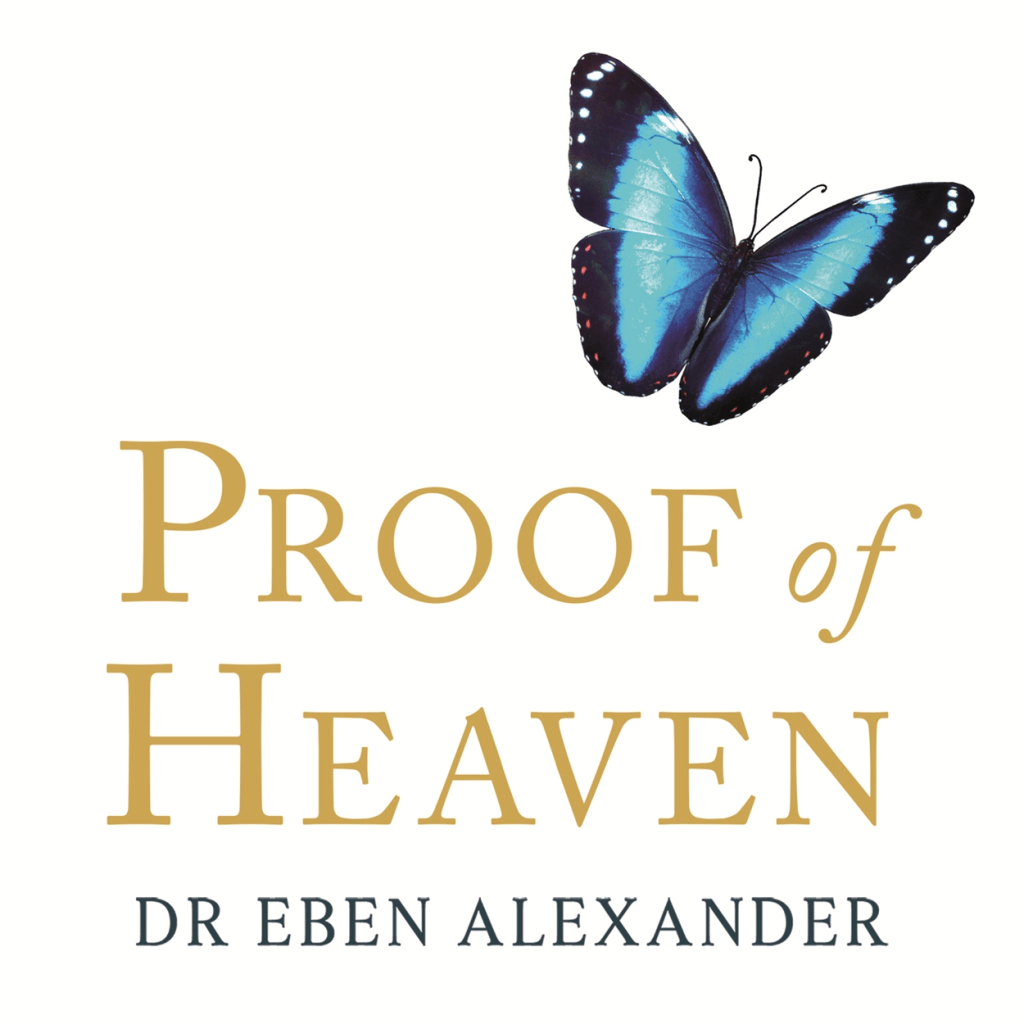
    I’ve recently read Proof of Heaven: A Neurosurgeon’s Journey into the Afterlife, by Dr. Eben Alexander, who documented a miraculous experience that led him to believe that the death of the brain and of the body doesn’t constitute the end of existence, that consciousness lives on after death and god exists and loves all beings. He dedicated this book to people like him (and me) who are sceptical about NDE recollections. As someone with an obsessive preoccupation with the subject of NDEs and insights into occurrences that hint at the phenomenon of consciousness existing independently from the brain, I’ve had this one on my reading list for a while. The way the narrator describes his communication style in the idyllic world he visited is not unlike my own transcendental experience from some time ago: wordless, felt, almost telepathic, and ineffable.

    The narrator views his NDE as a life-turning event that led to a metamorphosis of his life as he knew it, due to a very significant paradigm shift regarding a fundamental belief. As a firm believer in science, although hoping to be proven wrong, he had always aligned with the view that the brain equals consciousness, that once the neocortex is switched off, the possessor vanishes into non-being. He had read many recollections of NDE subjects who claimed to have navigated otherworldly landscapes or talked to god during their experiences, but he always thought such instances were still brain-based, that they happened whilst the brain was not totally shut down – for instance, if someone’s heart was temporarily off and their neocortex was inactivated for a while yet not irreversibly damaged and irretrievable. That was before he was afflicted with a very rare case of bacterial meningitis and, whilst in a coma and with a completely inoperative neocortex – as he claims, the deeper part of him – that he had previously described as existing beyond time – deserted his body and his mortal identity, including his memories and his self-concept, to wander into other realms, meet otherworldly beings, have a conversation with god, and have glimpses into higher dimensions.

    During his comatose metaphysical odyssey, he delved into the Underworld, the Gateway, and the Core, places that he was convinced were real.

    The Underworld was characterised by “Darkness, but a visible darkness-like being submerged in mud yet also being able to see through it. Or maybe dirty Jell-O describes it better. Transparent, but in a bleary, blurry, claustrophobic, suffocating kind of way. Sound, too: a deep, rhythmic pounding, distant yet strong, so that each pulse of it goes right through you. Like a heartbeat? A little, but darker, more mechanical-like the sound of metal against metal

    Whilst in this pulsing underworld, his consciousness was devoid of memory or concepts of identity, his existence was not limited by time, and he felt like his awareness was uncannily merging with his surroundings. In a way, the experience was dreamlike, as he could perceive what was happening around him, without having any self-concept. He didn’t have a body or at least the awareness of one, or the capacity to form words. It felt like he had regressed to a primordial state, he ponders, as far back as the bacteria that infected him, causing his illness – in a world devoid of emotion, logic, and language.

    The traveller’s extremely apathetic predisposition gave him a certain invulnerability, due to his detachment from his memories and sense of self. Although he could judge that he may or may not survive that place, thoughts of either option caused nothing but indifference.

    The narrator mentions this underworld dwelling was like being inside a murky womb with bloody vessel-like ramifications of a dirty scarlet aglow, or like being buried underground yet still able to see the matrixes of roots.

    I am going to include his entire description of the place, because I feel it is a great image of an uncanny liminal space:

    “The longer I stayed in this place, the less comfortable I became. At first I was so deeply immersed in it that there was no difference between “me” and the half-creepy, half-familiar element that surrounded me. But gradually this sense of deep, timeless, and boundary less immersion gave way to something else: a feeling like I wasn’t really part of this subterranean world at all, but trapped in it.

    Grotesque animal faces bubbled out of the muck, groaned or screeched, and then were gone again. I heard an occasional dull roar. Sometimes these roars changed to dim, rhythmic chants, chants that were both terrifying and weirdly familiar-as if at some point I’d known and uttered them all myself.

    As I had no memory of prior existence, my time in this realm stretched way, way out. Months? Years? Eternity? Regardless of the answer, I eventually got to a point where the creepy-crawly feeling totally outweighed the homey, familiar feeling. The more I began to feel like a me—like something separate from the cold and wet and dark around me—the more the faces that bubbled up out of that darkness became ugly and threatening. The rhythmic pounding off in the distance sharpened and intensified as well—became the work-beat for some army of troll-like underground laborers, performing some endless, brutally monotonous task. The movement around me became less visual and more tactile, as if reptilian, wormlike creatures were crowding past, occasionally rubbing up against me with their smooth or spiky skins. Then I became aware of a smell: a little like blood, and a little like vomit. A biological smell, in other words, but of biological death, not of biological life. As my awareness sharpened more and more, I edged ever closer to panic. Whoever or whatever I was, I did not belong here. I needed to get out. But where would I go? Even as I asked that question, something new emerged from the darkness above: something that wasn’t cold, or dead, or dark, but the exact opposite of all those things. If I tried for the rest of my life, I would never be able to do justice to this entity that now approached me . . . to come anywhere close to describing how beautiful it was. But I’m going to try.”

    The being of light he continues to describe was spinning, emitting shiny, white-gold filaments causing the darkness enveloping the protagonist to fracture and disintegrate. Eventually, the whirling light revealed an opening, a portal that the traveller went through, feeling like being born into an idyllic, blissful world, where the inside and the outside were intertwined and where he also experienced uncanny feelings of déjà vu.

    “Below me there was countryside. It was green, lush, and earth like. lt was earth, but at the same time it wasn’t. It was like when your parents take you back to a place where you spent some years as a very young child. You don’t know the place. Or at least you think you don’t. But as you look around, something pulls at you, and you realize that a part of yourself-a part way deep down-does remember the place after all, and is rejoicing at being back there again.”

    The narrator continues to emphasise the realness of the place throughout the dreamlike descriptions. He also describes “the single most real” experience of his life: an encounter with a girl who communicates a special, soothing message to him by transferring its conceptual essence into his mind, wordlessly. Whilst acknowledging the limitations of earthly language, he translated the message as such:

    “You are loved and cherished, dearly, forever.”

    “You have nothing to fear.”

    “There is nothing you can do wrong.”

    Inside the Core, advanced, ethereal, winged beings, scintillating creatures with silvery bodies, living sounds, and an elusive divine being blessed the surroundings. Everything was part of Source. After silently asking questions such as “Where is this place? Who am I? Why am I here?”, he mentions that “the answer came instantly in an explosion of light, colour, love, and beauty that blew through me like a crashing wave. What was important about these bursts was that they didn’t simply silence my questions by overwhelming them. They answered them, but in a way that bypassed language. Thoughts entered me directly. But it wasn’t thought like we experience on earth.”

    This part was what struck a chord with me because of my own experience of transcendence. There is an uncanny resemblance between my own otherworldly encounter and the excerpt above, particularly the communication style, which is something that I’ve written about on my blog at some point and in my diary more extensively, and our words seem to describe a similar encounter – albeit with an extra element that was pretty essential in mine. It’s also relevant to say I was not in a coma or on DMT, and there were no perceptual hallucinations, it was an intense inner feeling whilst I was caught somewhere between worlds.

    I would love to end this on a positive note and to say that this book will convert your world view on matters of the afterlife. Naturally, however, despite the credentials of the author, I was inclined to take the subject of his writing with a grain of salt, especially in regard to the moment when the NDE happened. I was so excited about this non-fiction book because it was written by a neurosurgeon who expressed his belief in science throughout it, as well as confidently asserting that his conclusions were grounded in medical analysis of his experience and on his deep familiarity with the most advanced concepts in brain science and consciousness studies. Normally when I read about NDEs, they often appear intertwined with the notion of a DMT-induced hallucination and there remains an unresolved issue of whether the voyage to alternative realms occurred during the coma or immediately before or after it, which is more scientifically plausible. This makes sense, especially considering the numerous cases of people who have miraculously awakened from extended comas, only to confirm that they only encountered nothingness beyond. There have been neuroscientists who also discredited the supernatural element of Dr Eben Alexander’s story, saying it was unscientific and justifying it using the same explanation I mentioned. One of the doctors involved in his case also stated that Eben was hallucinating before he went in a coma.

    And I understand and still feel the scepticism. However, because of my experiences, I must say this story opens up that door of the esoteric inside my mind a little bit wider. I shall see if reading Dr Raymond A Moody will have the same effect.

  • Content Marketing for Art Brands

    Content Marketing for Art Brands

    To thrive in the fast-paced, digitally-driven world, art brands including galleries, art magazines, and artists need to harness the potential of content marketing by creating content that is not only informative, engaging, well-organised, and aesthetically cohesive, but also resonates with their target audience. Employing impactful digital marketing tactics whilst being aware of the best art marketing practices will make a notable difference to your business.

    Content marketing is all about storytelling, showing your passion, and revealing your expertise and insights, whilst providing value for your readers and viewers. Content marketing doesn’t feel like marketing, because it focuses on sharing your vision and enriching people’s lives, whilst also building your brand loyalty by allowing your audience to relate with you and form an emotional connection. Your content doesn’t have to strive to appeal to everyone: identify your target audience and focus on your niche, but don’t be afraid to explore and leverage multiple types of content and different platforms.

    Remember, whereas it’s important to use various channels and content formats to connect with and build a loyal audience by sharing your story, inspiration, knowledge, behind-the-scenes, views on news, additional services and projects, exhibitions, and so on, don’t feel like you have to disclose everything – especially as an artist, it’s understandable if you’d rather provide tantalising, elusive glimpses into your art and partial clues to maintain an aura of mystery surrounding your work. As an art business owner in general, focusing on quality and substance is the optimal approach. The key is to offer real value to your audience and make them feel like they are a part of your world, or that your inner realities meaningfully intersect. Make sure your content is well-written, intriguing, visually striking, recognisable, and shareable. The balance between revealing and concealing is up to you and what feels authentically on-brand for you.

    If you’re seeking to make your art brand more visible and successful in the virtual space, check out my top 10 tips on how to implement effective content marketing strategies to achieve your marketing goals and propel your business to new heights.

    Find out useful information ranging from tactics for growth, social media marketing, SEO tips, collaborations, e-mail subscriptions, and different types of content, to content marketing ideas tailored to the art world by reading my latest blog post via www.dianamarindigital.com:

    https://dianamarindigital.com/2023/03/29/boost-your-art-business-with-content-marketing-tips-for-galleries-and-artists/

  • The Uncanny Website Revamp

    The Uncanny Website Revamp

    I just re-vamped the Uncanny Archive website, making it more atmospheric whilst including descriptions of different categories of the uncanny, as well as personal insights and additional information on the Freudian roots of the concept. There will be more web content coming up soon, so keep an eye out, especially if you’re a fellow lover of uncanny films and intriguing, moving narratives.

    Within the first pages of his essay on Das Unheimliche, Freud adopts a humble tone, acknowledging that his analysis is limited by the lack of exposure to foreign literature due to conditions in the immediate post-World War I period. Within this historical context, the psychoanalyst’s interest and fascination with the uncanny arose from his experience treating post-war traumatic cases. This is evident in his essay, which consistently gravitates towards the subject of neurosis and the significance of repressed content of thought in the manifestation of the uncanny. 

    Freud’s work itself turns out to possess some of the uncanny characteristics it describes. First of all, its purpose is to reveal something that is concealed within the parameters of subjectivity of feeling, of experience, and memories. […] Another aspect that Das Unheimliche shares with its subject and with many uncanny narratives is that it is haunting, repetitive, and filled with uncertainty. […] Certain works of art encompass that combination of factors through which the uncanny is born out of art and transcends into life, making the reader and the viewer experience it.

    Visit the Uncanny Archive website to read more.