The Neon Demon (2016), directed by Nicolas Winding Refn, is a surreal hyper-stylised psychological horror film unveiling a dark satire of the fashion industry. Elle Fanning plays Jesse, who epitomises the trope of the pure, genuine, angelic character entering a wicked world filled with artificial, soulless, manufactured characters, and becoming tainted by her surroundings. Meanwhile, everything spirals out of control and eventually down into the macabre and the gruesome.
The hallucinatory and grotesque spectacle is shown through a slick fashion commercial aesthetic, accompanied by fitting synth sounds and little dialogue, as the film relies on its bewitching atmosphere. Many parallels can be drawn between Refn’s film and the stylish Japanese psychological horror film, Helter Skelter (2012), which was potentially a source of inspiration: they are both bloody, visually stunning, surreal, satirical reflections on the artificiality of the fashion world. They even share torn out eyeballs – the difference being The Neon Demon goes all the way when one character eats a regurgitated eyeball, in one of the many scenes alluding to the theme of women devouring each other and destroying themselves in pursuit of beauty-based fame. The shock value of The Neon Demon is continuously impactful, with elements ranging from self-mutilation and absurd knife fights to cannibalism and necrophilia.

The ghastly, sickening acts and soft gore visuals are mixed with beautiful, compelling imagery and a glamorous style in such a harmonious way, as if purposely trying to make it hard for viewers to be grossed out; instead, the viewer is under a spell, watching the unfolding of a disturbingly strange dream.
The majority of criticism the film has been subjected to revolves around it being shallow, reductive, objectifying, offensive, form over content. However, the film is clearly self-reflective in the sense that it’s a critique of the things it depicts and the things it exaggerates to an absurd degree. Sometimes the subtext eludes viewers because the film might appear to revel in its own madness and in the culture it condemns, but, in the end, every viewer takes something different from the film. The Neon Demon is hypnotic and compelling with its gripping atmosphere, its dual aesthetic- incorporating both the glamorously exquisite and the macabre, and its bewildering dream sequences.

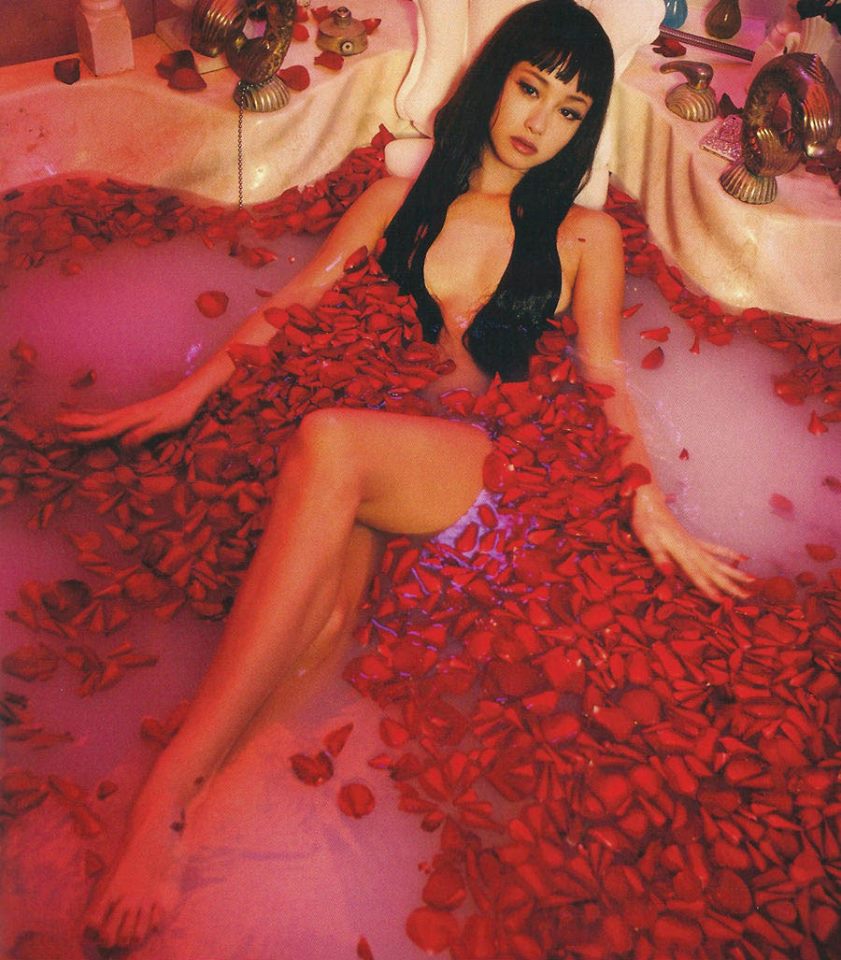 Based on the Japanese exploitative psychological horror manga by Kyoko Okazaki, Helter Skelter (2012), directed by Mika Ninagawa, is a disturbing hyperstylised surreal drama depicting the chaotic life of manufactured superstar Lilico, who navigates the dark side of the fashion world. What lurks beyond the glamorous facade is portrayed as not only sad, but grim, and merging with the macabre. Whilst Lilico gradually delves into psychotic delusions, the film touches upon notions of transience, artificiality, the impact of stardom and its correlation with mental state deterioration, the identification of the self purely with the image and the (fluctuating and inevitably fading) success of the image, and the consequent predictable corruption of the soul.
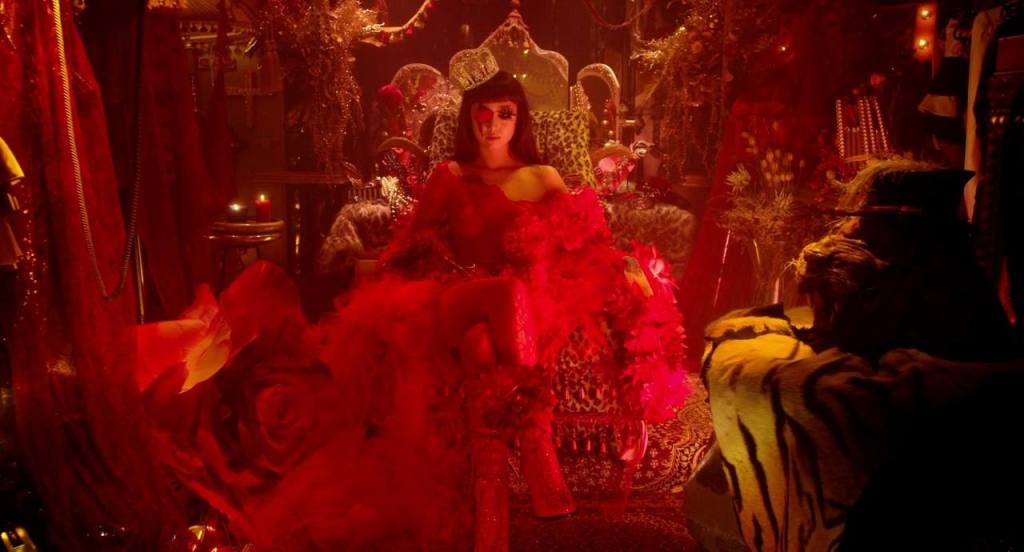
Lilico, played by suitably controversial Erika Sawajiri, is an influential and highly appreciated Japanese supermodel whose beautiful appearance permeates the news, magazines, and minds of Japanese teenage girls who look up to and aspire to be her – or the idea of her. Behind the scenes and the smiles, she embodies a clear case of narcissistic personality disorder, her existence solely dictated by an insatiable ego which is fed by fame and dependent on the recognition of her physical beauty and success. In some ways, her life seems to be a heavenly dream that she just grows tired of: she is always found either revelling or agonising in aesthetic, lurid, and shiny surroundings, around people who satisfy her every whim. She lives in an alluring, luxurious, decadent place, where the colour palette is dominated by red, the vividness of the decor being reminiscent of Argento’s classic, Suspiria (1977).
Jaded, tragically cynical, shallow, and malicious, Lilico ends up being a toxic presence in the lives of the few people in her proximity, constantly undermining and treating her assistant harshly despite her blind devotion, and trying to sabotage others’ happiness. Her self-centred, vitriolic demeanour is counteracted by moments of vulnerability in which she drowns in her own dramatic sadness, as depicted in explicit shots finding her collapsed and lying motionless on the floor. Lilico is unhinged, oscillating between feeling on top of the world, completely apathetic, in total agony, and at times terrifyingly psychotic. The psychotic episodes unfold like visually stunning, distorted psychedelic nightmares, featuring blood rain, optical illusions, and ominous butterflies.
When another model enters the picture and seems to steal the spotlight, threatening her goddess status with her presence, Lilico is faced with the acute awareness of the flimsy quality of the fashion industry. Consumed by feelings of helplessness and resentment, she wants to destroy the new star, Kozue Yoshikawa, despite acknowledging the inherent ephemeral nature of modelling careers and the hunt for newness. However, since her numerous cosmetic surgeries are taking their toll as the clinic she went to is accused of suspicious conduct in their treatments, Lilico’s physical health diminishes and she ends up destroying herself and performing a shocking act in front of a myriad of cameras pointed at her- an act which, of course, involves the eyes.
Aesthetically, Helter Skelter is a hypnotic feast for the senses, which is unsurprising considering the director of the film is Mika Ninagawa, who has a background in commercial photography and a lurid, vividly-coloured signature photographic style. The message is transparent in this twisted, grotesque, yet highly aesthetic spectacle, namely a poignant and compelling critique of the fashion world, its objectifying nature, and the concept of stardom which encourages the cultivation of appearance over essence. The protagonist displays a perfect, glamourous, appealing image out into the world, whilst being rotten on the inside- both mentally and physically. Lilico is unequivocally damned, however not entirely responsible for her own damnation.


 DIANA MARIN