Category: reviews

  • A glimpse into the mind of Louise Bourgeois: art & psychoanalysis

    Louise Bourgeois viewed art as an alternative form of psychoanalysis, an unravelling of the psyche, as it is based on exploring unconscious associations. Currently on display at Hayward Gallery, in London, The Woven Child exhibition features sculptures that explore ambivalent mental states, past selves, ghostly memories, and physical and emotional pain, as well as art installations incorporating textiles, old fabrics, needles, and spiders – which she views as protective repairers, rather than frightening figures. The spider motif is associated with motherhood, whilst the process of weaving is also a metaphor for mending family relations.

    Delving into her work can be an unsettling process. In “Louise Bourgeois, Freud’s Daughter”, a book that also features rare excerpts from Bourgeois’ notebooks and diaries, Juliet Mitchell hints at the uncanny effect of her work, mentioning the ambivalence of the emotions felt due to the way her art taps into past and present mental states. She also emphasises that Bourgeois’ wish was for the viewer to focus on their own (unconscious) response to her work, rather than wondering about her own free associations. This aligns with the discourse on the uncanny, which inherently relies on the subjective experience of the viewer. Objects are usually not thought of as inherently ‘uncanny’. Unconscious responses to her work (and art in general) can be similar, consistent, despite the fluctuations in our psychological configuration and in the psychic, repressed material that triggers the response.

    Although this is an oversimplification of the themes she depicted, her innovative work is in part fuelled by a resentment towards her father and an admiration for her mother. According to Mitchell, Bourgeois was obsessively fascinated with her own childhood and afraid of her own capacity for aggression (a trait that is especially condemned in women). She also sublimated sadistic, vengeful drives through her art. In her therapy sessions, she tried to question the “nice girl” tendencies, resurrecting the buried self. She allowed herself to express rage and criticism towards Freud, Lacan, and her own psychoanalyst, Lowenfeld, whilst appreciating Freud’s “opponents”, Jung and Klein.

    Despite being engaged in Freudian psychoanalysis for a significant period of her life, Bourgeois wrote an essay titled “Freud’s Toys”, in which she expressed the view that Freud’s method wasn’t helpful for artists. There tends to be an ambivalence in her statements regarding both the function of art and the links between the creative and the psychoanalytical process: whilst she acknowledged they are both forms of psyche excavation, metamorphosis, and resurrection, her reinforcement of the image of the suffering, tormented artist appears to be incompatible with the ‘talking cure’.

    She pointed out that “To be an artist involves some suffering. That’s why artists repeat themselves – because they have no access to a cure”.

    At the same time, she stated: “The connections that I make in my work are connections that I cannot face. They are really unconscious connections. The artist has the privilege of being in touch with his or her unconscious, and this is really a gift. It is the definition of sanity. It is the definition of self-realization.”

  • Francesca Woodman- haunting self-portraits

    Francesca Woodman- haunting self-portraits

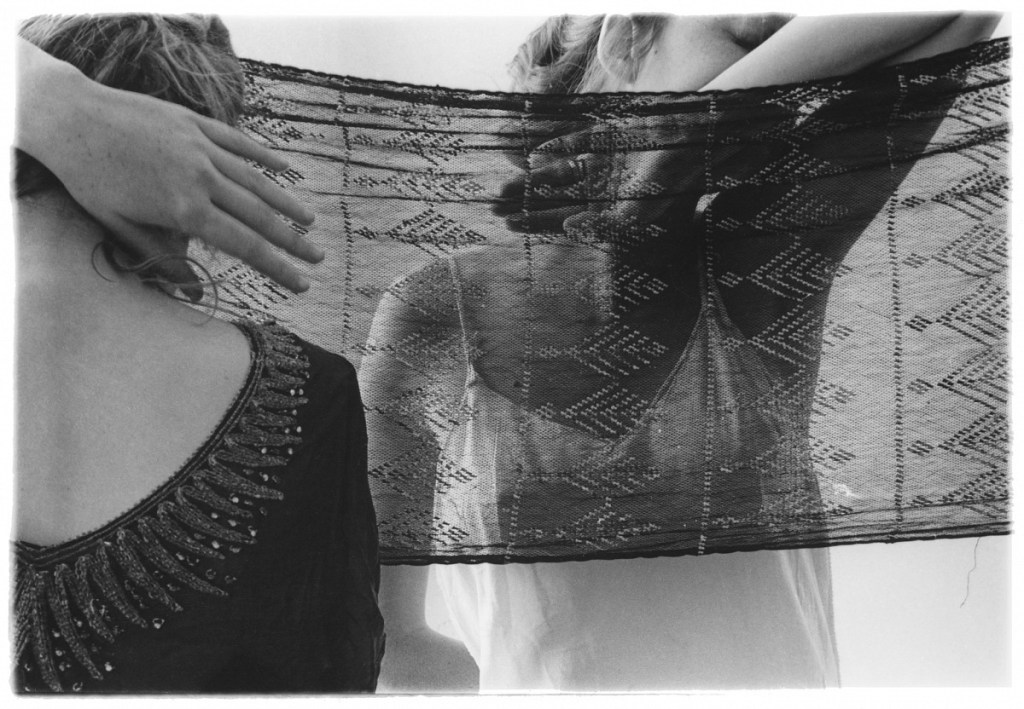
    Francesca Woodman’s iconic oeuvre includes staged artful self-portraits exploring the relationship between body and space and aspects of identity, featuring her often nude or semi-nude body either in motion, fragmented, collapsed or disguised, like a ghostly, elusive presence in a seemingly abandoned domestic space. The uncanny mise-en-scene includes disintegrating decor and collapsing structures, contributing to the atmosphere of alienation and desolation. The haunting cinematic portraits evoke a sense of remoteness, but also timelessness, whilst alluding to the fluidity of self-image, sexuality, the subject-object dichotomy, and the ambiguity of existence and identity- also emphasised by the blur effect achieved by slow shutter speed. The choice of black and white photographs and a fashion style characteristic of previous eras further emphasises the uncanny atemporality. Whilst her photographs reveal a tendency towards and concern with neuroticism and self-dramatisation, her parents emphasise that art critics tend to infuse her work with underlying political and feminist themes whilst missing her playfulness, humour, and irony- perhaps more transparent in other less-known photographs. The mythologisation of her artistic identity might partially be influenced by her tragic suicide at the age of 22, at the end of a depressive episode.

    Corey Keller, a curator of photography at the San Francisco Museum of Modern Art, mentions: “Art students are drawn to the conviction she brought to her work and, in contrast to the cool slickness of the digital, it embraces tactility and decay in a very sensual and seductive way.”

  • Analysis: Meshes of the Afternoon (1943): a spiralling lucid nightmare, Maya Deren, & A dialogue with the Unconscious

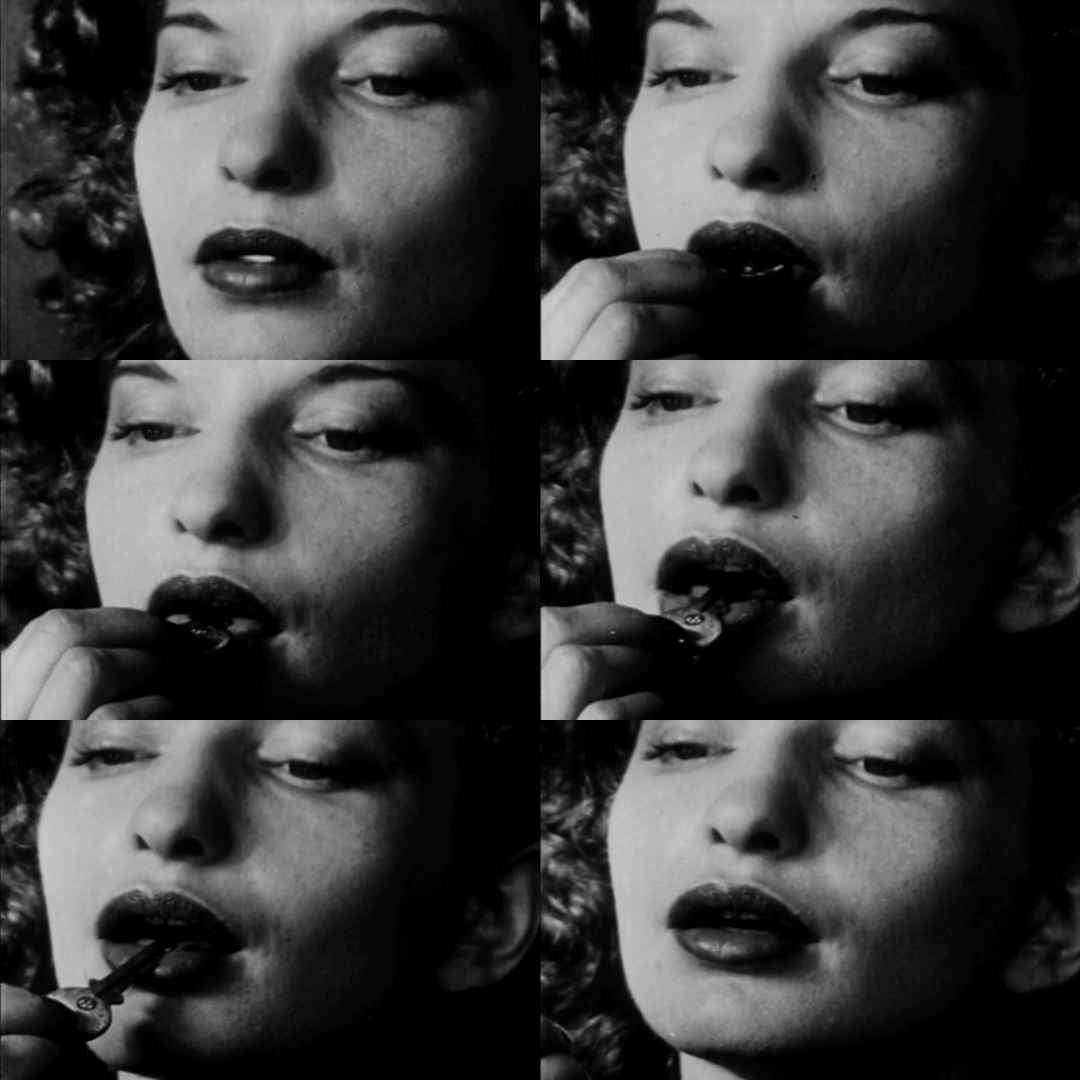
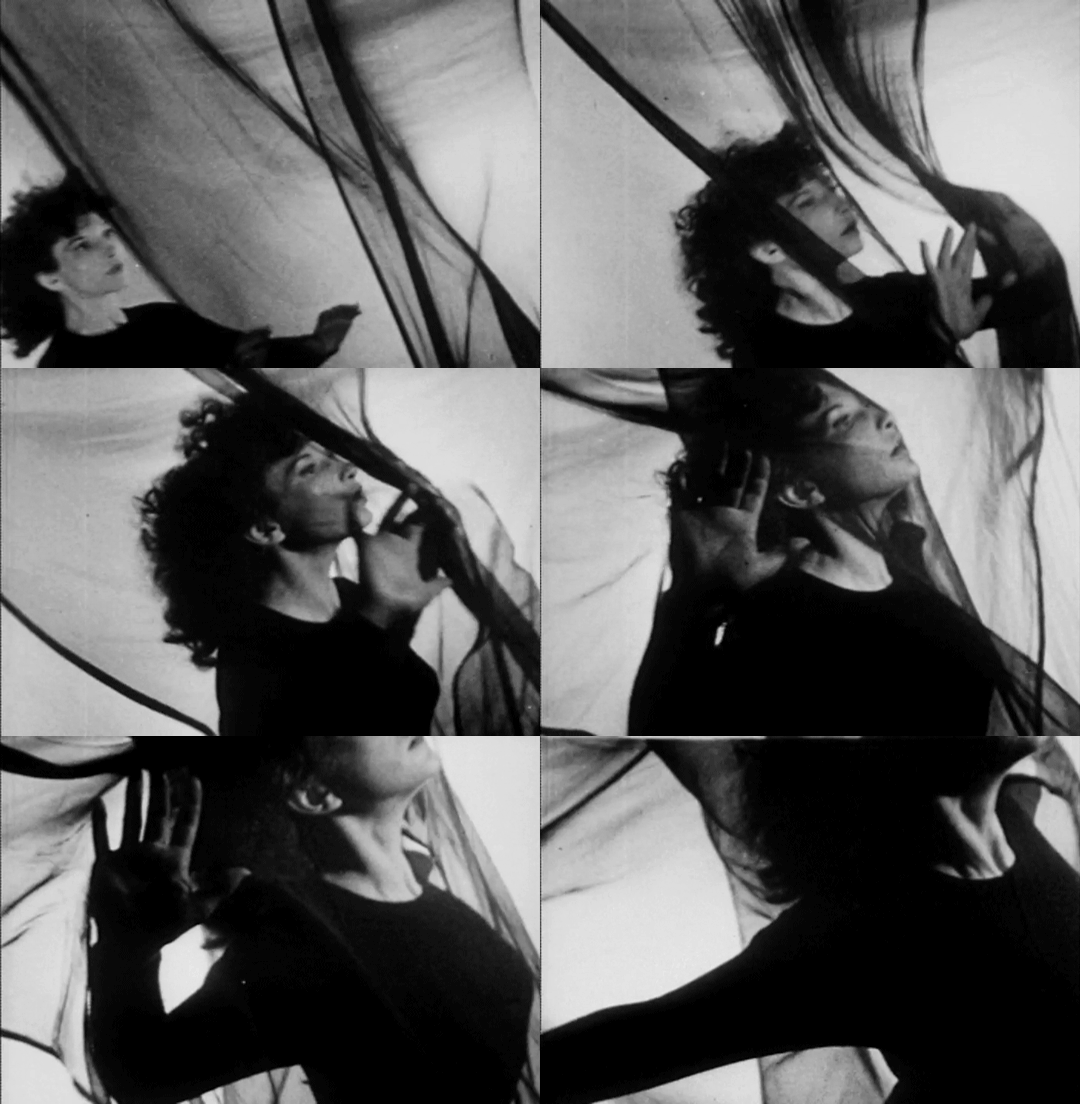
    Meshes of the Afternoon (1943) is a memorable, experimental, surreal short film directed and written by Maya Deren. Referred to as poetic psychodrama, the film was ahead of its time with its focus on depicting fragments of the unconscious mind, externalising disjointed mental processes, dreams, and potential drama through poetic cinematic re-enactments brought to life by uncanny doppelganger figures. The enigmatic protagonist, played by Deren herself, enters a dream world in which she finds herself returning to the same spots and actions in and around her house, chasing a strange mirror-faced figure in a nightmarish, entangling, spiralling narrative. Whilst she ritualistically goes through nearly identical motions, with some slight changes, within a domestic space that is imbued with dread and a sense of doom, unreality, and foreignness – we also witness glimpses of multiple versions of herself, watching herself. The camera shifts from subjective to objective angles as the self-representation of the protagonist alternates between the dichotomous concepts of the self and the “other”. The domestic space revolves around certain recurrent symbolic objects. The film conjures up the uncanniness of dissociation or, more specifically, depersonalisation; self-obsession, a woman’s dual inner/outer life and subjective experience of the world, all congruous with Deren’s interest in self-transformation, interior states, surpassing the confines of personality and self-construct, as well as the self-transcending rituals of Haitian Vodou. The dream story, culminating in death, symbolically alludes to the -sometimes strange and terrifying- initial, non-rational stage of the Jungian process of the “transcendent function” (the symbolic confrontation with the unconscious) leading to the separation of awareness from unconscious thought patterns and the liberating reconciliation between the two opposites: ego and the unconscious, which also has the effect of integrating neurotic dissociations.

    Continuity is absent in the disjointed dream narrative of the film. The woman goes up the stairs inside the house and unpredictably emerges from the window in a haunting shot, wrapped in and caressed by soft, semi-transparent curtains. After catching her distorted reflection in the polished knife, the camera follows her fluid bending movements as she is crawling on the staircase, whilst being strangely blown away by the wind in various directions within a claustrophobic space, levitating, trying to hang onto things, and eventually hanging in a crucified position against the wall. With her bat-like presence casting a larger-than-life shadow behind her, she gazes at her sleeping body on the couch through a point-of-view shot from the ceiling. This moment vividly evokes the concept of an out-of-body experience. She then watches a previous version of herself through the window, following the flower-holding, black cloaked figure outside. Unable to catch up, she enters the house, and the subjective camera movement switches to this version of her, whilst she catches a glimpse of the funereally dark, cloaked apparition walking up the stairs.
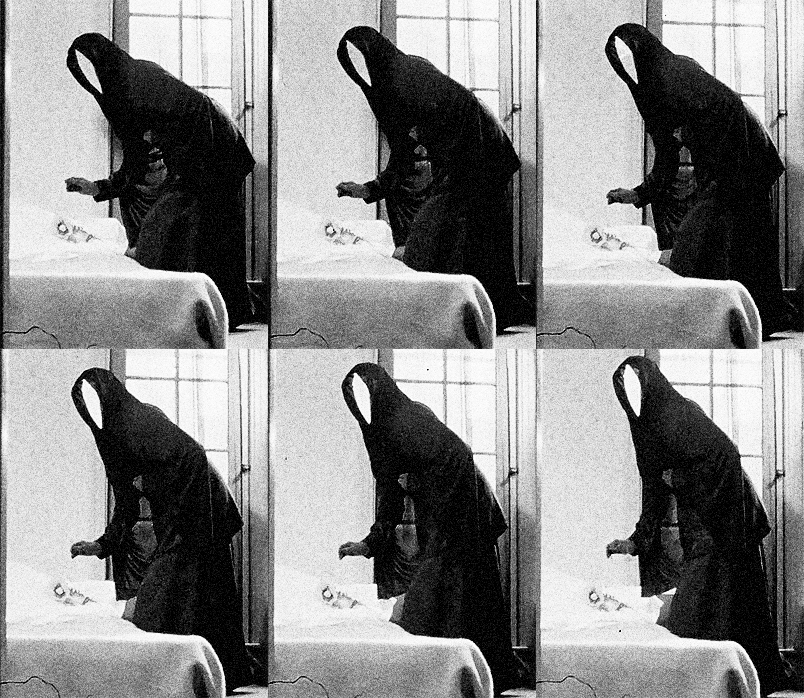
    The elusive mirror-faced character is compelling and symbolically evocative. Nun, Grim Reaper, or mourner? The hooded black cloak and the ritual of bringing a flower to someone’s bed are immediately reminiscent of death, of mourning, and associations between bed/tomb and sleep/death. As the face of the obscure ghost-like manifestation is actually a mirror showing the reflection of the watcher, the scenario conjures up the idea of mourning one’s own death. After leaving the flower on the bed, the character disappears and the image of the woman also disappears and re-materialises several times, back and forth on the staircase.  She then heads towards her own sleeping body whilst holding a knife, proceeding to try to stab herself before she awakens and sees a man holding a flower in front of her.

    The phantom steps of the hooded dream character are traced and re-traced by the man and the woman in what appears to be reality but turns out to be a dream within a dream. The man carries the flower upstairs, leaving it on the bed, a gesture that echoes the dream act but is seen in a different context- of intimacy rather than a religious or funereal act. The flower, a symbol of femininity, is therefore connected with death and sexuality, respectively. After a shot of the reflection of the man in the mirror next to the bed, we watch her lying down through the male gaze. The camera switches to the predatory look on his face, and, as he is about to touch her, she grabs the knife and tries to stab his face. At this point, the knife breaks a mirror instead, and the face of the man disintegrates into shards (another connection between the man and the dream figure), revealing an image -perhaps a memory- of waves and the beach. The man comes inside the house again to find the dead body of the woman on the couch- she committed suicide by cutting herself with a mirror.
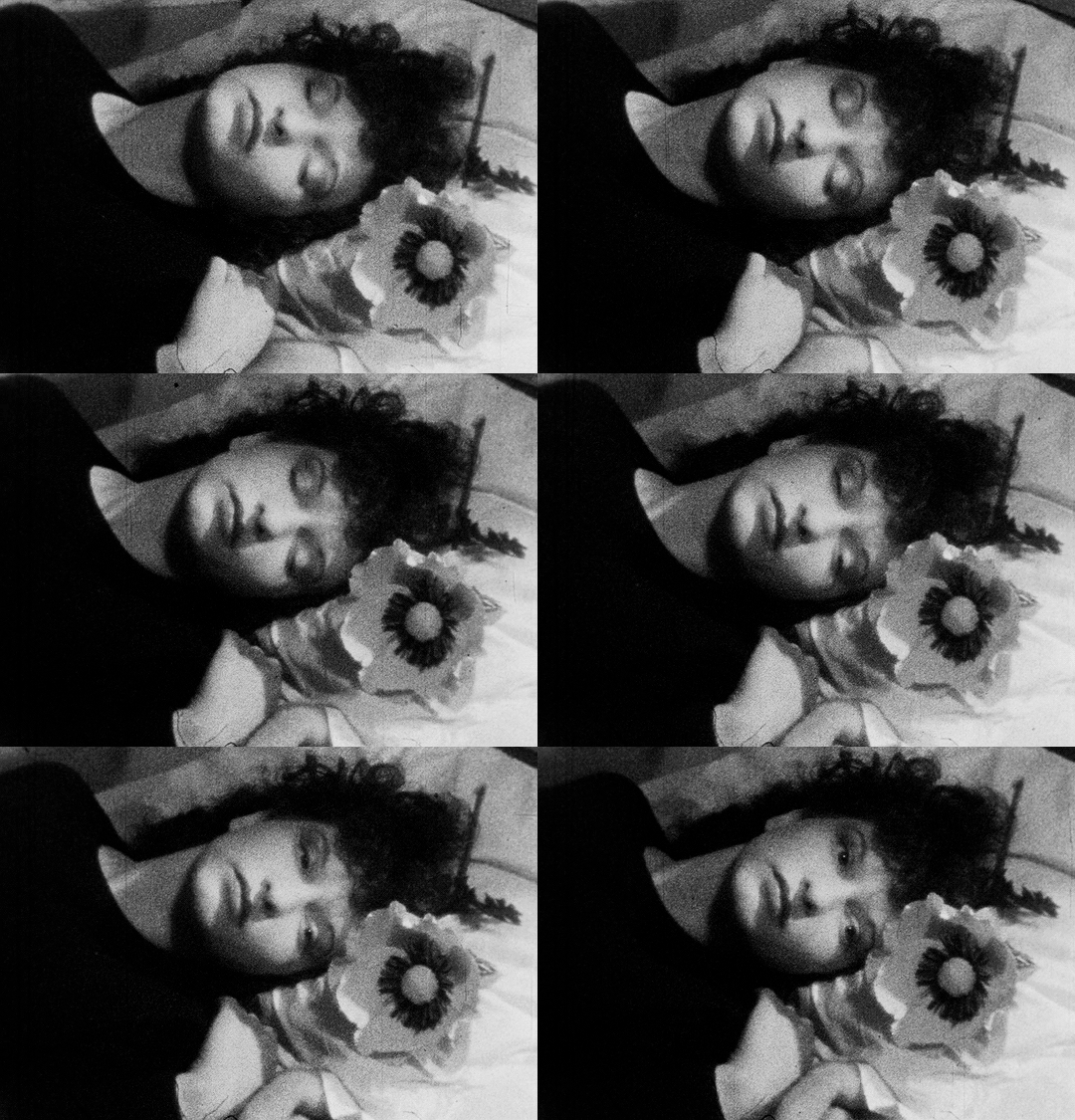
    Deren poetically described the moment of the intertwining worlds as “a crack letting the light of another world gleam through.” [Deren, “A Letter”, in Essential Deren]

    The uncanny dimension of the film lies in the transformation of the familiar environment into something mystifying, the dream-reality ambiguity, the repetition compulsion, the doubling (tripling and quadrupling), the distortions in spatial and temporal awareness, as well as the repetitive use of familiar images such as household objects that seemingly gain unknown symbolic connotations, whilst functioning as mnemonic devices. The juxtaposition of objects also contributes to the sense of dread and paranoia- the off-the-hook phone, the silent record player, the flower left behind by the enigmatic figure, the knife, the falling key. We can associate the off-the-hook phone with loss of communication, the knife -phallic form, therefore masculinity, besides the surface level connection with danger and death, the flower, as mentioned, having a contrasting effect-femininity, but also, death in this context; the key represents confinement, repression, and feeling entrapped, but also the possibility to escape. When the woman pulls out the key from her mouth, perhaps she had “the key” to find the way out all along, and then, as the regurgitated key turns into a knife, there is a connection between escape and (psychic) suicide. The mirror stands for introspection, and the death by mirror cut might allegorically refer to the disintegration of the identity construct, linked to liberation. When a version of the woman picks up the knife, she is re-claiming her agency, wielding phallic power.

    It is worth mentioning that the director strongly opposed and discouraged psychoanalytic interpretations of her film and of the symbolic significance of the objects the film revolves around, instead encouraging the viewer to only interpret them in the context of the film narrative as a whole to avoid going beyond conscious intent in art. This brings me back to an inner debate on the topic of film analysis, its limitations and the question whether there is such a thing as going “too deep” into conscious and unconscious meaning behind film. The “risk” of going too deep is ingrained in the nature of the work of any film scholar or critic, especially when it comes to cine-psychoanalysis. However, when it comes to surreal films in particular, the intentions are blurred and open to interpretation, and clearly Deren’s art is lyrical in its symbolic nature, created by association of poetic images, and influenced by her interest in psychology. Before turning to cinematography, Maya Deren expressed herself through poetry, but she found it too limiting to convey the images in her mind through words.

    To respect the wishes of the creator, let’s also look at her own statements related to the film, as well as her general preoccupations and beliefs, which are transparently relevant to the film.
    This film is concerned with the interior experiences of an individual. It does not record an event which could be witnessed by other persons. Rather, it reproduces the way in which the subconscious of an individual will develop, interpret and elaborate an apparently simple and casual incident into a critical emotional experience.” —Maya Deren on Meshes of the Afternoon, from DVD release Maya Deren: Experimental Films 1943–58.
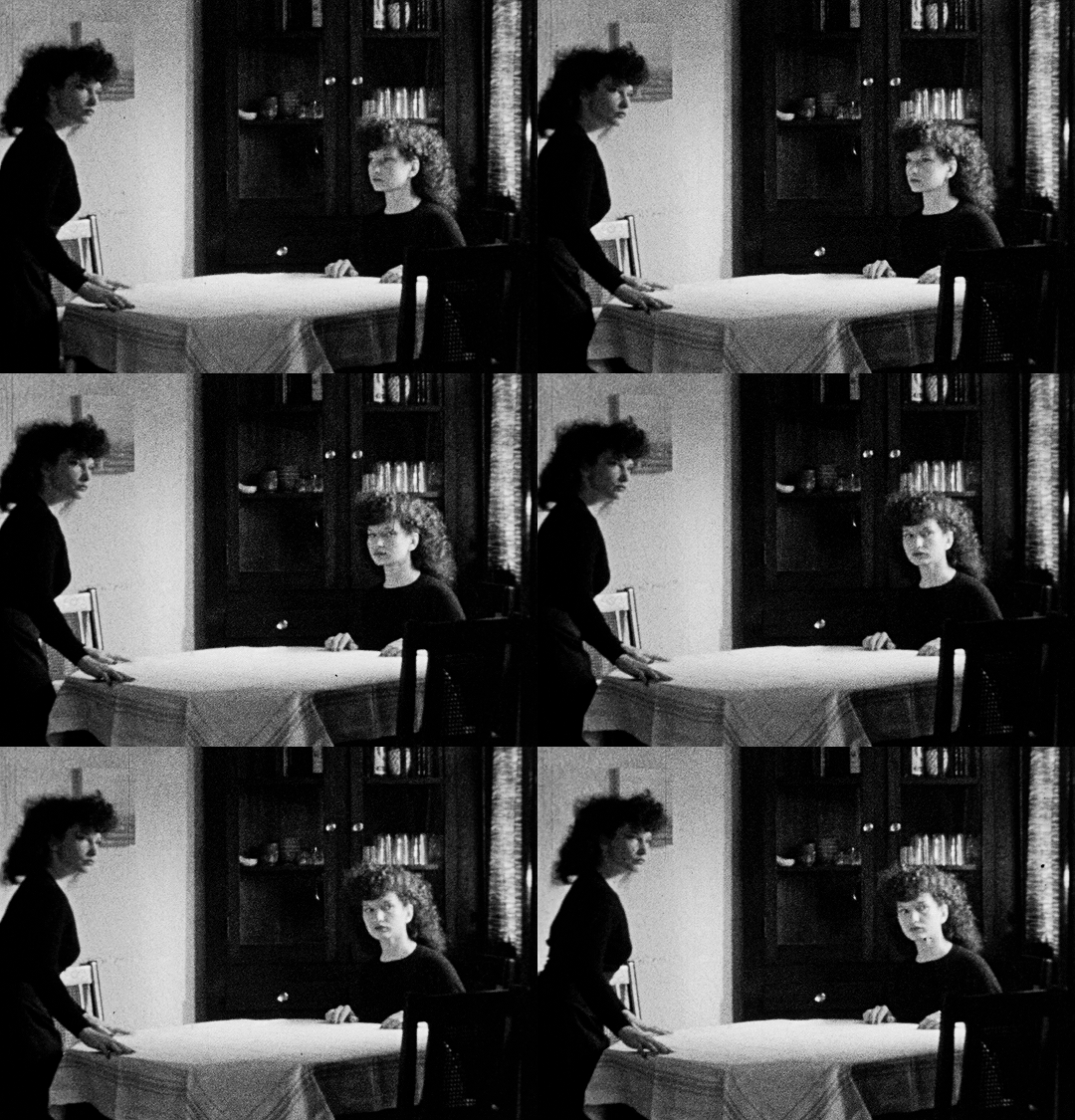
    The multiplying of the character is connected to dissociation, alienation, emotional fragmentation, and potentially reintegration towards the end. The multiple incarnations of the woman evoke an internal schizoid narrative breathing life into alternative versions of herself- challenging her self-construct. Some of her personas are passively observing her more powerful, key-holding, knife-wielding persona. The suicide is symbolic, despite the fact that, in the final scene, it appears as if the layers of the dream world are peeled off and we have access to the real world. I believe the death symbolism is derived from Jungian psychology- i.e. the death and resurrection of consciousness. In light of this thought, the film can represent a visual representation of Jung’s Transcendent Function. What unfolds on screen is the process through which a person gains awareness of and confronts unconscious material driving their life in order to unite and re-channel the opposing energies of the ego and the unconscious into a third state of being, of wholeness. This would also have an integral effect that will merge the embodiments of the character’s dissociations. According to Jung, the process involves a challenging, unnerving unleashing of fantasies, dreams, and instincts. The sense of dread and panic evoked by the film matches this idea. The process is also associated with the notion of ego death in Eastern philosophies.

    To further delve into Deren’s psyche and establish other links, let’s remember that she was fascinated by the rituals of Haitian Vodou and religious possession. She later participated in Vodou ceremonies and documented the rituals. Together with her love of dance (and later, her experience with recreational drugs) her immersion in and fascination with rituals were also a result of seeking to drift away from self-centredness, to go beyond self-construct and personality, and merge with something greater. This is again related to the Buddhist concept of ego death – a transcendent, life-turning mental state with self-revelatory consequences. We know that Deren has a preoccupation with the transformation of the self and reaching higher spiritual states of awareness. In this excerpt from An Anagram of Ideas on Art, Form, and Film (1946), she makes insightful comments about ritual:

    The ritualistic form treats the human being not as the source of the dramatic action, but as a somewhat depersonalised element in a dramatic whole. The intent of such depersonalisation is not the destruction of the individual; on the contrary, it enlarges him beyond the personal dimension and frees him from the specialisations and confines of personality. He becomes part of a dynamic whole which, like all such creative relationships, in turn, endow its parts with a measure of its larger meaning.”

    I am glad she mentions depersonalisation and associates it with a form of spiritual awakening, as this coincides with my beliefs on depersonalisation and derealisation, which are also relevant to the film. The two often go hand in hand. Both experiences (note I’m not referring to them as ‘disorders’) involve a feeling of detachment – from one’s thoughts and from reality, as well as an awareness of this detachment (which distinguishes it from psychosis: there are no delusions or psychotic elements involved). Derealisation involves experiencing the world as if you are living in a dream or a film, and depersonalisation is the feeling of unreality of the self, which has been introduced as a psychiatric disorder of the dissociative type in 1930 and has been updated and re-interpreted several times in various psychiatric diagnosis manuals. Other common features mentioned in the DSM-IV are an uncanny distortion in visual and temporal perception, a feeling that other people, places, or events appear unfamiliar, unreal, or mechanical and lacking emotional depth. An individual experiencing this might feel like an outside observer of his or her own mental processes. All of this also applies to Meshes of the Afternoon where the protagonist is in a perpetual, adrift state of trance as she navigates the dream web and observes herself from an external perspective, whilst familiar objects appear foreign, strange, or ‘tainted’.

    Here is an excerpt from Feeling Unreal, one of the few books tackling the elusive topic of  DPD- written by Daphne Simeon, MD and Jeffrey Abugel. The description matches the insight and feeling revealed by Deren regarding the state of depersonalisation in ritual:

    “No longer grounded by familiar sensations or surroundings, they feel as if they’re losing their grip on reality. But unlike people with psychotic conditions like schizophrenia, they are not going insane at all. They are, if anything, suddenly overly aware of reality and existence and of the ways in which their own experience is a distortion of a ‘normal’ sense of a real self. Depersonalisation, in fact, resembles a sort of altered ‘awareness’ or ‘awakening’ that in some cultures is thought to be a level of spiritual growth.”

    It is worth watching both existing versions of the film: Your viewing experience might change depending on whether you watch the early silent version or the 1959 version accompanied by the official sombre, atmospheric soundtrack created by ‎Teiji Ito, Maya’s second husband. You will also not be surprised to find out that the dreamlike atmosphere and narrative of Meshes was a source of inspiration for David Lynch’s Lost Highway (1997) and Mulholland Drive (2001).
  • Signe Pierce: Glamorous over-saturated hyperreality

    Signe Pierce: Glamorous over-saturated hyperreality

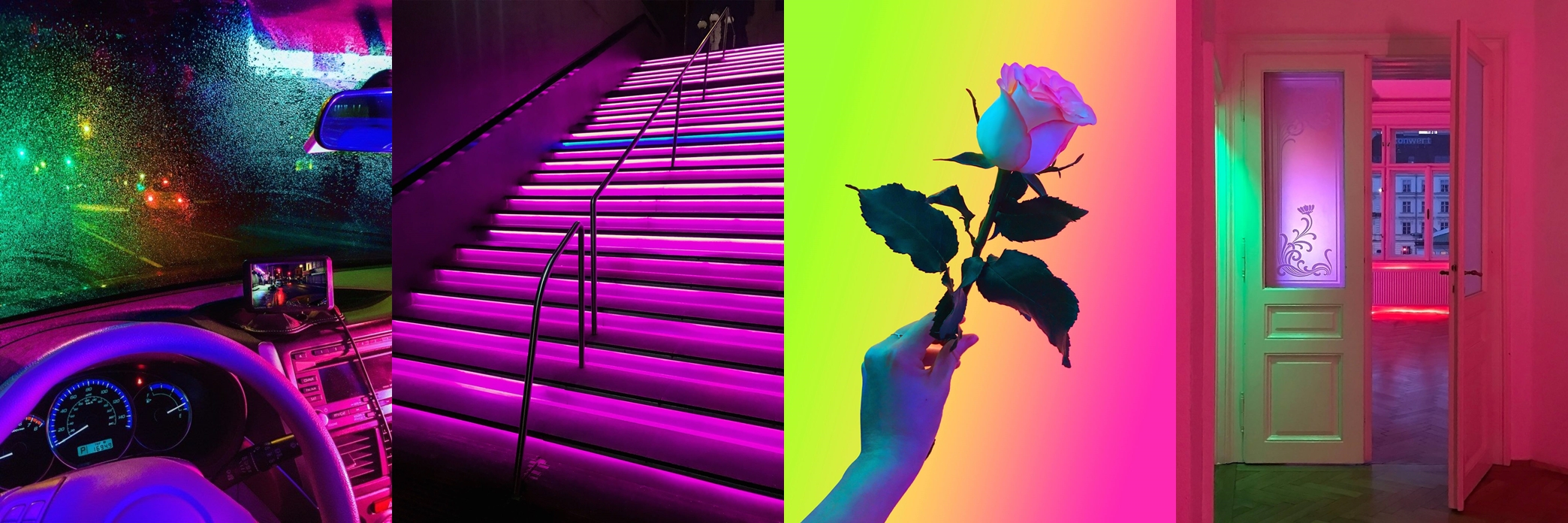
    signe-pierce-collage-1

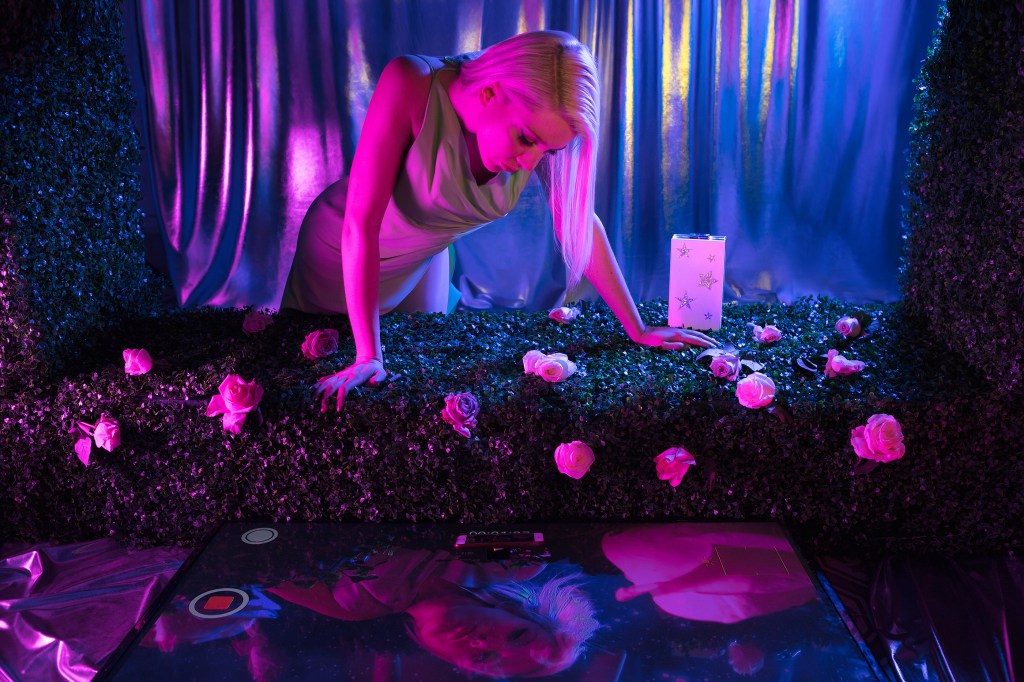
    New York-based contemporary multimedia artist Signe Pierce self-identifies as a reality artist, exploring the blurred lines between art and technology, between art and life, and the concept of heightened reality through her neon urban signature photographic style characterised by a glamorous, saccharine aesthetic. The vibrant colour palette she uses is dominated by bright pink and purple hues, adding a different dimension to mundane urban landscapes. The chromatic excess emphasises artificiality, as the artist provides a visual commentary on the nature of reality in the digital world.
    Signe Pierce embraces the idea of ‘unreality’ and takes it to extremes in her lurid, holographic paradise. The viewer entering her world is mesmerised, distracted, trapped in hyperreality. Beautifully influenced by her environment and the chaos of New York, her work provides a glimpse into an augmented version of the famous city for the outsider to be virtually immersed into. Since her art is of a meta-referential nature, it shouldn’t be surprising that it self-consciously depicts the ubiquity of commercial ads and photography, phone screens, screens in general, which, instead of piercing into her world, are rather being harmoniously incorporated in it.

    The almost aggressive, consistent use of pink and light purple tones reveals a feminist preoccupation with what is considered stereotypically girly- being subverted by the themes depicted, such as consumerism, surveillance, hyper-reality, and assertive hyper-femininity. The artist not only plays with visual perceptions by depicting fluid forms and using distorted liquefied shapes in some of her pictures, she also challenges perceptions of femininity, by blurring the line between the objectifier and the objectified and portraying the female figure as provocative and strong.
    The slick fashion commercial aesthetic of the photographs is reminiscent of surreal fashion horror films such as Nicolas Winding Refn’s Neon Demon and the urban vividness of cyberpunk cinematography. At the same time, her frequently updated Instagram feed includes cinematic photographs depicting a constantly wired, overstimulated world. Some elements often featured in her universe are mirrors, eyes, technological devices, shiny, holographic pieces of clothing, reflecting lights, rainy cityscapes, strip malls, and a lush, stunningly illuminated mise-en-scene. In addition to emphasising the inherent ‘simulacrum’ nature of the urban experience in New York, Signe Pierce’s hyperreal sensory spectacle merges perceptions of reality and simulation to make the viewer question the nature of truth and reality in contemporary society.

  • Costume design symbolism in Crimson Peak (2015): Lucille’s breathtaking blue velvet dress

    Costume design symbolism in Crimson Peak (2015): Lucille’s breathtaking blue velvet dress

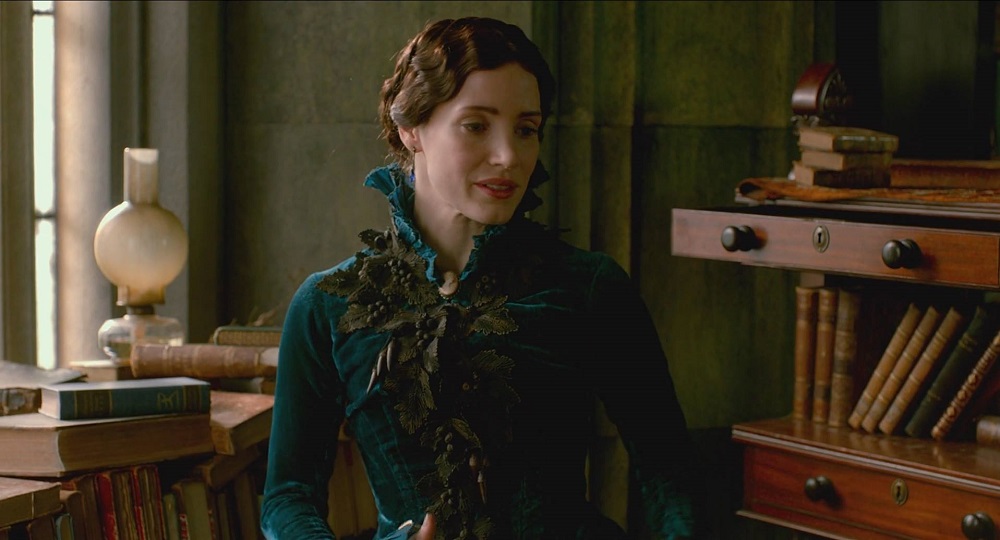
    crimson-peak-lucille-blue-velvet-dress-symbolism

    Crimson Peak (2015), directed by Guillermo del Toro, is a visually stunning, gloomy cinematic horror spectacle, noted for its incredible and haunting aesthetic. A particularly remarkable and alluring feature of the intricate production design is Lucille’s breathtaking blue velvet dress. The bewitching symbolically-charged Victorian design of the dress includes a black garland resembling a vine with withered leaves, claustrophobically climbing towards her pale neck. The owner, played by the mesmerising Jessica Chastain, is a beautiful, tense, frigidly graceful corset-wearing ice queen filled with dark repressed emotions, whose attire reflects her inner state. Her blue, heavy rigid dress seems to blend with her eerie funereal surroundings, the underwater feeling given by the aquatic colours and the flickering interplay of light and darkness, the dark curtains, and the grandiose blue walls of the Gothic mansion. She is tragically connected to the ominous house and the dead vines tangled up around her body further anchor her in it, symbolising her psychological confinement. She is often shown in contrast to pure, innocent, and lively Edith, played by Mia Wasikowska, who wears light and loose gowns.

  • Review: Gregory Crewdson’s cinematic photography

    Review: Gregory Crewdson’s cinematic photography

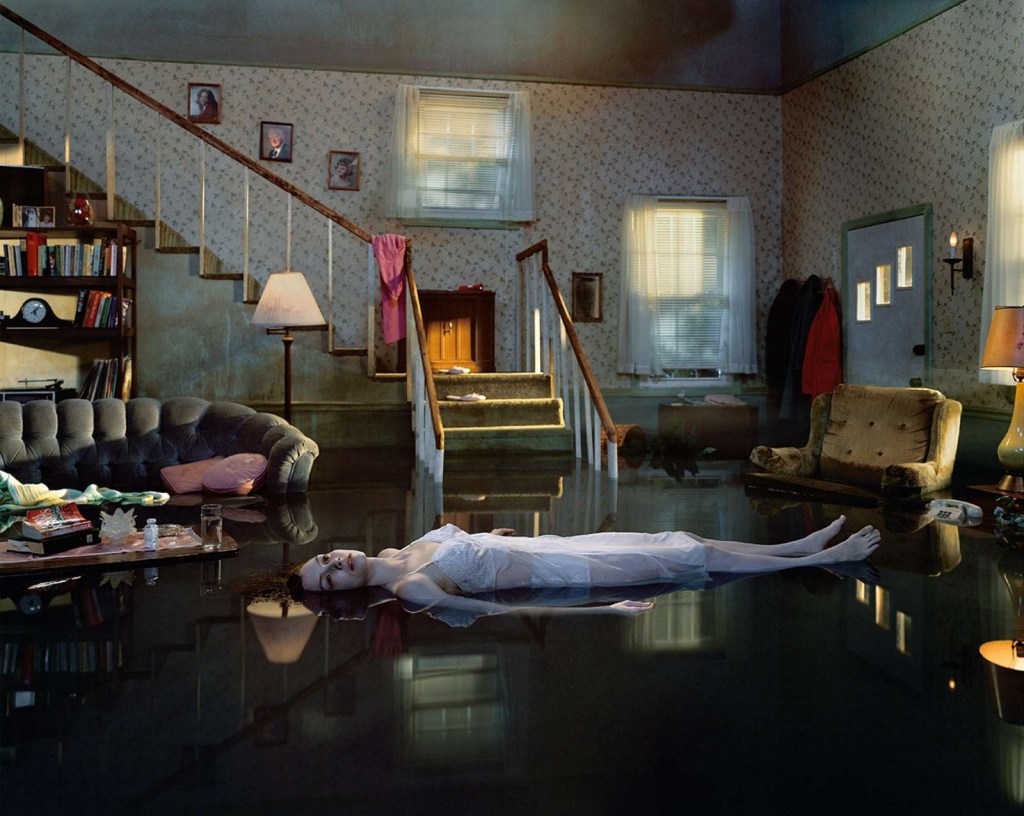
    Gregory Crewdson’s dark, atmospheric, cinematic photographs capture perfectly framed frozen moments incorporating disconnected figures which seem to reflect the domestic and natural landscapes they inhabit; the mundane landscapes are often characterised by an eerie solitude and transformed into something otherworldly, haunting, and compelling. His photographs seem to both reveal and conceal something, creating ambiguous narratives – they are both stills of life and embodiments of the uncanny. The boundaries between life and art, between intimacy and isolation, between strange and familiar environments are blurred.

    “My pictures are about everyday life combined with theatrical effect. I want them to feel outside of time, to take something routine and make it irrational. I’m always looking for a small moment that is a revelation.” – Gregory Crewdson

    The cinematic nature of his work is also reflected in the complex process of creating and staging his images: there is a large crew involved in various aspects of production; props, casting, storyboards, and the natural world is heightened by the use of artificial Hollywood-style lighting and effects such as artificial rain and ice.

    “My pictures are about a search for a moment—a perfect moment. To me the most powerful moment in the whole process is when everything comes together and there is that perfect, beautiful, still moment. And for that instant, my life makes sense.” – Gregory Crewdson

    In his interviews, GC emphasises the importance of the visual balance between the figure, the interior space, and the exterior space; the feeling of transience and the sense of in-between-ness evoked by his images, the enigmatic moments between other unknown moments, the visual commentary on the human condition, the portrayal of flesh, nudity, aging, vulnerability, and mortality.

    Crewdson’s aesthetic incorporates American suburban surrealism, and the mise-en-scène usually features windows, mirrors, bleak settings shown in a mysterious, ghostly light. His photographs are windows into the intimacy of a world filled with hidden unsettling desires.

    “I’m interested in using the iconography of nature and the American landscape as surrogates or metaphors for psychological anxiety, fear or desire.”- Gregory Crewdson

    The characters created often seem alienated, immersed in deep thought, in cosmic loneliness, internal conflict, or a longing for something ineffable. Their expressions are pensive, focused on something beyond the world depicted, at times introspective. The feelings evoked are anticipation – frozen in time, subconscious disquiet, and estrangement.

    “I really love that dynamic between beauty and sadness…there’s always these moments of quiet alienation, the sense of disconnect, but also, these moments of possibility.”- Gregory Crewdson

    Crewdson’s photography reminds us of the suspense, sadness, and solitude of Edward Hopper’s paintings, of Diane Arbus’ bizarre and psychologically intense photographic portraits of people on the margins of society, of William Eggleston’s saturated depictions of seemingly normal, mundane settings behind which something disturbing seems to lurk; as well as the surreal quality of the films of David Lynch.

    Crewdson’s series include Cathedral of Pines, Twilight, and Beneath the Roses.

  • Reviews: Psychological horror films set in the fashion world: The Neon Demon (2016) and Helter Skelter (2012)

    Reviews: Psychological horror films set in the fashion world: The Neon Demon (2016) and Helter Skelter (2012)

    The Neon Demon (2016), directed by Nicolas Winding Refn, is a surreal hyper-stylised psychological horror film unveiling a dark satire of the fashion industry. Elle Fanning plays Jesse, who epitomises the trope of the pure, genuine, angelic character entering a wicked world filled with artificial, soulless, manufactured characters, and becoming tainted by her surroundings. Meanwhile, everything spirals out of control and eventually down into the macabre and the gruesome.

    The hallucinatory and grotesque spectacle is shown through a slick fashion commercial aesthetic, accompanied by fitting synth sounds and little dialogue, as the film relies on its bewitching atmosphere. Many parallels can be drawn between Refn’s film and the stylish Japanese psychological horror film, Helter Skelter (2012), which was potentially a source of inspiration: they are both bloody, visually stunning, surreal, satirical reflections on the artificiality of the fashion world. They even share torn out eyeballs – the difference being The Neon Demon goes all the way when one character eats a regurgitated eyeball, in one of the many scenes alluding to the theme of women devouring each other and destroying themselves in pursuit of beauty-based fame. The shock value of The Neon Demon is continuously impactful, with elements ranging from self-mutilation and absurd knife fights to cannibalism and necrophilia.

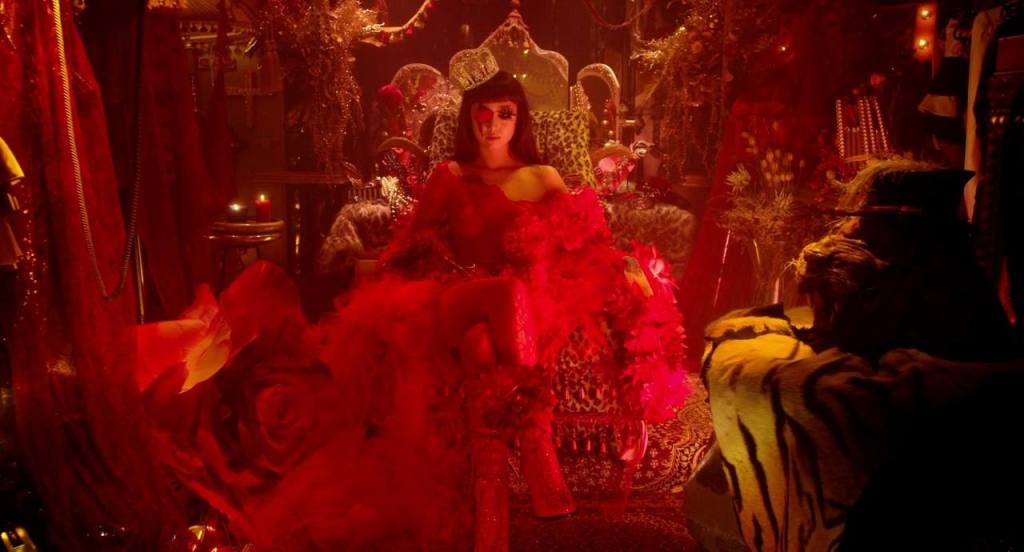
    neon-demon-film-still-2

    The ghastly, sickening acts and soft gore visuals are mixed with beautiful, compelling imagery and a glamorous style in such a harmonious way, as if purposely trying to make it hard for viewers to be grossed out; instead, the viewer is under a spell, watching the unfolding of a disturbingly strange dream.

    The majority of criticism the film has been subjected to revolves around it being shallow, reductive, objectifying, offensive, form over content. However, the film is clearly self-reflective in the sense that it’s a critique of the things it depicts and the things it exaggerates to an absurd degree. Sometimes the subtext eludes viewers because the film might appear to revel in its own madness and in the culture it condemns, but, in the end, every viewer takes something different from the film. The Neon Demon is hypnotic and compelling with its gripping atmosphere, its dual aesthetic- incorporating both the glamorously exquisite and the macabre, and its bewildering dream sequences.

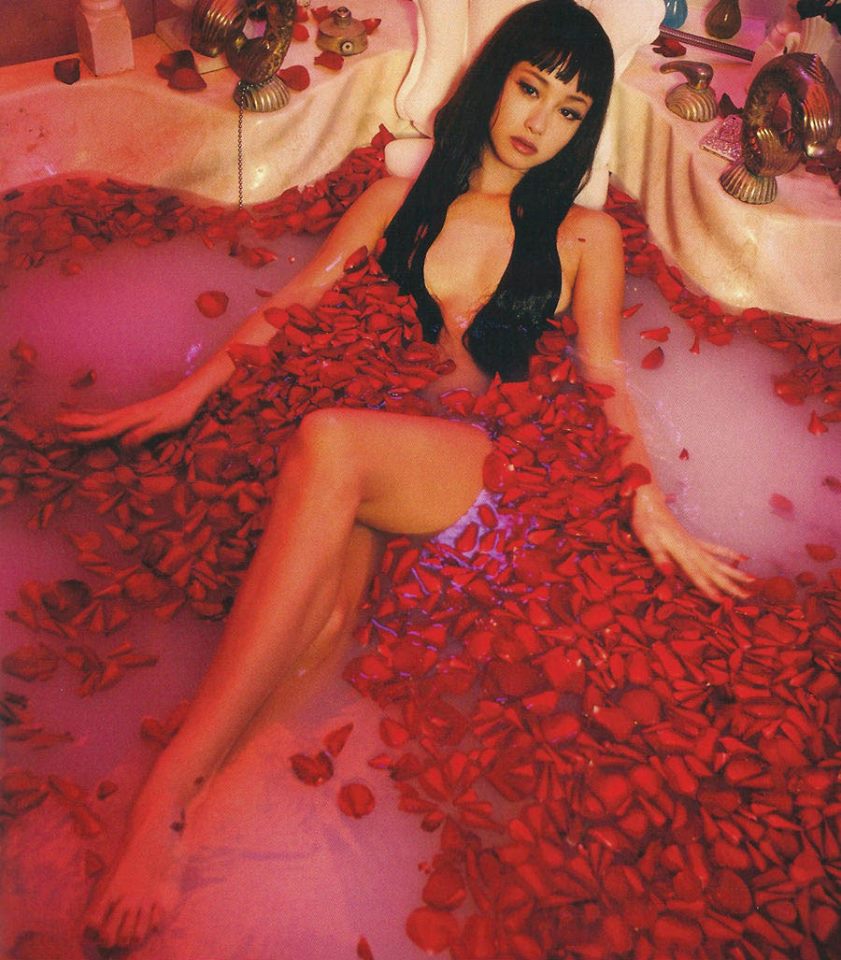
    41272426_1918757085094468_5702621502751375360_nBased on the Japanese exploitative psychological horror manga by Kyoko Okazaki, Helter Skelter (2012), directed by Mika Ninagawa, is a disturbing hyperstylised surreal drama depicting the chaotic life of manufactured superstar Lilico, who navigates the dark side of the fashion world. What lurks beyond the glamorous facade is portrayed as not only sad, but grim, and merging with the macabre. Whilst Lilico gradually delves into psychotic delusions, the film touches upon notions of transience, artificiality, the impact of stardom and its correlation with mental state deterioration, the identification of the self purely with the image and the (fluctuating and inevitably fading) success of the image, and the consequent predictable corruption of the soul.
    Lilico, played by suitably controversial Erika Sawajiri, is an influential and highly appreciated Japanese supermodel whose beautiful appearance permeates the news, magazines, and minds of Japanese teenage girls who look up to and aspire to be her – or the idea of her. Behind the scenes and the smiles, she embodies a clear case of narcissistic personality disorder, her existence solely dictated by an insatiable ego which is fed by fame and dependent on the recognition of her physical beauty and success. In some ways, her life seems to be a heavenly dream that she just grows tired of: she is always found either revelling or agonising in aesthetic, lurid, and shiny surroundings, around people who satisfy her every whim. She lives in an alluring, luxurious, decadent place, where the colour palette is dominated by red, the vividness of the decor being reminiscent of Argento’s classic, Suspiria (1977).

    Jaded, tragically cynical, shallow, and malicious, Lilico ends up being a toxic presence in the lives of the few people in her proximity, constantly undermining and treating her assistant harshly despite her blind devotion, and trying to sabotage others’ happiness. Her self-centred, vitriolic demeanour is counteracted by moments of vulnerability in which she drowns in her own dramatic sadness, as depicted in explicit shots finding her collapsed and lying motionless on the floor. Lilico is unhinged, oscillating between feeling on top of the world, completely apathetic, in total agony, and at times terrifyingly psychotic. The psychotic episodes unfold like visually stunning, distorted psychedelic nightmares, featuring blood rain, optical illusions, and ominous butterflies.

    When another model enters the picture and seems to steal the spotlight, threatening her goddess status with her presence, Lilico is faced with the acute awareness of the flimsy quality of the fashion industry. Consumed by feelings of helplessness and resentment, she wants to destroy the new star, Kozue Yoshikawa, despite acknowledging the inherent ephemeral nature of modelling careers and the hunt for newness. However, since her numerous cosmetic surgeries are taking their toll as the clinic she went to is accused of suspicious conduct in their treatments, Lilico’s physical health diminishes and she ends up destroying herself and performing a shocking act in front of a myriad of cameras pointed at her- an act which, of course, involves the eyes.

    Aesthetically, Helter Skelter is a hypnotic feast for the senses, which is unsurprising considering the director of the film is Mika Ninagawa, who has a background in commercial photography and a lurid, vividly-coloured signature photographic style. The message is transparent in this twisted, grotesque, yet highly aesthetic spectacle, namely a poignant and compelling critique of the fashion world, its objectifying nature, and the concept of stardom which encourages the cultivation of appearance over essence. The protagonist displays a perfect, glamourous, appealing image out into the world, whilst being rotten on the inside- both mentally and physically. Lilico is unequivocally damned, however not entirely responsible for her own damnation.

  • Film sequence analysis: Melancholia (2011) – the surreal overture

    Film sequence analysis: Melancholia (2011) – the surreal overture

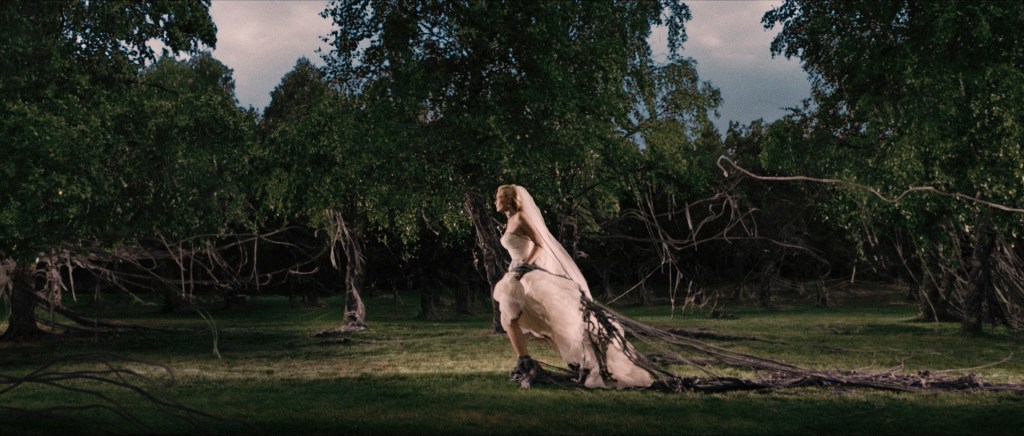
    The opening sequence of Melancholia (2011, Lars von Trier), a collection of gloomy, surreal, painting-resembling, slow-motion shots, is an insidious introduction to the themes of this compelling cinematic symphony of death and destruction. What completes the eerie dreamscape is the exquisite, haunting piece of music by Wagner – the Prelude to the tragic opera Tristan und Isolde, which magnifies the sorrow depicted in the shots and throughout the whole film. The film and the opera both exhibit the philosophical pessimism of Schopenhauer, revolving around unhappiness, death, and painful, unfulfilled human yearning. The nocturnal landscape, the Realm of the Night from Wagner’s opera, symbolically stands for the realm of hidden truth; and the only escape or redemption from a world perceived as evil and relentlessly suffering, is spiritual release, death, hence Justine’s morbid Ophelia moment and the early appearance of the destructive planet, “Melancholia”. The deadly planet, with its suggestive name, is a metaphor most beautifully conveyed visually when Justine, the perpetually despondent and apathetic bride, bathes naked in its light and is shown yearning for its life-threatening touch, on the same musical notes from the Prelude. Death appears in other forms in von Trier’s haunting cinematic overture as well, such as the striking nightmarish image of the dead birds falling from the sky in the background whilst Justine’s cold blank face is shown in a close-up shot; or the horse collapsing backwards in bleak surroundings. Another memorable surreal image is that of a fascinated Justine staring at her fingertips as they seem to be connected to the bolts of lightning.

    Within the themes and the atmosphere of Melancholia, we can also find echoes of Wagner’s own beautifully dark poetic words about Tristan und Isolde, once again resonating with Schopenhauer’s philosophy. He describes the tragic story as “a tale of endless yearning, longing, the bliss and wretchedness of love; world, power, fame, honour, chivalry, loyalty, and friendship all blown away like an insubstantial dream; one thing left living – longing, longing unquenchable, a yearning, a hunger, a languishing forever renewing itself; one sole redemption – death, finality, a sleep without awakening…”

  • A glimpse of Annihilation (2018). The Uncanny Within.

    A glimpse of Annihilation (2018). The Uncanny Within.

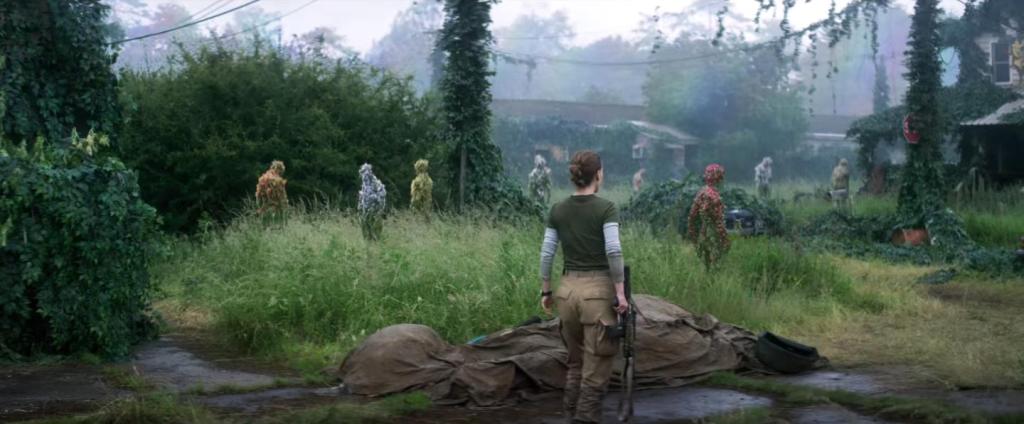
    After the success of his intense directorial debut, Ex Machina, Alex Garland creates a cinematic adaptation of Jeff VanderMeer’s first book from the Southern Reach TrilogyAnnihilation. The sci-fi thriller turns out to be a visually stunning exploration into the unknown, which in this case borrows the form of the enigmatic ‘Shimmer’, a disquieting yet alluring foreign veil encompassing a part of the Earth, Area X – ceaselessly expanding and threatening to swallow the whole world.

    The film opening reveals Lena, the protagonist, a biologist portrayed by the enigmatic, detached Natalie Portman who appears disoriented while being interrogated about the expedition and its survivors. The next scene introduces us for a brief moment to the desolate landscape surrounding the lighthouse, which is mysteriously related to the powerful alien presence the film revolves around. The lighthouse becomes a symbol, the connection with another world, with something uncanny, just like the Monolith from 2001: A Space Odyssey (1968).

    The eerie and toxic beauty of the scenery from Area X echoes the dystopian “Zone” depicted in the well-known sci-fi, Stalker (1979), directed by Andrei Tarkovsky. Similarly, just as the Zone proves to be a philosophical journey, the Area X expedition also symbolises an exploration inwards, and eventually, a disintegration of identity – an idea poetically alluded to through the words uttered by the psychologist in a crucial intense scene towards the end: “Unfathomable mind: now beacon, now sea.”, quoting Samuel Beckett.

    There are many alluring elements contributing to the immersive nature of the film and its fascinating uncanniness: The alien presence of an ambiguous nature, strange, nightmarish mutations, a symbiotic connection and the fear of being assimilated into something terrifying, blurred lines between self and other, the process of doubling, the tension, the eerie, magnetic atmosphere, gripping narrative, philosophical, introspective discourse, and compelling body horror imagery consisting in familiar elements depicted in a sinister, macabre way.

    A geomorphologist, a paramedic, a physicist, a biologist, and a psychologist enter the Shimmer seeking answers and, whilst they encounter biological anomalies, beauty and decay, and a lot of unanswerable questions, we are encouraged to wonder what really lies beyond their (and our) human drive to enter the unknown, as well as how the uncanny encountered outwards echoes the uncanny within each of them.

    Here are a few haunting excerpts from the eponymous book by Jeff VanderMeer. Among other thematic concerns, the book is also focused on environmental themes and metaphors for the conflict between nature and culture. VanderMeer alludes to the relationship between human beings and planet Earth, which can also be viewed through a lens of contamination. He emphasises the idea that nature should be treated as a part of us, just as we are part of nature; for if we dismiss it, we become alienated from a part of ourselves, of our humanness.

    The following excerpts are amazingly reflective of the concept of the uncanny:

    The effect of this cannot be understood without being there. The beauty of it cannot be understood, either, and when you see beauty in desolation it changes something inside you. Desolation tries to colonise you.”

    “I believed that it might be pulling these different impressions of itself from my mind and projecting them back at me, as a form of camouflage. To thwart the biologist in me, to frustrate the logic left in me.

    “A day that had the clarity of dream, of something strange yet familiar – familiar routine but strange calmness.”

    “And what had manifested? What do I believe manifested? Think of it as a thorn, perhaps, a long, thick thorn so large it is buried deep in the side of the world. Injecting itself into the world. Emanating from this giant thorn is an endless, perhaps automatic, need to assimilate and to mimic. Assimilator and assimilated interact through the catalyst of a script of words, which powers the engine of transformation. Perhaps it is a creature living in perfect symbiosis with a host of other creatures. Perhaps it is “merely” a machine. But in either instance, if it has intelligence, that intelligence is far different from our own. It creates out of our ecosystem a new world, whose processes and aims are utterly alien—one that works through supreme acts of mirroring, and by remaining hidden in so many other ways, all without surrendering the foundations of its otherness as it becomes what it encounters.”

    “[…] Imagine these expeditions, and then recognise that they all still exist in Area X in some form, even the ones that came back, especially the ones that came back: layered over one another, communicating in whatever way is left to them. Imagine that this communication sometimes lends a sense of the uncanny to the landscape because of the narcissism of our human gaze, but that it is just part of the natural world here. I may never know what triggered the creation of the doppelgangers, but it may not matter.”

    “The strange quality of the light upon this habitat, the stillness of it all, the sense of waiting, brought me halfway to a kind of ecstasy.”

    ― Jeff VanderMeer, “Annihilation”

  • Review: Laura Makabresku’s dark fairy tales

    Review: Laura Makabresku’s dark fairy tales

    Polish self-taught fine art photographer Kamila Kansy, known as Laura Makabresku, draws inspiration from her deep, intimate connection to her native land – which she perceives as a mysterious realm of sinister fairy tales, in order to design a tragic world revolving around death, obscure eroticism, suffering, and human frailty. The suggestive name of her artistic identity conjures up the darkness portrayed in her haunting photographs which seem to reflect the Freudian uncanny through their eerie and strangely familiar quality.

    Stepping away from digital cameras, she embraces the analogue practice with a soft painterly style with dark undertones. To create a gloomy, glacial, and morbid atmosphere, the colours used are often desaturated dark blue and green and the photographs are intentionally underexposed. Some photographs adopt the technique of superimposition to achieve a ghostly aesthetic and induce the impression that there is always something morbid looming within the frame – a dormant presence about to be unleashed.

    The distinctive imagery depicting Laura Makabresku’s artistic world can be compared to a dream: it has multiple layers, inviting the observer to begin an internal exploration. Her pictures should not only be admired aesthetically, but also felt from within. The shots are like collections of impulses, raw emotions, objects filled with hidden symbolism displayed in a beautifully chaotic, surreal manner which often involves strikingly unexpected combinations of elements such as dead animals, naked bodies, blood, knives, ants amplified in size, ravens pictured indoors, and human bodies with animal masks. The uncanny is ever present in this artistic realm: from dead birds coming out of the mouth of a woman collapsed on the autumnal earth, a naked body covered in moss, guarded by a mysterious fox, a sorrowful girl’s languid body enveloped by a goat’s hide, a pensive woman touching a bowl filled with blood, upon which a little bird rests, a touching portrait of a girl embracing a fox in a glass coffin, eyes covered by pressed flowers or positioned dangerously close to a raven. All of her entrancing visual creations are filled with lyricism. In addition to these transparent motifs and compositions, the uncanny also lies in the homely atmosphere of the photographs, as well as the strange aesthetic quality reminiscent of macabre fairy tales.

    Influenced by Francesca Woodman, her black and white portraits of the naked female body convey a duality between the calm, beautiful, graceful vulnerability and simplicity of the nude body sight and the undertones of death, darkness, emptiness, isolation, and dark sexuality. Through self-portraits, she embraces her fears and anguish and explores themes like autopsy, witchcraft, love, and a deep connection with animals, mortality, and the evil that lurks within her. The universe she creates makes the viewers look within and be inspired to embrace their own dark instincts and fantasies.