Tag: reviews

  • Signe Pierce: Glamorous over-saturated hyperreality

    Signe Pierce: Glamorous over-saturated hyperreality

    signe-pierce-collage-1

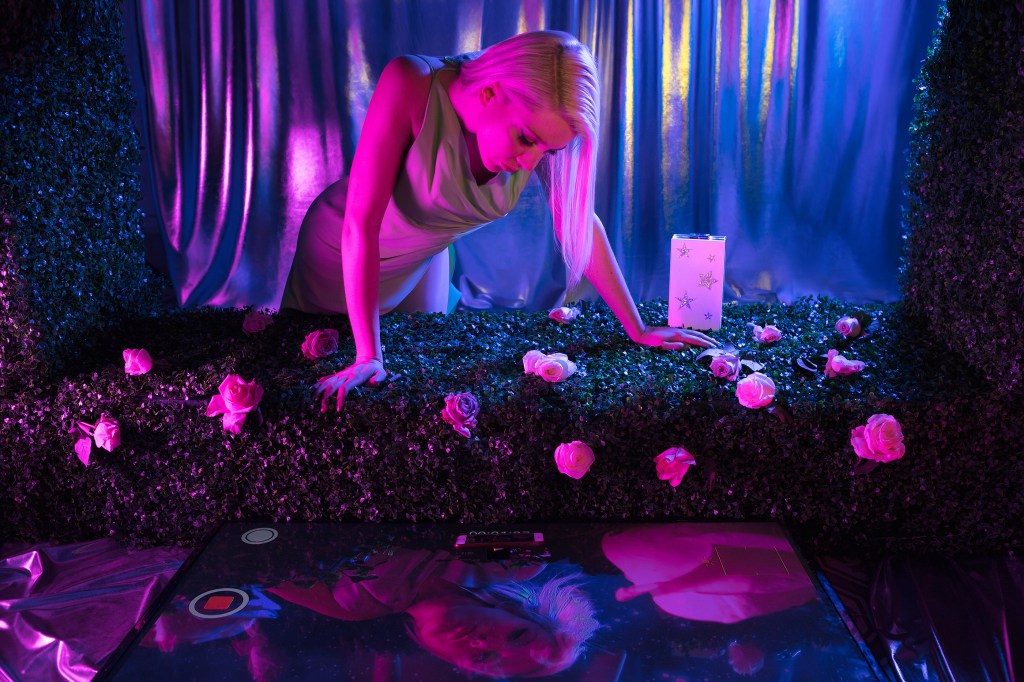
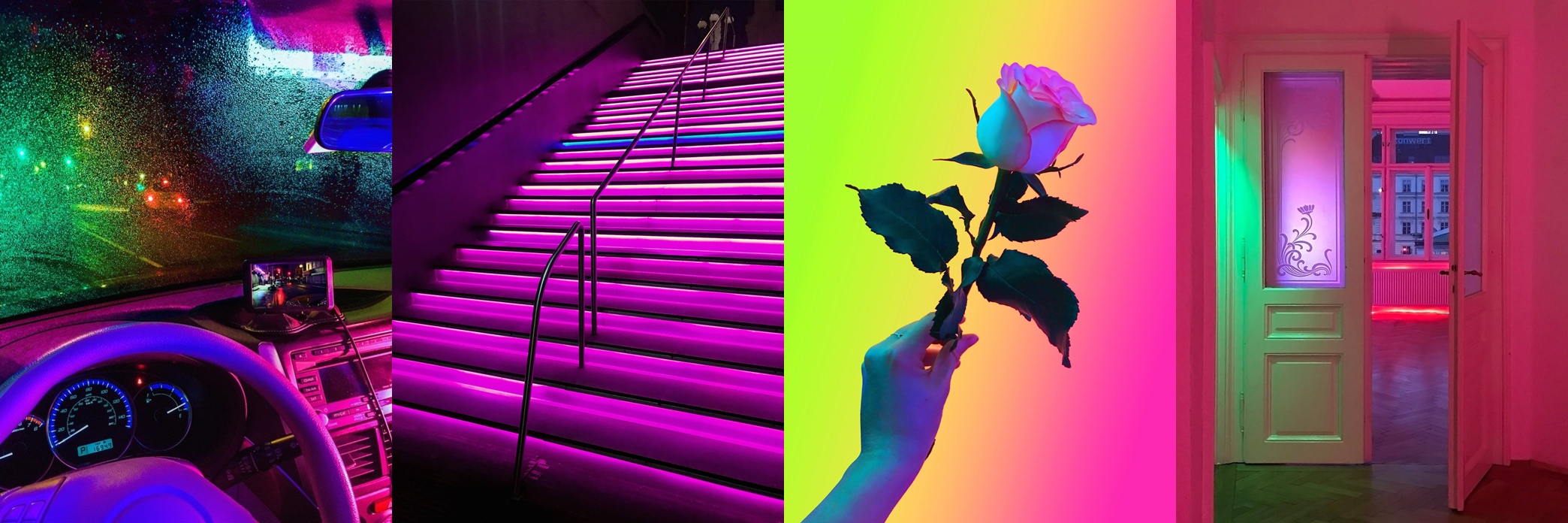
    New York-based contemporary multimedia artist Signe Pierce self-identifies as a reality artist, exploring the blurred lines between art and technology, between art and life, and the concept of heightened reality through her neon urban signature photographic style characterised by a glamorous, saccharine aesthetic. The vibrant colour palette she uses is dominated by bright pink and purple hues, adding a different dimension to mundane urban landscapes. The chromatic excess emphasises artificiality, as the artist provides a visual commentary on the nature of reality in the digital world.
    Signe Pierce embraces the idea of ‘unreality’ and takes it to extremes in her lurid, holographic paradise. The viewer entering her world is mesmerised, distracted, trapped in hyperreality. Beautifully influenced by her environment and the chaos of New York, her work provides a glimpse into an augmented version of the famous city for the outsider to be virtually immersed into. Since her art is of a meta-referential nature, it shouldn’t be surprising that it self-consciously depicts the ubiquity of commercial ads and photography, phone screens, screens in general, which, instead of piercing into her world, are rather being harmoniously incorporated in it.

    The almost aggressive, consistent use of pink and light purple tones reveals a feminist preoccupation with what is considered stereotypically girly- being subverted by the themes depicted, such as consumerism, surveillance, hyper-reality, and assertive hyper-femininity. The artist not only plays with visual perceptions by depicting fluid forms and using distorted liquefied shapes in some of her pictures, she also challenges perceptions of femininity, by blurring the line between the objectifier and the objectified and portraying the female figure as provocative and strong.
    The slick fashion commercial aesthetic of the photographs is reminiscent of surreal fashion horror films such as Nicolas Winding Refn’s Neon Demon and the urban vividness of cyberpunk cinematography. At the same time, her frequently updated Instagram feed includes cinematic photographs depicting a constantly wired, overstimulated world. Some elements often featured in her universe are mirrors, eyes, technological devices, shiny, holographic pieces of clothing, reflecting lights, rainy cityscapes, strip malls, and a lush, stunningly illuminated mise-en-scene. In addition to emphasising the inherent ‘simulacrum’ nature of the urban experience in New York, Signe Pierce’s hyperreal sensory spectacle merges perceptions of reality and simulation to make the viewer question the nature of truth and reality in contemporary society.
  • Costume design symbolism in Crimson Peak (2015): Lucille’s breathtaking blue velvet dress

    Costume design symbolism in Crimson Peak (2015): Lucille’s breathtaking blue velvet dress

    crimson-peak-lucille-blue-velvet-dress-symbolism

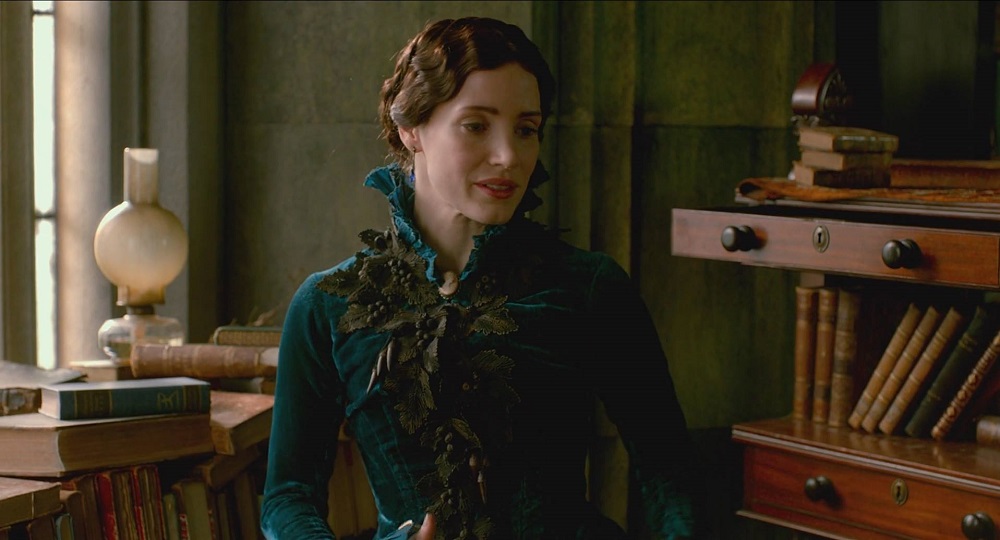
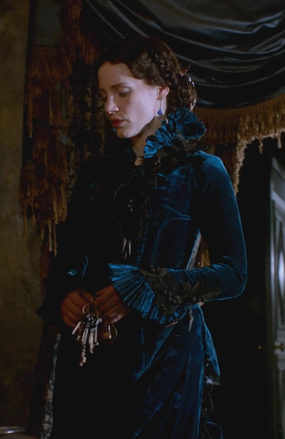
    Crimson Peak (2015), directed by Guillermo del Toro, is a visually stunning, gloomy cinematic horror spectacle, noted for its incredible and haunting aesthetic. A particularly remarkable and alluring feature of the intricate production design is Lucille’s breathtaking blue velvet dress. The bewitching symbolically-charged Victorian design of the dress includes a black garland resembling a vine with withered leaves, claustrophobically climbing towards her pale neck. The owner, played by the mesmerising Jessica Chastain, is a beautiful, tense, frigidly graceful corset-wearing ice queen filled with dark repressed emotions, whose attire reflects her inner state. Her blue, heavy rigid dress seems to blend with her eerie funereal surroundings, the underwater feeling given by the aquatic colours and the flickering interplay of light and darkness, the dark curtains, and the grandiose blue walls of the Gothic mansion. She is tragically connected to the ominous house and the dead vines tangled up around her body further anchor her in it, symbolising her psychological confinement. She is often shown in contrast to pure, innocent, and lively Edith, played by Mia Wasikowska, who wears light and loose gowns.

  • Review: Gregory Crewdson’s cinematic photography

    Review: Gregory Crewdson’s cinematic photography

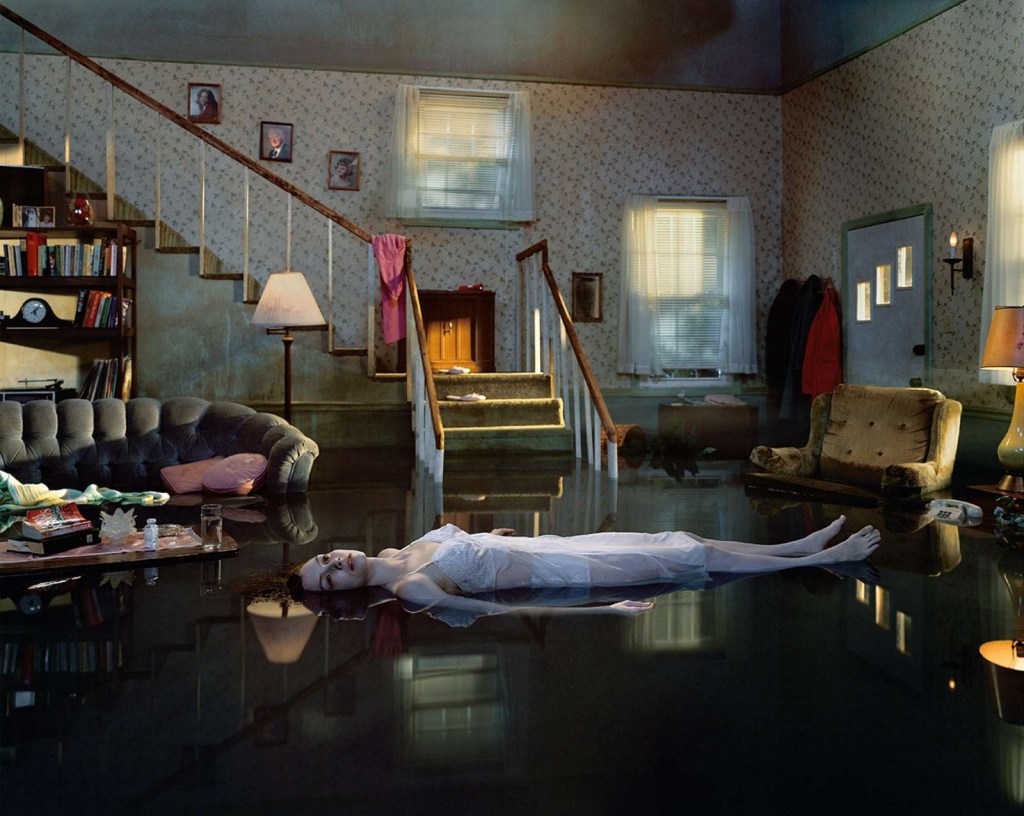
    Gregory Crewdson’s dark, atmospheric, cinematic photographs capture perfectly framed frozen moments incorporating disconnected figures which seem to reflect the domestic and natural landscapes they inhabit; the mundane landscapes are often characterised by an eerie solitude and transformed into something otherworldly, haunting, and compelling. His photographs seem to both reveal and conceal something, creating ambiguous narratives – they are both stills of life and embodiments of the uncanny. The boundaries between life and art, between intimacy and isolation, between strange and familiar environments are blurred.

    “My pictures are about everyday life combined with theatrical effect. I want them to feel outside of time, to take something routine and make it irrational. I’m always looking for a small moment that is a revelation.” – Gregory Crewdson

    The cinematic nature of his work is also reflected in the complex process of creating and staging his images: there is a large crew involved in various aspects of production; props, casting, storyboards, and the natural world is heightened by the use of artificial Hollywood-style lighting and effects such as artificial rain and ice.

    “My pictures are about a search for a moment—a perfect moment. To me the most powerful moment in the whole process is when everything comes together and there is that perfect, beautiful, still moment. And for that instant, my life makes sense.” – Gregory Crewdson

    In his interviews, GC emphasises the importance of the visual balance between the figure, the interior space, and the exterior space; the feeling of transience and the sense of in-between-ness evoked by his images, the enigmatic moments between other unknown moments, the visual commentary on the human condition, the portrayal of flesh, nudity, aging, vulnerability, and mortality.

    Crewdson’s aesthetic incorporates American suburban surrealism, and the mise-en-scène usually features windows, mirrors, bleak settings shown in a mysterious, ghostly light. His photographs are windows into the intimacy of a world filled with hidden unsettling desires.

    “I’m interested in using the iconography of nature and the American landscape as surrogates or metaphors for psychological anxiety, fear or desire.”- Gregory Crewdson

    The characters created often seem alienated, immersed in deep thought, in cosmic loneliness, internal conflict, or a longing for something ineffable. Their expressions are pensive, focused on something beyond the world depicted, at times introspective. The feelings evoked are anticipation – frozen in time, subconscious disquiet, and estrangement.

    “I really love that dynamic between beauty and sadness…there’s always these moments of quiet alienation, the sense of disconnect, but also, these moments of possibility.”- Gregory Crewdson

    Crewdson’s photography reminds us of the suspense, sadness, and solitude of Edward Hopper’s paintings, of Diane Arbus’ bizarre and psychologically intense photographic portraits of people on the margins of society, of William Eggleston’s saturated depictions of seemingly normal, mundane settings behind which something disturbing seems to lurk; as well as the surreal quality of the films of David Lynch.

    Crewdson’s series include Cathedral of Pines, Twilight, and Beneath the Roses.

  • Film sequence analysis: Melancholia (2011) – the surreal overture

    Film sequence analysis: Melancholia (2011) – the surreal overture

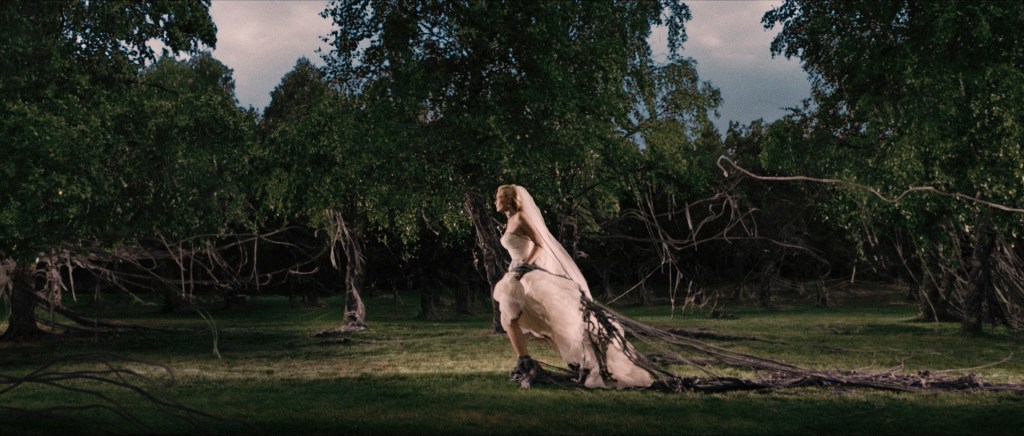
    The opening sequence of Melancholia (2011, Lars von Trier), a collection of gloomy, surreal, painting-resembling, slow-motion shots, is an insidious introduction to the themes of this compelling cinematic symphony of death and destruction. What completes the eerie dreamscape is the exquisite, haunting piece of music by Wagner – the Prelude to the tragic opera Tristan und Isolde, which magnifies the sorrow depicted in the shots and throughout the whole film. The film and the opera both exhibit the philosophical pessimism of Schopenhauer, revolving around unhappiness, death, and painful, unfulfilled human yearning. The nocturnal landscape, the Realm of the Night from Wagner’s opera, symbolically stands for the realm of hidden truth; and the only escape or redemption from a world perceived as evil and relentlessly suffering, is spiritual release, death, hence Justine’s morbid Ophelia moment and the early appearance of the destructive planet, “Melancholia”. The deadly planet, with its suggestive name, is a metaphor most beautifully conveyed visually when Justine, the perpetually despondent and apathetic bride, bathes naked in its light and is shown yearning for its life-threatening touch, on the same musical notes from the Prelude. Death appears in other forms in von Trier’s haunting cinematic overture as well, such as the striking nightmarish image of the dead birds falling from the sky in the background whilst Justine’s cold blank face is shown in a close-up shot; or the horse collapsing backwards in bleak surroundings. Another memorable surreal image is that of a fascinated Justine staring at her fingertips as they seem to be connected to the bolts of lightning.

    Within the themes and the atmosphere of Melancholia, we can also find echoes of Wagner’s own beautifully dark poetic words about Tristan und Isolde, once again resonating with Schopenhauer’s philosophy. He describes the tragic story as “a tale of endless yearning, longing, the bliss and wretchedness of love; world, power, fame, honour, chivalry, loyalty, and friendship all blown away like an insubstantial dream; one thing left living – longing, longing unquenchable, a yearning, a hunger, a languishing forever renewing itself; one sole redemption – death, finality, a sleep without awakening…”

  • A glimpse of Annihilation (2018). The Uncanny Within.

    A glimpse of Annihilation (2018). The Uncanny Within.

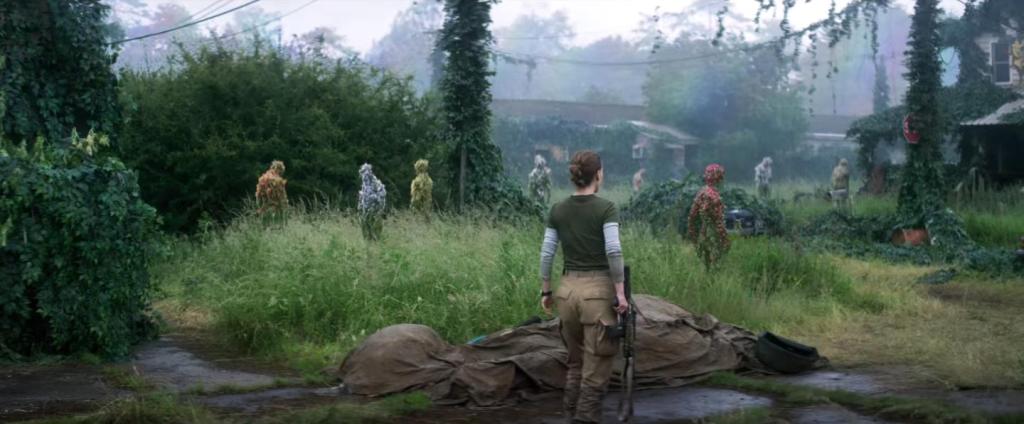
    After the success of his intense directorial debut, Ex Machina, Alex Garland creates a cinematic adaptation of Jeff VanderMeer’s first book from the Southern Reach TrilogyAnnihilation. The sci-fi thriller turns out to be a visually stunning exploration into the unknown, which in this case borrows the form of the enigmatic ‘Shimmer’, a disquieting yet alluring foreign veil encompassing a part of the Earth, Area X – ceaselessly expanding and threatening to swallow the whole world.

    The film opening reveals Lena, the protagonist, a biologist portrayed by the enigmatic, detached Natalie Portman who appears disoriented while being interrogated about the expedition and its survivors. The next scene introduces us for a brief moment to the desolate landscape surrounding the lighthouse, which is mysteriously related to the powerful alien presence the film revolves around. The lighthouse becomes a symbol, the connection with another world, with something uncanny, just like the Monolith from 2001: A Space Odyssey (1968).

    The eerie and toxic beauty of the scenery from Area X echoes the dystopian “Zone” depicted in the well-known sci-fi, Stalker (1979), directed by Andrei Tarkovsky. Similarly, just as the Zone proves to be a philosophical journey, the Area X expedition also symbolises an exploration inwards, and eventually, a disintegration of identity – an idea poetically alluded to through the words uttered by the psychologist in a crucial intense scene towards the end: “Unfathomable mind: now beacon, now sea.”, quoting Samuel Beckett.

    There are many alluring elements contributing to the immersive nature of the film and its fascinating uncanniness: The alien presence of an ambiguous nature, strange, nightmarish mutations, a symbiotic connection and the fear of being assimilated into something terrifying, blurred lines between self and other, the process of doubling, the tension, the eerie, magnetic atmosphere, gripping narrative, philosophical, introspective discourse, and compelling body horror imagery consisting in familiar elements depicted in a sinister, macabre way.

    A geomorphologist, a paramedic, a physicist, a biologist, and a psychologist enter the Shimmer seeking answers and, whilst they encounter biological anomalies, beauty and decay, and a lot of unanswerable questions, we are encouraged to wonder what really lies beyond their (and our) human drive to enter the unknown, as well as how the uncanny encountered outwards echoes the uncanny within each of them.

    Here are a few haunting excerpts from the eponymous book by Jeff VanderMeer. Among other thematic concerns, the book is also focused on environmental themes and metaphors for the conflict between nature and culture. VanderMeer alludes to the relationship between human beings and planet Earth, which can also be viewed through a lens of contamination. He emphasises the idea that nature should be treated as a part of us, just as we are part of nature; for if we dismiss it, we become alienated from a part of ourselves, of our humanness.

    The following excerpts are amazingly reflective of the concept of the uncanny:

    The effect of this cannot be understood without being there. The beauty of it cannot be understood, either, and when you see beauty in desolation it changes something inside you. Desolation tries to colonise you.”

    “I believed that it might be pulling these different impressions of itself from my mind and projecting them back at me, as a form of camouflage. To thwart the biologist in me, to frustrate the logic left in me.

    “A day that had the clarity of dream, of something strange yet familiar – familiar routine but strange calmness.”

    “And what had manifested? What do I believe manifested? Think of it as a thorn, perhaps, a long, thick thorn so large it is buried deep in the side of the world. Injecting itself into the world. Emanating from this giant thorn is an endless, perhaps automatic, need to assimilate and to mimic. Assimilator and assimilated interact through the catalyst of a script of words, which powers the engine of transformation. Perhaps it is a creature living in perfect symbiosis with a host of other creatures. Perhaps it is “merely” a machine. But in either instance, if it has intelligence, that intelligence is far different from our own. It creates out of our ecosystem a new world, whose processes and aims are utterly alien—one that works through supreme acts of mirroring, and by remaining hidden in so many other ways, all without surrendering the foundations of its otherness as it becomes what it encounters.”

    “[…] Imagine these expeditions, and then recognise that they all still exist in Area X in some form, even the ones that came back, especially the ones that came back: layered over one another, communicating in whatever way is left to them. Imagine that this communication sometimes lends a sense of the uncanny to the landscape because of the narcissism of our human gaze, but that it is just part of the natural world here. I may never know what triggered the creation of the doppelgangers, but it may not matter.”

    “The strange quality of the light upon this habitat, the stillness of it all, the sense of waiting, brought me halfway to a kind of ecstasy.”

    ― Jeff VanderMeer, “Annihilation”