Category: Uncategorized

  • Wuthering Heights (2011) and the uncanny connection with nature

    Wuthering Heights (2011) and the uncanny connection with nature

    Wuthering Heights (2011), directed by Andrea Arnold, is a moody, visceral, atmospheric cinematic version of the story featuring the natural beauty and intensity of Kaya Scodelario as Cathy and her ineffable connection with Heathcliff, both of them sharing a deep bond with the gloomy, bleak, foggy surroundings. A haunting, alluringly grim atmosphere is ever present throughout the film. The scenery is dark and as chaotic and turbulent as the compelling cinematography of the film. The atmospheric sounds are intense and loud. From the very beginning, the sound makes us anticipate the eerie human-nature connection. A grown-up Heathcliff wanders around thoughtfully in an empty room, in what appears to be an abandoned house. We can hear the loud wind from outside, as well as the cracking sounds of the doors and the floor. There is something eerie about the location and the unfolding of this initial scene. It looks and sounds as if it could be a house from a horror film. The moment when the branches of a tree hit the window reminds us of the scene from the book in which Mr. Lockwood breaks the window to make the tapping stop. In the film, Heathcliff runs against the wall and ends up collapsing on the floor. After he starts crying, we hear four blows on the window, followed by Heathcliff’s matching response: hitting the floor four times while crying in despair. Then, we hear the impetuous rain and the powerful wind followed by the loud bark of the dogs. The wuthering sound remains constant. Heathcliff remains behind and is barked at by a dog, to which he responds with a savage snarl that implies his wild nature.

    The chemistry between young Heathcliff and Cathy seems to be quite unusual: it is not represented through words, but mainly through looks, gestures, and, symbolically, through the agitation of the natural elements on the moors. Their bond is closely intertwined with the human-nature bond. The point-of-view shots showing Cathy’s wild hair blown in the wind are followed by shots of the wild, high grass and weeds, suggesting a correlation between her tumultuous character and the chaotic movement of the plants. Even though Heathcliff showed he was capable of speaking (despite being mostly uneducated), the two children rarely talk: it seems that there is an unspoken understanding between them or a sense of telepathy whilst they listen to the whistling of the wind and admire the haunting beauty of the landscape. The actors’ performances are very instinctive and have a visceral quality.

    The environment provides refuge for Cathy and Heathcliff from the rest of the world. After their escape from the baptising moment, they start running on the windy, misty moors, happy and carefree. When they get back home, they are slapped by her father for their little rebellion. The film highlights metaphors for the conflict between culture and nature, culture trying to dominate nature, but failing, as nature does not succumb so easily.

    During the playful yet tension-imbued mud fight scene, the two children bond with each other and with the earth at the same time. The playful exploration of childhood is essential in the film. Everything between them seems pure, simple, and physical when they are little. The moors become a symbol for their love affair that becomes more complicated as they grow up. What for the spectator might look like a bleak dystopian or threatening landscape, was actually Heathcliff’s Arcadia. When a grown-up Heathcliff returns after a long absence, it’s not only for his love, Cathy, but also for the place and time when he experienced that pure bliss. An idyllic image of unattainable splendour is engraved in his mind. Childhood often seems to reside in the realm of Arcadia in our minds, offering a unique way of feeling and experiencing things, which cannot be brought back or re-adopted.

    The moors can also be associated with the dark brooding character of a lonely soul (Heathcliff): the moors are infertile, arid, wild, and even threatening. They are not supposed to be cultivated. They are untouched, uninfluenced by culture. Healthcliff is wild in the traditional way which implies unfitness for civil society, yet he is also wild in the modern use of the word, in that he signifies an antidote to hypercivilisation. The concept of wildness denotes something that is shared between humans and nonhuman entities. There are various examples of how this refers to Heathcliff: consider any scene where young Heathcliff resonates with the natural elements.

    wuthering-heights-2011-still-26
  • Life observations and tips on how to pass through life with awareness

    – Empowered people contribute to the empowerment of those around them.
    – Avoid judging things at surface level. You need to dig a few layers deeper without closing your eyes when you find treasure rooms or catacombs. On the surface, you might be trapped in a Fata Morgana.
    – It’s true that high expectations often lead to disillusionment with the world; however, as long as you don’t let yourself be disillusioned with your self, high expectations can be used as fuel to build and improve your life.
    – Falsity contaminates. Authenticity inspires; it’s contagious, enveloped in light, and arouses kindness. Its adepts are a dying breed, so value them.
    – We all have both light and darkness within us. Some will see the angelic, others the devilish, and such judgements are partly reflections of the watcher. I wouldn’t say you should never see yourself through the eyes of another as that could inhibit empathy and diminish your humanity, or simply prevent positive things from happening- instead, be selective of the eyes you borrow, why, and when…
    – …and whatever you do, never lose your own vision, lest you be swallowed by the mouth of the world and become a watered-down version of yourself.
    – Sometimes you won’t know if something is right or wrong for you until you try it. If you realise it feels wrong, give up. If it feels right, carry on, regardless of external views. Not all compasses for life navigation reveal the same directions.
    – Your beliefs, perspective on, or perceptions of many subjects will shift over time. This can manifest in your response to and interpretations of the world around you, which can, in turn, re-shape your world.
    – You should create your life, not just react to it. Relinquish fatalistic views.

    – Don’t fall into toxic ego traps.
    – As you age, years start flying by in a blink. I’m young, and I already feel life slipping away so quickly. Don’t live in the past and don’t spend too much time lamenting the death of past moments or things that are out of your control.
    – Don’t become complacent. If you ever feel ‘there is more to life than this’, whether you’re thinking of your job, lifestyle, or experiences, you are probably right. Explore and feel new things, pump up your dopamine and adrenaline levels. Take risks, but have a safety net.
    Embrace who you are. Maybe in your adolescence and your twenties that’s a meaningless or elusive statement since you’re constantly learning new things, going through changes, growing as a person. Well, hopefully your whole life will consist of that. But embracing yourself encompasses that fluidity too, it means giving yourself a break, recognising all aspects of yourself and accepting them (if they’re not harmful or toxic). It’s okay to cultivate happy thoughts and it’s okay to be cynical sometimes. It’s okay to be funny and it’s okay to be serious. Intense and light-hearted and giggly. Sociable and reserved. Impulsive or stoic. It’s okay to explore your provocative side and it’s also okay to be timid.  To see yourself as a collection of thoughts and memories. To be made of many things, without any single aspect defining you by itself. It’s okay to be real.

  • A poem: Evocation

    There was nothing left
    except her orange blossom scent
    in the air,
    her skin cells
    on the conspiring blanket,
    the energy he was feeding off
    and her seraphic aspirations,
    elegantly penned
    in a forlorn diary
    before her concept
    of the world expanded into
    postmodern depths and
    her self-concept became
    a liberating fluidity
    of thoughts and impulses.
    She’d been through a lot of
    symbolic suicides before
    deciding to resort to
    serial homicide.
    She loved herself, yet
    with every touch
    there was a numbness-
    perhaps in her multiple deaths
    she was seeking
    life,
    perhaps in her metaphorical murders
    she was seeking an escape from
    pseudo-life.

  • Various poems

    Catatonic state

    I feel your ashes
    like quicksand
    I’m sucked into
    so I’m standing still
    trying to enjoy the view.


    Your faith

    I never confessed this but
    your faith helped keep me
    anchored in myself
    whenever the currents started
    hitting from all sides.
    I just wanted to thank you
    for still existing in my mind.


    Extensions

    Extensions of me
    are ramifying under
    your skin.
    Does it hurt when
    I unravel your bloody
    nightmares?


    Discrepancy

    As you weed them out,
    slowly, the space between
    you and the other you-
    both mental concepts-
    will become smaller
    and smaller
    until they merge into one
    at which point you will look
    around, filled with life,
    no longer tainted, you will
    open your eyes and see
    the discrepancy is abolished
    but so is everyone else.

  • Cognitive biases

    Many people live their lives jumping from one cognitive bias to another, with a reluctance to delve deeper or look beyond. They see what they want, they perceive things, events, and people around them in a light that reinforces what they already think or fear of the world or hope the world to be like, and often in a one-dimensional way. This can range from something superficial like snap judgements and the famous halo effect — for instance seeing an attractive person and automatically, sometimes unconsciously attributing them other good traits like being good-natured or intelligent (although there is also the reverse effect, in which people associate some positive assessments with negative personality traits), from the Barnum effect with practices like astrology and certain personality tests, to having confirmation biases such as unsubstantiated interpretations of ambiguous events and situations which fit some pre-existing beliefs or the illusory correlation of behaviours or events. People also tend to have selective, biased memories, often more likely to remember emotionally-charged events more vividly and subjectively. They often have a filter through which all information and their perception of reality goes, which reaffirms some values they hang onto and — sometimes unwisely — attach their sense of self and their interpretation of others to.

    This may seem like an effective and useful self-defence mechanism in many cases, because it means you can always stick to your own little bubble, never having to confront points of view which don’t match your own and which will make you contemplate and potentially doubt the beliefs that you’ve relied on for a long time. However, this approach to life is pretty clearly a double-edged sword. It can often prove to be delusion-inducing, divisive, and toxic as it prevents genuine connection among people and can even turn everything into a — sometimes subtle and insidious — war of ideas, with every person being uncompromising and unwilling to let their guard down and be open or receptive. This war is not always transparent or even vocalised, it can be silent, low-key, as well as appearing disguised as something else-i.e. power trips — because of feelings of repression and the fear or rejection of the unpredictable and the unknown. Things get particularly problematic when the subject concerned is something of importance to people, something related to someone’s core beliefs or nature such as views on life purposes, career choices, relationships, kids, religion, etc.

    What would be the solution then? To judge appearances and only hang out with those who never challenge any of your beliefs? This scenario is quite problematic and actually impossible unless you only seek superficial connections and you’re not truly connected with others — because otherwise, you will most likely never be on the same page with anyone else entirely. Whether that’s a partner, friend, acquaintance, family member, there will always be a situation in which your views on some subject diverge. Because everyone has had unique experiences which shaped them differently. If you’re lucky, one of you will be more diplomatic about it and drop their view to prevent reaching a point where you’ll be pulling each other’s hair out. But is it such a good thing? Always relinquishing one’s standpoint in order to stay away from any semblance of confrontation is not a long-term, or constructive tactic, because it doesn’t stimulate change or self-development and doesn’t really benefit anyone in the long run. It normally only provides moments of relief and passing through life as lightly as possible- although even that depends on what the voice of your ego says.

    I anticipate what one might think: maybe that’s all you want sometimes, moments of relief and bliss. Choosing your battles seems like sensible advice, after all, doesn’t it?  Indeed, and in the end you will inevitably also weigh how much you value the opinion and judgement of the other, as well as how much you value your own opinion, how important it is to you; if you decide it’s a matter of significance and, simultaneously, that it’s a person whose opinion matters to you, and you can’t just brush things off, then you need to be aware of how you tackle the subject, don’t try to make it seem like you’re imposing your perception of reality on someone else. People might be less inclined or willing to digest and properly, openly process information communicated with an ostentatious holier-than-thou attitude. Even though you may find it difficult to act in an emotionally intelligent way if it’s a subject you feel strongly about, like an ingrained belief, it’s not impossible. Promote acceptance by embodying an accepting and open approach to the world around you. Sometimes this implies accepting that people have different opinions, some of which you may view as wrong; other times the best approach is to educate, where there is ignorance. The more you get to know yourself and others, the easier it will be to know when to be assertively relentless in your convictions, and when to let go.

    The key is to aim towards becoming the best versions of our selves. Let’s be aware of our cognitive biases and not trust them blindly, let’s be open-minded and non-judgemental and non-dismissive towards other perceptions of reality. Let’s build bridges. Let’s do this whilst still being authentic and true to ourselves and to our own core system of values, but also true to the people around us. Let’s choose understanding first and foremost, which ultimately leads to happiness anyway, and let’s defy the narcissistic tendency of our contemporary society by practising empathy and fulfilling self-interests simultaneously, rather than treating them as mutually exclusive.

  • A glimpse of Perfect Blue

    A glimpse of Perfect Blue

    Perfect Blue (1997), directed by Satoshi Kon, is a disturbing, disorienting, surreal Japanese animated psychological horror/thriller film based on the 1991 novel “Perfect Blue: Complete Metamorphosis” written by Yoshikazu Takeuchi. Mima, a 21-year-old former pop icon pursuing an acting career, can no longer discern between reality and fantasy, as she is haunted by ghosts of her past as a teen idol and subsequently delves into paranoid delusions and nightmares. Her doppelgänger- an elusive mirror figure seemingly belonging to a parallel reality- is an embodiment of her former J-pop self whose taunting remarks about her failed diva status seem to spring from her own unconscious mind. The underlying commentary of the film touches the theme of unstable selfhood correlated with celebrity and the vicious effects of stardom, in a dark critique of Japanese pop culture and the cult of celebrity.
    This eerie stylised depiction of madness filled with blood, violence, and suspense, has been seen as an animated version of a Giallo thriller directed by Dario Argento; it has also been cited as the inspiration behind Darren Aronofsky’s work, the most obvious one being Black Swan.

  • Reviews: Psychological horror films set in the fashion world: The Neon Demon (2016) and Helter Skelter (2012)

    Reviews: Psychological horror films set in the fashion world: The Neon Demon (2016) and Helter Skelter (2012)

    The Neon Demon (2016), directed by Nicolas Winding Refn, is a surreal hyper-stylised psychological horror film unveiling a dark satire of the fashion industry. Elle Fanning plays Jesse, who epitomises the trope of the pure, genuine, angelic character entering a wicked world filled with artificial, soulless, manufactured characters, and becoming tainted by her surroundings. Meanwhile, everything spirals out of control and eventually down into the macabre and the gruesome.

    The hallucinatory and grotesque spectacle is shown through a slick fashion commercial aesthetic, accompanied by fitting synth sounds and little dialogue, as the film relies on its bewitching atmosphere. Many parallels can be drawn between Refn’s film and the stylish Japanese psychological horror film, Helter Skelter (2012), which was potentially a source of inspiration: they are both bloody, visually stunning, surreal, satirical reflections on the artificiality of the fashion world. They even share torn out eyeballs – the difference being The Neon Demon goes all the way when one character eats a regurgitated eyeball, in one of the many scenes alluding to the theme of women devouring each other and destroying themselves in pursuit of beauty-based fame. The shock value of The Neon Demon is continuously impactful, with elements ranging from self-mutilation and absurd knife fights to cannibalism and necrophilia.

    neon-demon-film-still-2

    The ghastly, sickening acts and soft gore visuals are mixed with beautiful, compelling imagery and a glamorous style in such a harmonious way, as if purposely trying to make it hard for viewers to be grossed out; instead, the viewer is under a spell, watching the unfolding of a disturbingly strange dream.

    The majority of criticism the film has been subjected to revolves around it being shallow, reductive, objectifying, offensive, form over content. However, the film is clearly self-reflective in the sense that it’s a critique of the things it depicts and the things it exaggerates to an absurd degree. Sometimes the subtext eludes viewers because the film might appear to revel in its own madness and in the culture it condemns, but, in the end, every viewer takes something different from the film. The Neon Demon is hypnotic and compelling with its gripping atmosphere, its dual aesthetic- incorporating both the glamorously exquisite and the macabre, and its bewildering dream sequences.

    41272426_1918757085094468_5702621502751375360_nBased on the Japanese exploitative psychological horror manga by Kyoko Okazaki, Helter Skelter (2012), directed by Mika Ninagawa, is a disturbing hyperstylised surreal drama depicting the chaotic life of manufactured superstar Lilico, who navigates the dark side of the fashion world. What lurks beyond the glamorous facade is portrayed as not only sad, but grim, and merging with the macabre. Whilst Lilico gradually delves into psychotic delusions, the film touches upon notions of transience, artificiality, the impact of stardom and its correlation with mental state deterioration, the identification of the self purely with the image and the (fluctuating and inevitably fading) success of the image, and the consequent predictable corruption of the soul.

    Lilico, played by suitably controversial Erika Sawajiri, is an influential and highly appreciated Japanese supermodel whose beautiful appearance permeates the news, magazines, and minds of Japanese teenage girls who look up to and aspire to be her – or the idea of her. Behind the scenes and the smiles, she embodies a clear case of narcissistic personality disorder, her existence solely dictated by an insatiable ego which is fed by fame and dependent on the recognition of her physical beauty and success. In some ways, her life seems to be a heavenly dream that she just grows tired of: she is always found either revelling or agonising in aesthetic, lurid, and shiny surroundings, around people who satisfy her every whim. She lives in an alluring, luxurious, decadent place, where the colour palette is dominated by red, the vividness of the decor being reminiscent of Argento’s classic, Suspiria (1977).

    Jaded, tragically cynical, shallow, and malicious, Lilico ends up being a toxic presence in the lives of the few people in her proximity, constantly undermining and treating her assistant harshly despite her blind devotion, and trying to sabotage others’ happiness. Her self-centred, vitriolic demeanour is counteracted by moments of vulnerability in which she drowns in her own dramatic sadness, as depicted in explicit shots finding her collapsed and lying motionless on the floor. Lilico is unhinged, oscillating between feeling on top of the world, completely apathetic, in total agony, and at times terrifyingly psychotic. The psychotic episodes unfold like visually stunning, distorted psychedelic nightmares, featuring blood rain, optical illusions, and ominous butterflies.

    When another model enters the picture and seems to steal the spotlight, threatening her goddess status with her presence, Lilico is faced with the acute awareness of the flimsy quality of the fashion industry. Consumed by feelings of helplessness and resentment, she wants to destroy the new star, Kozue Yoshikawa, despite acknowledging the inherent ephemeral nature of modelling careers and the hunt for newness. However, since her numerous cosmetic surgeries are taking their toll as the clinic she went to is accused of suspicious conduct in their treatments, Lilico’s physical health diminishes and she ends up destroying herself and performing a shocking act in front of a myriad of cameras pointed at her- an act which, of course, involves the eyes.

    Aesthetically, Helter Skelter is a hypnotic feast for the senses, which is unsurprising considering the director of the film is Mika Ninagawa, who has a background in commercial photography and a lurid, vividly-coloured signature photographic style. The message is transparent in this twisted, grotesque, yet highly aesthetic spectacle, namely a poignant and compelling critique of the fashion world, its objectifying nature, and the concept of stardom which encourages the cultivation of appearance over essence. The protagonist displays a perfect, glamourous, appealing image out into the world, whilst being rotten on the inside- both mentally and physically. Lilico is unequivocally damned, however not entirely responsible for her own damnation.

  • Review: Mira Nedyalkova’s underwater photography

    Review: Mira Nedyalkova’s underwater photography

    A selection of artworks from the stunning, eerie underwater photography collection by Bulgarian visual artist and fine art photographer Mira Nedyalkova.

    Mira’s work depicts the beautiful facets of pain and sadness in fluid forms, whilst linking water with sensuality and exploring erotic and emotional themes.

    Water symbolism always makes us think of regeneration, purification, and catharsis – a reflection of the beginning and the end. Mira emphasises the dual dimension of water, symbolising sin and purity, as well as pleasure and innocence. The aquatic element has both generative and destructive powers; it can be life-giving and apocalyptic. Her models are depicted as otherworldly beings, seemingly frail, yet also dark and enigmatic. Water is also the essential element contributing to the surreal aesthetic of the pictures, since it changes the light, colour, and shapes captured in unexpected ways.

    Mira Nedyalkova is not interested in pure photography – as opposed to many photographers who praise raw analogue photographs for capturing unaltered moments, she recognises the creative and transformative power of post-processing and digital editing as a way of enriching photography, of creating something new, conveying an emotion, and telling a story. As a former painter, she now sees digital editing as a way of getting closer to painting again.

    Like many artists, Mira believes emotion is an essential part of a remarkable piece of art. Her view is epitomised in her stunning, memorable photographs, often depicting expressive, intense characters found in captivity. Other recurring characteristics of her artistic vision are a preference for nudity, the eerie beauty of nature, enigmatic, fragile-looking animals, and subtle sexuality.

  • Film sequence analysis: Melancholia (2011) – the surreal overture

    Film sequence analysis: Melancholia (2011) – the surreal overture

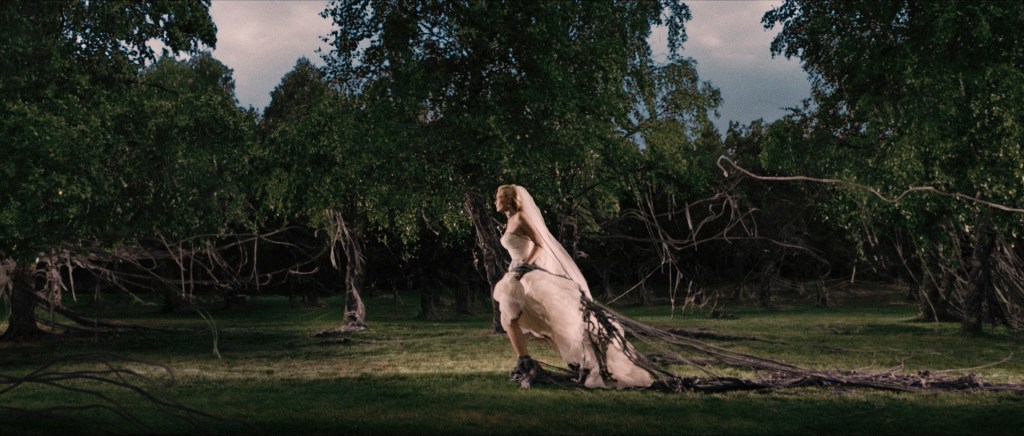
    The opening sequence of Melancholia (2011, Lars von Trier), a collection of gloomy, surreal, painting-resembling, slow-motion shots, is an insidious introduction to the themes of this compelling cinematic symphony of death and destruction. What completes the eerie dreamscape is the exquisite, haunting piece of music by Wagner – the Prelude to the tragic opera Tristan und Isolde, which magnifies the sorrow depicted in the shots and throughout the whole film. The film and the opera both exhibit the philosophical pessimism of Schopenhauer, revolving around unhappiness, death, and painful, unfulfilled human yearning. The nocturnal landscape, the Realm of the Night from Wagner’s opera, symbolically stands for the realm of hidden truth; and the only escape or redemption from a world perceived as evil and relentlessly suffering, is spiritual release, death, hence Justine’s morbid Ophelia moment and the early appearance of the destructive planet, “Melancholia”. The deadly planet, with its suggestive name, is a metaphor most beautifully conveyed visually when Justine, the perpetually despondent and apathetic bride, bathes naked in its light and is shown yearning for its life-threatening touch, on the same musical notes from the Prelude. Death appears in other forms in von Trier’s haunting cinematic overture as well, such as the striking nightmarish image of the dead birds falling from the sky in the background whilst Justine’s cold blank face is shown in a close-up shot; or the horse collapsing backwards in bleak surroundings. Another memorable surreal image is that of a fascinated Justine staring at her fingertips as they seem to be connected to the bolts of lightning.

    Within the themes and the atmosphere of Melancholia, we can also find echoes of Wagner’s own beautifully dark poetic words about Tristan und Isolde, once again resonating with Schopenhauer’s philosophy. He describes the tragic story as “a tale of endless yearning, longing, the bliss and wretchedness of love; world, power, fame, honour, chivalry, loyalty, and friendship all blown away like an insubstantial dream; one thing left living – longing, longing unquenchable, a yearning, a hunger, a languishing forever renewing itself; one sole redemption – death, finality, a sleep without awakening…”

  • A poem: Unfiltered

    Clinical,
    surreal emptiness.
    Chocolate-scented wood.
    Smell of new and
    non-alcoholic intoxication.
    Life as art for art’s sake.

    Neon light flickers as you blink
    infected by dizziness.

    No longer tone-deaf to the harmonies
    of your own soul,
    you don’t shrink for someone else to grow.

    An invisible corpse in the plastic bag
    winks at you from the corner-
    madness, it grows
    in sanity.

    Lifeless but intense:
    you don’t pray for another,
    you prey for yourself.