– Empowered people contribute to the empowerment of those around them.
– Avoid judging things at surface level. You need to dig a few layers deeper without closing your eyes when you find treasure rooms or catacombs. On the surface, you might be trapped in a Fata Morgana.
– It’s true that high expectations often lead to disillusionment with the world; however, as long as you don’t let yourself be disillusioned with your self, high expectations can be used as fuel to build and improve your life.
– Falsity contaminates. Authenticity inspires; it’s contagious, enveloped in light, and arouses kindness. Its adepts are a dying breed, so value them.
– We all have both light and darkness within us. Some will see the angelic, others the devilish, and such judgements are partly reflections of the watcher. I wouldn’t say you should never see yourself through the eyes of another as that could inhibit empathy and diminish your humanity, or simply prevent positive things from happening- instead, be selective of the eyes you borrow, why, and when…
– …and whatever you do, never lose your own vision, lest you be swallowed by the mouth of the world and become a watered-down version of yourself.
– Sometimes you won’t know if something is right or wrong for you until you try it. If you realise it feels wrong, give up. If it feels right, carry on, regardless of external views. Not all compasses for life navigation reveal the same directions.
– Your beliefs, perspective on, or perceptions of many subjects will shift over time. This can manifest in your response to and interpretations of the world around you, which can, in turn, re-shape your world.
– You should create your life, not just react to it. Relinquish fatalistic views.
– Don’t fall into toxic ego traps.
– As you age, years start flying by in a blink. I’m young, and I already feel life slipping away so quickly. Don’t live in the past and don’t spend too much time lamenting the death of past moments or things that are out of your control.
– Don’t become complacent. If you ever feel ‘there is more to life than this’, whether you’re thinking of your job, lifestyle, or experiences, you are probably right. Explore and feel new things, pump up your dopamine and adrenaline levels. Take risks, but have a safety net.
– Embrace who you are. Maybe in your adolescence and your twenties that’s a meaningless or elusive statement since you’re constantly learning new things, going through changes, growing as a person. Well, hopefully your whole life will consist of that. But embracing yourself encompasses that fluidity too, it means giving yourself a break, recognising all aspects of yourself and accepting them (if they’re not harmful or toxic). It’s okay to cultivate happy thoughts and it’s okay to be cynical sometimes. It’s okay to be funny and it’s okay to be serious. Intense and light-hearted and giggly. Sociable and reserved. Impulsive or stoic. It’s okay to explore your provocative side and it’s also okay to be timid. To see yourself as a collection of thoughts and memories. To be made of many things, without any single aspect defining you by itself. It’s okay to be real.
Blog
-
Life observations and tips on how to pass through life with awareness
-
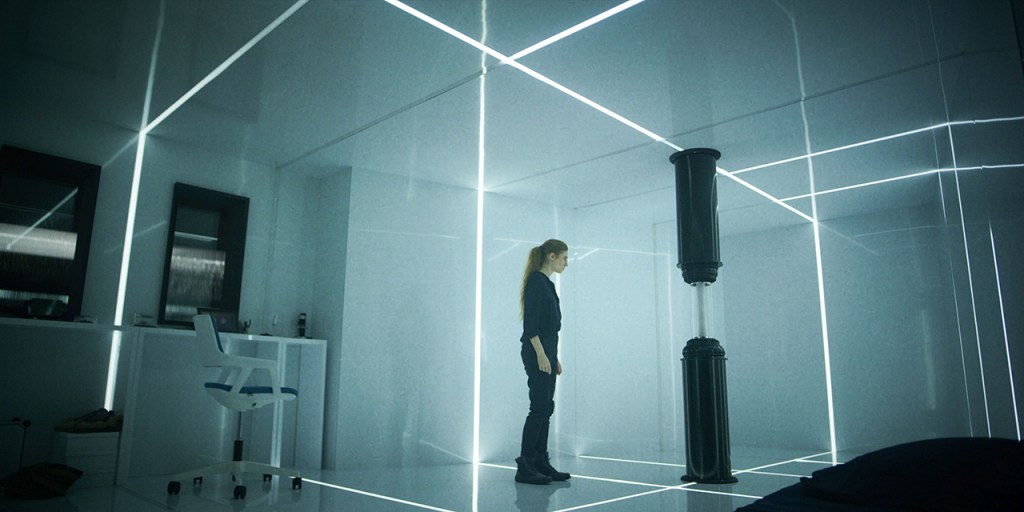
Review / analysis: Osmosis (2019, TV series)
Osmosis (2019, TV, now on Netflix), created by Audrey Fouché, is a French sci-fi drama series with echoes of Black Mirror, albeit less nihilistic, and a tinge of Sense8, as it depicts telepathic encounters. It revolves around the frequently explored sci-fi concept of AI-facilitated romance, interwoven with corresponding existential, moral, and political concerns, as well as realistic coexisting anxieties. The revealing biological term from the title is also the name of the futuristic dating app which collects, uses, and monitors the brain data of the testers for the purpose of uniting them with their ideal romantic match for life. There are also parallel narratives accompanying this romance-centric plot line, featuring non-romantic characters whose lives are driven by different purposes, with motivations such as family or socio-political agendas.
The specifics of the Osmosis process include swallowing a pill delivering nanorobots into the brains of the volunteers, as a way of picking up thoughts, characteristics, responses, and so on. At the end of the process, the algorithm not only reveals the face of their Osmotic partner, but allows the tech team to further analyse brain information in real time to examine the hormone levels, impulses, and reactions of the participant. When both partners are implanted, their brains can connect from afar, allowing them to share an otherworldly connection and moments of ineffable exaltation. There is a moment in which Paul, the protagonist and pioneer of Osmosis, visualises and tries to capture the phenomenon in words, yet the cynical unknowing man listening to him can’t grasp the reality or extent of the experience, dismissing it as poetic embellishment for falling in love.
The unique connection is depicted through intertwining physical bodies floating in a dark virtual space. However, there is an element of subjectivity which makes us reluctant to take Paul’s symbolic descriptions as well as the consistency of Osmosis for granted. Whilst Paul seems to be infatuated with and devoted to the Osmosis process, describing it as otherworldly, if we consider his partner’s dissatisfaction and actions in the show (which I will not spoil too much) we could infer that she may not feel it with the same intensity. It could be that certain issues regarding scientific predictability and the controlling aspects of Osmosis represent a strong incentive for her actions, overriding the augmented Osmosis euphoria, as we never hear her describe the same remarkable experience, which makes you wonder- to what extent does the Osmosis experience vary based on brain chemistry? Is it comparable to a normal intimate encounter between infatuated lovers? Is it as varied as people’s capacity for and perception of love? Another aspect that is aligned with the view of subjectivity and inconsistency is the moment Paul starts saying Osmosis didn’t seem as strong/ intense at particular times. Not to mention Lucas, whose abnormal Osmosis experience was dismissed as the inevitable error of and exception to the test. Is Osmosis as reliable as Paul hopes?
Osmosis is a complex show in its dystopian-utopian ambiguity, especially when it comes to the reliance on advanced invasive technology in the pursuit of human desires, the trustworthiness of and control exerted by tech companies, as well as the idea of controlling and monitoring feelings and predicting love-related outcomes. Some characters vouch for the project, whilst others exhibit outright pessimism or express some moral and existential doubts- including the supporters of a competing app based on a different, less fatalistic ideology. This will probably echo the responses of the viewers as well, and the common concerns anyone will have on this topic- the oscillations between rejecting and embracing the potential impact of such advanced technology, seeing it as a threatening aspect of the bleak dark future ahead or as an enlightening step forward.
Another significant dimension of the series- a contemporary element among more futuristic concerns, is the complicated familial bond between the creators of Osmosis, Esther (Agathe Bonitzer) and Paul (Hugo Becker). Paul believes in Osmosis with an obsessive dedication, yet everyone around him seems to have other conflicting interests. His sister, Esther, the tech mastermind behind the project, explores the alternative, medical uses derived from Osmosis, such as using the technology to revive their comatose mother, which leads to a sinister family secret being revealed through memory reconstruction. Meanwhile, another character reconsiders their own ulterior motive for signing up for the app, whilst an important piece of the puzzle experiences a change of heart, threatening Paul’s beliefs and life. AI sentience may also make a short-lived appearance.
The show is mostly slow-paced, exuding arthouse vibes, and the characters, as well as the actors’ performances, have a polarising effect in terms of likeability. Esther is the highly intelligent, calculated component of Osmosis, with a background in AI and computational neuroscience – who is, however, perhaps ironically, quite detached from the actual experience and aims of the project. She is absent-minded and somewhat discourteous with people in her vicinity, intense yet emotionally detached from everything aside from being invested in and consumed by family events, doing questionable deeds for pure reasons. Meanwhile, her interest in romantic love is non-existent and replaced by her love for her brother and mother, her sexual encounters in Virtual Reality, and her conversations with the Osmosis-powering computer, the disembodied voice of Martin. Esther is self-contained, tense, rarely smiling, unwavering in her goals – the sterile, clinical room she is usually seen in being a reflection of her clinical self. On the other hand, her brother, Paul, is quite the opposite, expansive, prone to worrying, emotionally transparent, lively, with his constantly reinforced devotion to the Osmosis project and his passionate discourse on the sublimity of love, even whilst the connection which started everything shows signs of disintegrating. If there is one character that will definitely have a negative impact, that will be Ana, due to her poor decision-making, unassured, flimsily duplicitous manner and random last-minute changes of heart: some nonsensical (for her character) and some belated; she was essential in the delivery of the plot, but her character could have made a lot more sense.
Osmosis starts from a common sci-fi premise and popular tropes including AI matchmaking, tech threats, surveillance, AI sentience, and data corruption, exploring themes of alienation, soulmates, family ties, alternative sexual orientation, addictions, proceeding to delve into the humanity of the characters, into character flaws, into stories not going as planned, into reality rather than pessimistic apocalyptic nightmares or make-believe romantic ideals.
-
A poem: Evocation
There was nothing left
except her orange blossom scent
in the air,
her skin cells
on the conspiring blanket,
the energy he was feeding off
and her seraphic aspirations,
elegantly penned
in a forlorn diary
before her concept
of the world expanded into
postmodern depths and
her self-concept became
a liberating fluidity
of thoughts and impulses.
She’d been through a lot of
symbolic suicides before
deciding to resort to
serial homicide.
She loved herself, yet
with every touch
there was a numbness-
perhaps in her multiple deaths
she was seeking
life,
perhaps in her metaphorical murders
she was seeking an escape from
pseudo-life. -
Various poems
Catatonic state
I feel your ashes
like quicksand
I’m sucked into
so I’m standing still
trying to enjoy the view.Your faith
I never confessed this but
your faith helped keep me
anchored in myself
whenever the currents started
hitting from all sides.
I just wanted to thank you
for still existing in my mind.Extensions
Extensions of me
are ramifying under
your skin.
Does it hurt when
I unravel your bloody
nightmares?Discrepancy
As you weed them out,
slowly, the space between
you and the other you-
both mental concepts-
will become smaller
and smaller
until they merge into one
at which point you will look
around, filled with life,
no longer tainted, you will
open your eyes and see
the discrepancy is abolished
but so is everyone else. -
A poem: A smile among ruins
All dead things are
resurrected
by the phantom smile-
you conjure it
when the world collapses:
that lovely,
foreign yet familiar
equivocal smile
your mind translates into
life and pure hope
stays engraved in your memory;
through mirroring,
you borrow it
and unknowingly pass it on
to someone else-
that is the sweet beauty
of connection.
–Alternative ending:
that is the bittersweet beauty
of apparent connection. -
Cognitive biases
Many people live their lives jumping from one cognitive bias to another, with a reluctance to delve deeper or look beyond. They see what they want, they perceive things, events, and people around them in a light that reinforces what they already think or fear of the world or hope the world to be like, and often in a one-dimensional way. This can range from something superficial like snap judgements and the famous halo effect — for instance seeing an attractive person and automatically, sometimes unconsciously attributing them other good traits like being good-natured or intelligent (although there is also the reverse effect, in which people associate some positive assessments with negative personality traits), from the Barnum effect with practices like astrology and certain personality tests, to having confirmation biases such as unsubstantiated interpretations of ambiguous events and situations which fit some pre-existing beliefs or the illusory correlation of behaviours or events. People also tend to have selective, biased memories, often more likely to remember emotionally-charged events more vividly and subjectively. They often have a filter through which all information and their perception of reality goes, which reaffirms some values they hang onto and — sometimes unwisely — attach their sense of self and their interpretation of others to.
This may seem like an effective and useful self-defence mechanism in many cases, because it means you can always stick to your own little bubble, never having to confront points of view which don’t match your own and which will make you contemplate and potentially doubt the beliefs that you’ve relied on for a long time. However, this approach to life is pretty clearly a double-edged sword. It can often prove to be delusion-inducing, divisive, and toxic as it prevents genuine connection among people and can even turn everything into a — sometimes subtle and insidious — war of ideas, with every person being uncompromising and unwilling to let their guard down and be open or receptive. This war is not always transparent or even vocalised, it can be silent, low-key, as well as appearing disguised as something else-i.e. power trips — because of feelings of repression and the fear or rejection of the unpredictable and the unknown. Things get particularly problematic when the subject concerned is something of importance to people, something related to someone’s core beliefs or nature such as views on life purposes, career choices, relationships, kids, religion, etc.
What would be the solution then? To judge appearances and only hang out with those who never challenge any of your beliefs? This scenario is quite problematic and actually impossible unless you only seek superficial connections and you’re not truly connected with others — because otherwise, you will most likely never be on the same page with anyone else entirely. Whether that’s a partner, friend, acquaintance, family member, there will always be a situation in which your views on some subject diverge. Because everyone has had unique experiences which shaped them differently. If you’re lucky, one of you will be more diplomatic about it and drop their view to prevent reaching a point where you’ll be pulling each other’s hair out. But is it such a good thing? Always relinquishing one’s standpoint in order to stay away from any semblance of confrontation is not a long-term, or constructive tactic, because it doesn’t stimulate change or self-development and doesn’t really benefit anyone in the long run. It normally only provides moments of relief and passing through life as lightly as possible- although even that depends on what the voice of your ego says.
I anticipate what one might think: maybe that’s all you want sometimes, moments of relief and bliss. Choosing your battles seems like sensible advice, after all, doesn’t it? Indeed, and in the end you will inevitably also weigh how much you value the opinion and judgement of the other, as well as how much you value your own opinion, how important it is to you; if you decide it’s a matter of significance and, simultaneously, that it’s a person whose opinion matters to you, and you can’t just brush things off, then you need to be aware of how you tackle the subject, don’t try to make it seem like you’re imposing your perception of reality on someone else. People might be less inclined or willing to digest and properly, openly process information communicated with an ostentatious holier-than-thou attitude. Even though you may find it difficult to act in an emotionally intelligent way if it’s a subject you feel strongly about, like an ingrained belief, it’s not impossible. Promote acceptance by embodying an accepting and open approach to the world around you. Sometimes this implies accepting that people have different opinions, some of which you may view as wrong; other times the best approach is to educate, where there is ignorance. The more you get to know yourself and others, the easier it will be to know when to be assertively relentless in your convictions, and when to let go.
The key is to aim towards becoming the best versions of our selves. Let’s be aware of our cognitive biases and not trust them blindly, let’s be open-minded and non-judgemental and non-dismissive towards other perceptions of reality. Let’s build bridges. Let’s do this whilst still being authentic and true to ourselves and to our own core system of values, but also true to the people around us. Let’s choose understanding first and foremost, which ultimately leads to happiness anyway, and let’s defy the narcissistic tendency of our contemporary society by practising empathy and fulfilling self-interests simultaneously, rather than treating them as mutually exclusive.
-
A poem: The Rite
Her face aglow,
she performs her rite
gracefully, like the snow
in the silver lunar light;
deathly hair, startling eyes,
soul-enhancing
white night purity, necromancing-
nude porcelain skin,
beauty within
whispers of sin;
knowledge sought after
flirting with disaster
secrets held in astral shells
uttered in diffuse spells
the occult- her only master. -
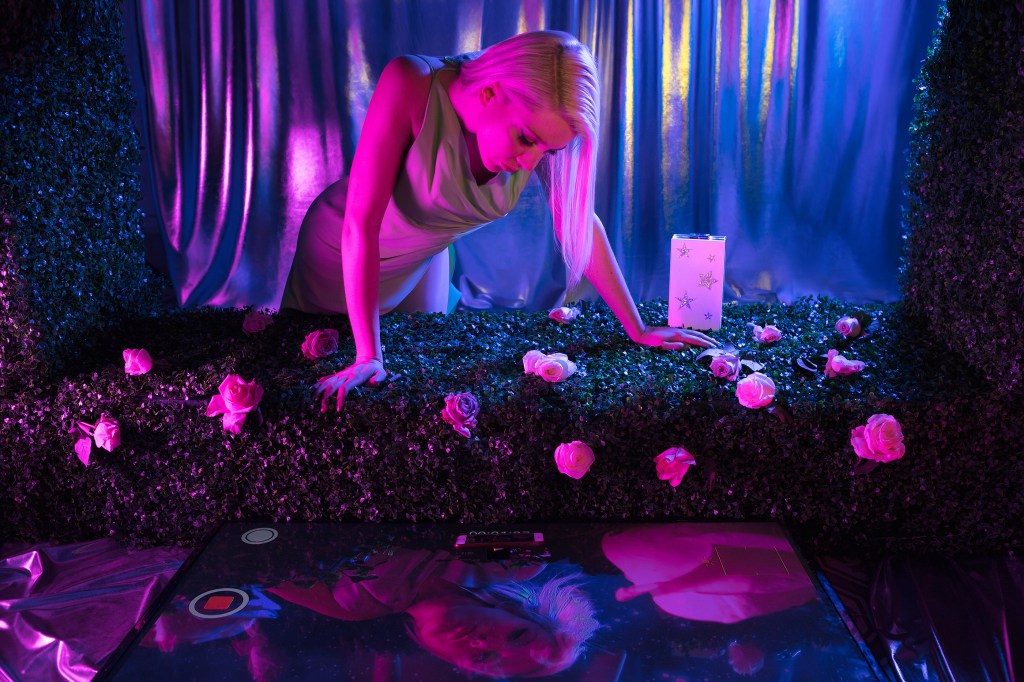
Signe Pierce: Glamorous over-saturated hyperreality
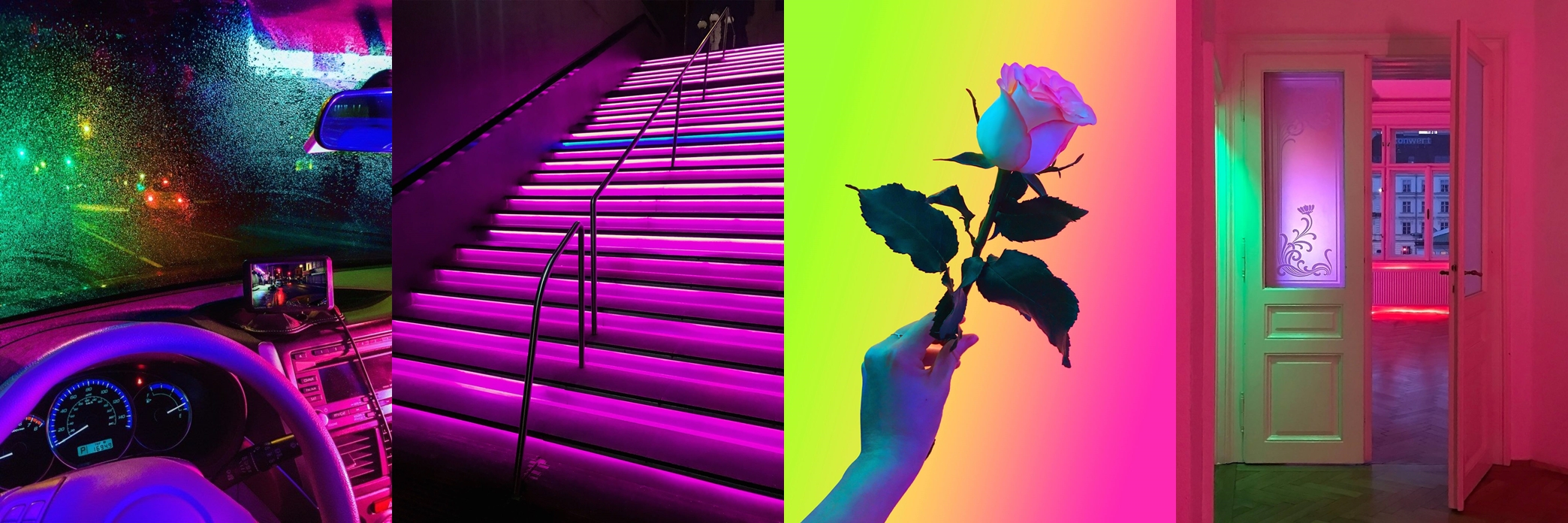
New York-based contemporary multimedia artist Signe Pierce self-identifies as a reality artist, exploring the blurred lines between art and technology, between art and life, and the concept of heightened reality through her neon urban signature photographic style characterised by a glamorous, saccharine aesthetic. The vibrant colour palette she uses is dominated by bright pink and purple hues, adding a different dimension to mundane urban landscapes. The chromatic excess emphasises artificiality, as the artist provides a visual commentary on the nature of reality in the digital world.
Signe Pierce embraces the idea of ‘unreality’ and takes it to extremes in her lurid, holographic paradise. The viewer entering her world is mesmerised, distracted, trapped in hyperreality. Beautifully influenced by her environment and the chaos of New York, her work provides a glimpse into an augmented version of the famous city for the outsider to be virtually immersed into. Since her art is of a meta-referential nature, it shouldn’t be surprising that it self-consciously depicts the ubiquity of commercial ads and photography, phone screens, screens in general, which, instead of piercing into her world, are rather being harmoniously incorporated in it.The almost aggressive, consistent use of pink and light purple tones reveals a feminist preoccupation with what is considered stereotypically girly- being subverted by the themes depicted, such as consumerism, surveillance, hyper-reality, and assertive hyper-femininity. The artist not only plays with visual perceptions by depicting fluid forms and using distorted liquefied shapes in some of her pictures, she also challenges perceptions of femininity, by blurring the line between the objectifier and the objectified and portraying the female figure as provocative and strong.
The slick fashion commercial aesthetic of the photographs is reminiscent of surreal fashion horror films such as Nicolas Winding Refn’s Neon Demon and the urban vividness of cyberpunk cinematography. At the same time, her frequently updated Instagram feed includes cinematic photographs depicting a constantly wired, overstimulated world. Some elements often featured in her universe are mirrors, eyes, technological devices, shiny, holographic pieces of clothing, reflecting lights, rainy cityscapes, strip malls, and a lush, stunningly illuminated mise-en-scene. In addition to emphasising the inherent ‘simulacrum’ nature of the urban experience in New York, Signe Pierce’s hyperreal sensory spectacle merges perceptions of reality and simulation to make the viewer question the nature of truth and reality in contemporary society. -
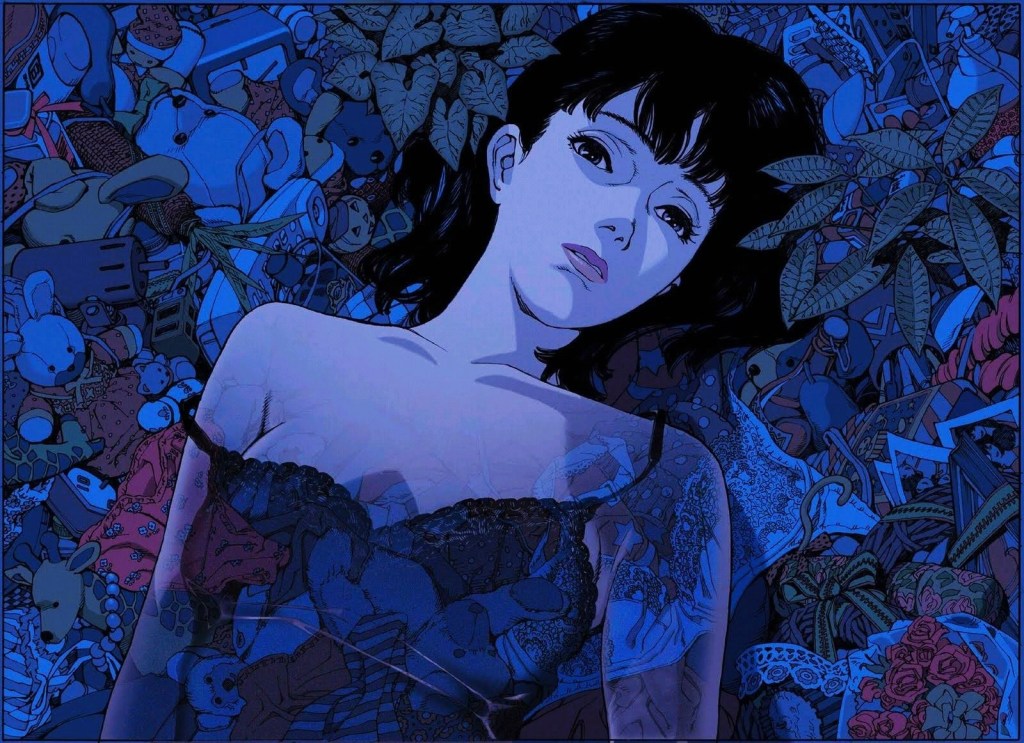
A glimpse of Perfect Blue
Perfect Blue (1997), directed by Satoshi Kon, is a disturbing, disorienting, surreal Japanese animated psychological horror/thriller film based on the 1991 novel “Perfect Blue: Complete Metamorphosis” written by Yoshikazu Takeuchi. Mima, a 21-year-old former pop icon pursuing an acting career, can no longer discern between reality and fantasy, as she is haunted by ghosts of her past as a teen idol and subsequently delves into paranoid delusions and nightmares. Her doppelgänger- an elusive mirror figure seemingly belonging to a parallel reality- is an embodiment of her former J-pop self whose taunting remarks about her failed diva status seem to spring from her own unconscious mind. The underlying commentary of the film touches the theme of unstable selfhood correlated with celebrity and the vicious effects of stardom, in a dark critique of Japanese pop culture and the cult of celebrity.
This eerie stylised depiction of madness filled with blood, violence, and suspense, has been seen as an animated version of a Giallo thriller directed by Dario Argento; it has also been cited as the inspiration behind Darren Aronofsky’s work, the most obvious one being Black Swan. -
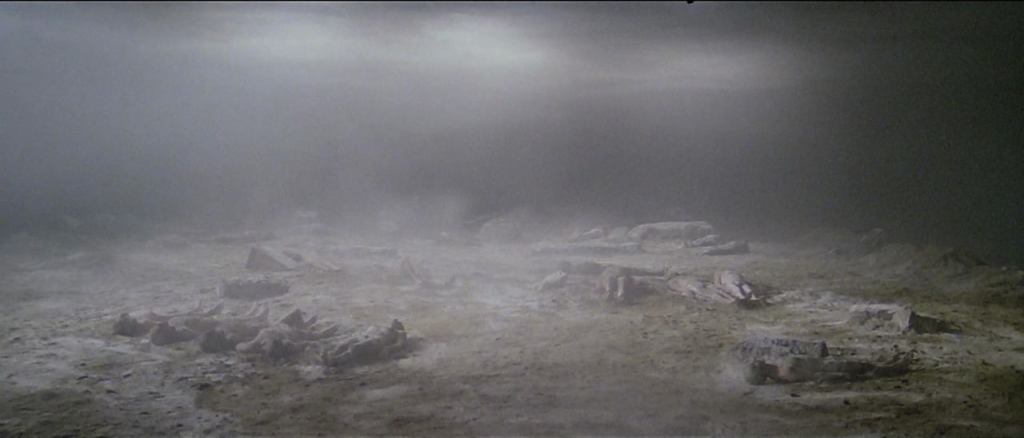
Short reviews: Lurid Cult Horror films – Fascination, The Beyond, and Videodrome
Fascination (1979) is an artful aesthetically-pleasing erotic Gothic horror film situated between arthouse and grindhouse, directed by Jean Rollin. Rollin tends to be associated with the sexploitation genre, yet he is recognised for the surreal dark fantasy style of his lyrical, tantalising, elegant, and atmospheric films, combining sensuality and visual poetry. Fascination’s opening scene takes place in 1905 in an abattoir where seemingly ordinary French women drink ox blood, considered a cure for anaemia at the time. Despite this bizarre moment and the fact that, as one of the ethereal vampire girls picks up a scythe, the film appears to progress into the slasher realm, Fascination is soft compared to other gore films, and not as surreal or bewildering as other Rollin films. The little gore that appears in the film is almost elegantly depicted.
Fascination is shot in a ghostly sinister castle surrounded by mist and emptiness. A thief ends up hiding in the chateau, where he finds two enigmatic nymph-like angelic-looking young women all alone, Eva and Elizabeth. They initially seem to be easy prey, but there is something unsettling about them, and it turns out they are actually part of a cult of aristocratic vampires.The Beyond (1981) is a surreal cult horror film with Southern Gothic echoes, directed by Lucio Fulci, who is known as “The Godfather of Gore”. When Liza decides to renovate her newly-inherited dilapidated hotel, the activity triggers a series of mysterious deaths. It is revealed that the hotel is built over one of the seven portals to Hell, which was activated by the renovation. The violent darkness of the film unfolds in an unsettling combination of supernatural events, visceral graphic scenes featuring tarantulas and ghastly rotten zombie flesh, and uncanny silhouettes haunting empty houses. Towards the end, the afterlife is painted as an eerie wasteland filled with corpses. The film exhibits a chaotic dreamlike atmosphere mixed with gruesome visuals and otherworldly sounds.
The Uncanny appears in many shapes and forms. Lurid, erotic, provocative, disturbing, hallucinatory, and grotesque are a few words you can use to describe David Cronenberg’s famous body horror film, Videodrome (1983), a sinister commentary on the sadomasochistic consumerist nature of our society & the pervasiveness and intrusiveness of technology. Cronenberg approached this theme in the 80s, yet it becomes increasingly relevant in time. Videodrome is a TV show featuring violent acts of punishment with sexual undertones tailored to an audience belonging to the age of over-stimulation. Marked by his girlfriend’s disappearance after auditioning for the show, Max explores the Videodrome phenomenon, finding out that the line between reality and simulation is blurred. The film ends on a tragic note, including the famous cult line “Death to Videodrome! Long live the new flesh!” uttered repetitively throughout the film like an incantation.
 DIANA MARIN